
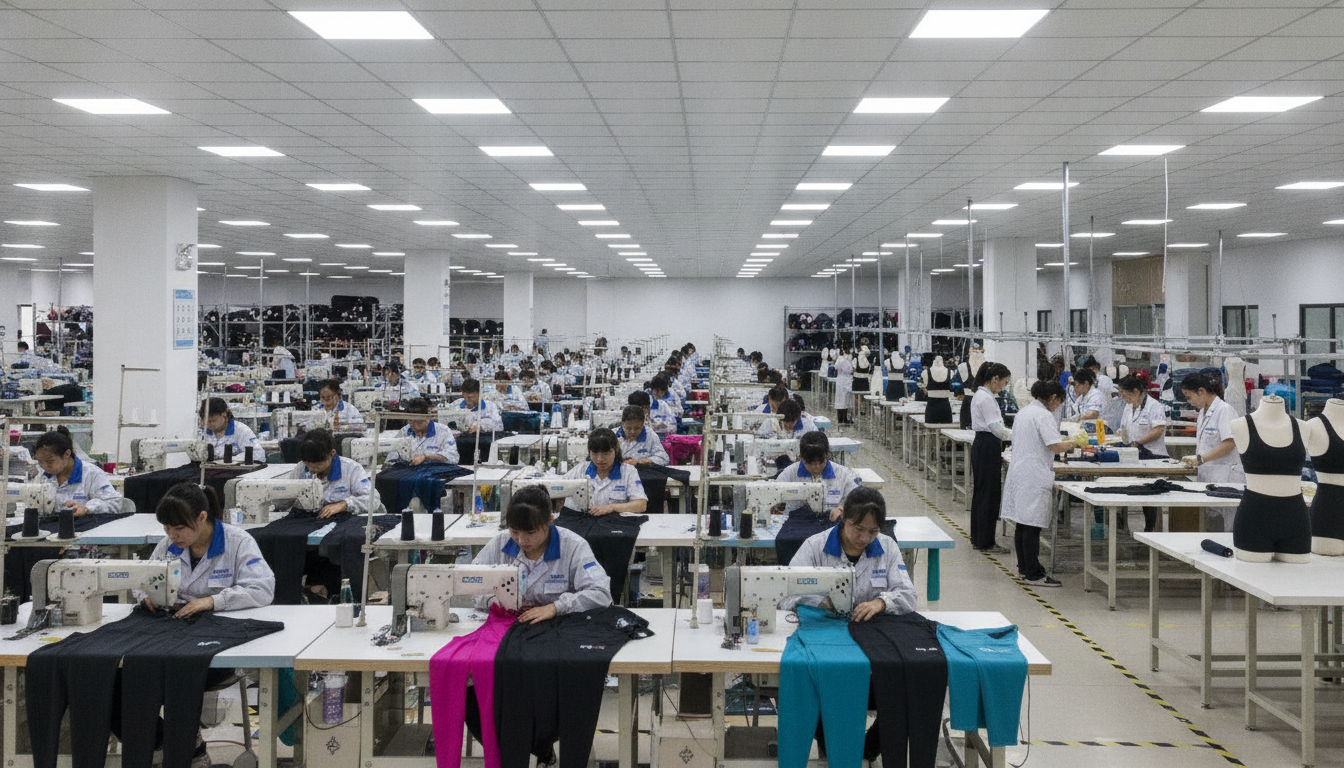
To verify a BSCI audit report from an activewear supplier, request the factory’s amfori Database ID (DBID), cross-check the factory name and address against your quotation and invoice, confirm the audit scope covers the exact production site where your activewear will be manufactured, review the audit validity period, and examine open non-conformances and corrective action plans rather than relying on a pass/fail summary.
📋 Table of Contents
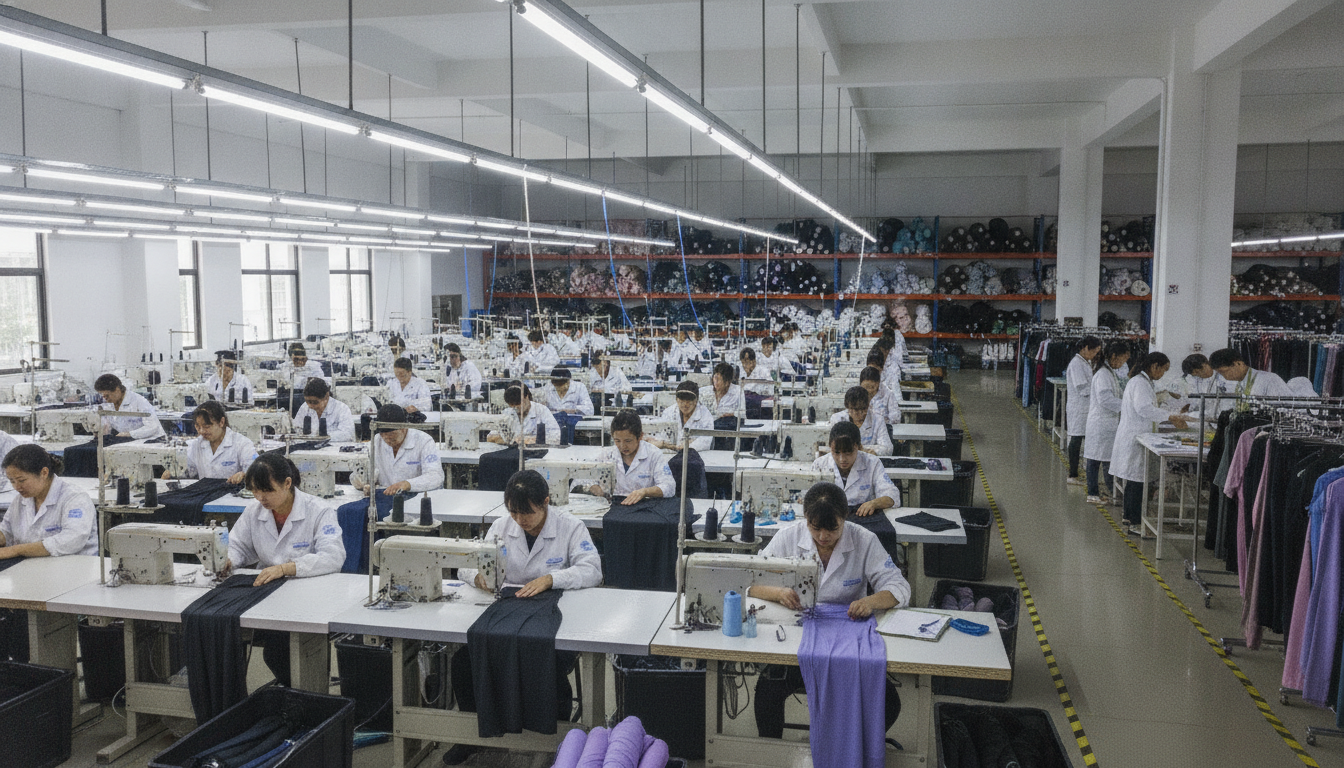
Activewear brands sourcing from China, Bangladesh, Vietnam, or other manufacturing hubs face a common challenge: suppliers present BSCI audit reports as proof of social compliance, but not every report is current, complete, or tied to the actual factory floor where your leggings, sports bras, or yoga sets will be cut and sewn. A PDF with the BSCI logo can be reused across sales cycles, printed from an expired audit, or issued for a different legal entity or production site than the one quoted on your invoice. For DTC founders, boutique studio owners building branded apparel lines, and emerging activewear startups, knowing how to verify a BSCI audit report from an activewear supplier is the first line of defense against trading-company intermediaries, shell entities, and subcontracting risks that fall outside audited facilities.
This guide walks through the six-step verification process buyers use to confirm a BSCI audit is real, current, and covers the exact production site. Each step addresses a specific risk surfaced in supplier due-diligence workflows, from database checks to corrective-action review, and includes the exact documents to request and the red flags to watch for.
The amfori Database ID is the unique identifier assigned to every factory monitored under the BSCI system. A supplier that has completed a BSCI audit holds an active DBID, which buyers can use to verify the factory’s compliance status through the official amfori platform or by contacting the auditor directly. Requesting the DBID is the first step in how to verify BSCI audit report activewear supplier claims, because it separates factories with genuine platform membership from those presenting outdated or recycled PDFs.
Suppliers routinely send polished audit summary PDFs during the quotation stage, but a standalone document does not confirm the factory’s current compliance status. A PDF can be copied from a previous audit cycle, issued for a sister factory under a different legal name, or presented after the audit validity period has expired. Buyers who rely on a PDF without cross-checking the DBID against the official platform cannot distinguish between an active, monitored factory and one that completed a single audit years ago and never followed up on corrective actions.
Ask the supplier to provide the factory’s amfori Database ID in writing, alongside the audit report PDF. The DBID is a multi-digit alphanumeric code that appears on the official audit certificate and in the factory’s amfori profile. Once you have the DBID, verify it through one of three methods:
Factories that hesitate to share the DBID, provide a different identifier, or claim the information is confidential raise a red flag. The DBID is not proprietary; it is the standard verification mechanism for BSCI compliance and should be shared freely during supplier onboarding.
The factory name and legal entity on the BSCI audit report must match the details on your quotation, invoice, and supplier registration documents. Mismatches signal that you may be dealing with a trading company, a shell entity, or a sister factory under different ownership, any of which can create liability if the actual production site is not the one audited.
Trading companies often present BSCI reports from their partner factories but issue quotations and invoices under their own company name. The audit covers the manufacturing facility, but the legal entity you are contracting with is a separate sales office with no direct control over production conditions. If a compliance issue arises, the trading company can claim it is not responsible because the factory is an independent third party.
Sister factories under the same ownership group may share a single BSCI audit, but the audited site is a different building or workshop than the one handling your order. The audit report lists Factory A at Address X, but your invoice lists Factory B at Address Y. Even if both are owned by the same parent company, the audit does not cover the production floor where your activewear will be cut and sewn.
Compare the following fields across the BSCI audit report, quotation, proforma invoice, and any supplier registration documents:
If the quotation lists a trading company name but the audit lists a factory name, request a written confirmation from the trading company that production will take place at the audited facility, and ask for the factory’s direct contact details. Verify those details match the audit report before proceeding.
A BSCI audit report includes a scope section that specifies which buildings, workshops, production lines, and processes were audited. The scope determines whether the audit covers the exact site where your activewear order will be manufactured. A factory may hold a valid BSCI audit for its main cut-and-sew workshop but subcontract dyeing, printing, or seamless knitting to external facilities that were not audited. If your order involves those processes, the audit does not cover the full supply chain.
The scope section of a BSCI audit report lists the physical locations audited, the production processes covered, and the number of workers employed at each site. For activewear manufacturing, the scope should cover:
Ask the supplier to provide the full audit report, not just the summary certificate. The full report includes a detailed scope section, a site map, and a breakdown of which production areas were inspected. Compare the scope against your product specifications and ask the following questions:
Factories that cannot provide a clear scope breakdown or claim the full report is confidential may be hiding subcontracting arrangements or operating production lines outside the audited area. Request a factory visit or third-party inspection to verify the actual production setup before placing a bulk order.
BSCI audits are valid for a limited period, typically 12 months from the audit date, after which the factory must undergo a re-audit to maintain active compliance status. An expired audit means the factory is no longer monitored under the BSCI system, and any corrective actions required during the previous audit may not have been completed. Buyers who accept an expired audit report assume the risk that current working conditions, wage practices, or health-and-safety protocols do not meet BSCI standards.
The audit report includes an issue date and a validity period. Check the issue date against the current calendar date to confirm the audit is still within its validity window. If the audit was issued more than 12 months ago, request proof that a re-audit has been scheduled or completed. Factories with active BSCI compliance maintain a regular audit cycle and can provide documentation of upcoming or recent re-audit dates.
In addition to the validity period, check the audit status on the amfori platform. A factory may hold a technically valid audit but have an inactive or suspended status if corrective actions were not completed on time or if a follow-up inspection revealed new non-conformances. The platform status is the authoritative indicator of current compliance, not the audit date alone.
If the audit report is expired, ask the supplier when the next audit is scheduled and request a copy of the re-audit report once it is completed. Do not place a bulk order until the re-audit is finished and the factory’s active status is confirmed. For small sample orders, an expired audit may be acceptable if you plan to conduct your own factory visit or third-party inspection before committing to production, but expired audits should never be the sole basis for supplier approval.
A BSCI audit report assigns a grade (A, B, C, D, or E) based on the severity and number of non-conformances identified during the inspection. A passing grade (A, B, or C) does not mean the factory has zero compliance issues; it means the issues identified are manageable and the factory has committed to corrective actions. Buyers who focus only on the overall grade miss the specific risks documented in the non-conformance and corrective-action sections of the report.
Non-conformances are findings where the factory did not meet one or more BSCI performance areas, which include:
Each non-conformance is classified as zero-tolerance, critical, major, or minor. Zero-tolerance findings (child labor, forced labor, severe health-and-safety violations) require immediate corrective action and a follow-up audit. Critical and major findings must be addressed within a specified timeframe, while minor findings are monitored during the next regular audit cycle.
The corrective action plan (CAP) section of the audit report lists the steps the factory has committed to take to resolve each non-conformance, the responsible person, and the target completion date. Reviewing the CAP reveals whether the factory is actively addressing compliance gaps or simply acknowledging findings without follow-through.
Ask the supplier to provide documentation of completed corrective actions, such as updated time-tracking systems, wage-payment records, fire-safety improvements, or revised worker contracts. If the audit identified multiple critical or major findings, request a follow-up inspection report or evidence that the issues have been closed out. Factories that cannot provide CAP documentation or claim the information is internal-only may not have completed the required corrective actions.
BSCI is one of several widely recognized social compliance frameworks used in activewear sourcing. Other common schemes include Sedex/SMETA, WRAP, SA8000, and Fair Trade. Each framework has different audit protocols, performance areas, and acceptance levels among brands and retailers. Understanding how BSCI compares to these alternatives helps buyers decide which audit evidence is sufficient for their sourcing policy and legal due diligence requirements.
Sedex is a membership platform that facilitates sharing of ethical trade data, and SMETA (Sedex Members Ethical Trade Audit) is the audit methodology used within the Sedex system. Both BSCI and SMETA cover similar performance areas (labor rights, health and safety, environment, business ethics), but SMETA audits are often conducted in a four-pillar format that includes environmental and business-ethics modules not always emphasized in BSCI. Many global brands accept either BSCI or SMETA, so suppliers may hold one or both. If a supplier offers a SMETA audit instead of BSCI, apply the same verification steps: check the Sedex platform for active status, cross-check entity details, review the audit scope, and examine non-conformances.
WRAP (Worldwide Responsible Accredited Production) is a certification program focused on apparel, footwear, and sewn-products manufacturing. WRAP certification requires factories to meet 12 principles covering labor practices, health and safety, environmental compliance, and customs compliance. WRAP is particularly common among US-based brands and retailers. WRAP certification is issued for 6, 12, or 24 months depending on the facility’s compliance level, and factories must undergo annual surveillance audits to maintain certification. If a supplier presents WRAP certification instead of BSCI, verify the certification status through the WRAP registry, confirm the certificate covers the production site, and review the most recent surveillance audit report.
Some factories hold BSCI, SMETA, and WRAP certifications simultaneously to meet the requirements of different buyer groups. If a supplier offers multiple audit reports, choose the one most recently issued and most closely aligned with your brand’s sourcing policy. A current SMETA audit is preferable to an expired BSCI audit, and a WRAP certification with an active surveillance cycle is stronger evidence than a one-time BSCI audit with no follow-up.
First-time founders and small brands often struggle with knowing exactly what documents to request during supplier onboarding. A standardized verification checklist ensures every supplier is evaluated consistently and reduces the risk of missing critical compliance gaps. The checklist below covers the core documents needed to verify BSCI audit claims and confirm the supplier’s legal identity, production capacity, and compliance status.
Send the checklist to the supplier during the initial quotation stage, before requesting samples. Suppliers who can provide all documents quickly and transparently are more likely to be reliable partners. Suppliers who delay, provide partial documents, or claim certain items are confidential may be hiding compliance gaps or operating through intermediaries. Use the checklist as a go/no-go gate: do not proceed to sampling or production until every document is received and verified.
In practice: A US DTC activewear founder requested the DBID and full BSCI report from three quoted suppliers. One provided the documents within 24 hours and the DBID verified active on the amfori platform. The second claimed the DBID was confidential and only shared a summary PDF with an expired audit date. The third provided a DBID that did not match the factory name on the quotation. The founder moved forward only with the first supplier, avoiding two high-risk scenarios.
Request the factory’s amfori Database ID (DBID) and verify it through the amfori platform if you are a member, or ask the supplier to provide a timestamped screenshot of the factory’s platform profile showing the DBID, audit grade, and validity period. You can also contact the audit firm listed on the report (Bureau Veritas, Intertek, SGS, TÜV, or another accredited BSCI auditor) and request confirmation that the DBID is active and tied to the factory name and address on your quotation.
amfori is the business association that owns and operates the BSCI (Business Social Compliance Initiative) audit system. BSCI is the social compliance framework and audit methodology, while amfori is the membership platform and organization that manages the database, sets standards, and accredits auditors. When a factory completes a BSCI audit, it is registered in the amfori database and assigned a Database ID (DBID), which buyers use to verify compliance status.
A complete BSCI audit report includes the factory’s amfori Database ID (DBID), legal name and physical address, audit scope (buildings, production lines, and processes audited), audit date and validity period, overall grade (A, B, C, D, or E), detailed findings for each BSCI performance area (working hours, wages, health and safety, child labor, forced labor, environment, business ethics), a list of non-conformances classified by severity (zero-tolerance, critical, major, minor), corrective action plans with responsible persons and target completion dates, and the auditor’s name and contact details.
Ready to source activewear from a vertically integrated factory with transparent BSCI compliance?
Request Our BSCI Scope Certificate and Factory Profile →
Last updated: August 2026
Written by the Walundi Export Team.
Sample 1 piece · bulk from 30 · OEKO-TEX & GRS certified · reply in 24h. No gatekeeping.
Low MOQ. Sustainable fabrics. OEM ready. Tell us your vision.
Click the button below to open WhatsApp. If you're not logged in to WhatsApp Web yet, scan the QR code first — then come back here and copy the message into the chat.