
📋 Table of Contents
Choosing between china vs bangladesh activewear manufacturing 2026 means weighing technical capability against unit cost. Many founders discover that factories quote similar FOB prices, but samples arrive with poor stretch recovery or seams that split during squat tests. The gap between what a factory claims and what it delivers often shows up in the first production round, not the sales call.
This guide compares both countries across MOQ, lead time, fabric performance, certification access, and landed costs for the US, UK, EU, and Australian markets. You will see where each country excels and where common production pitfalls emerge.
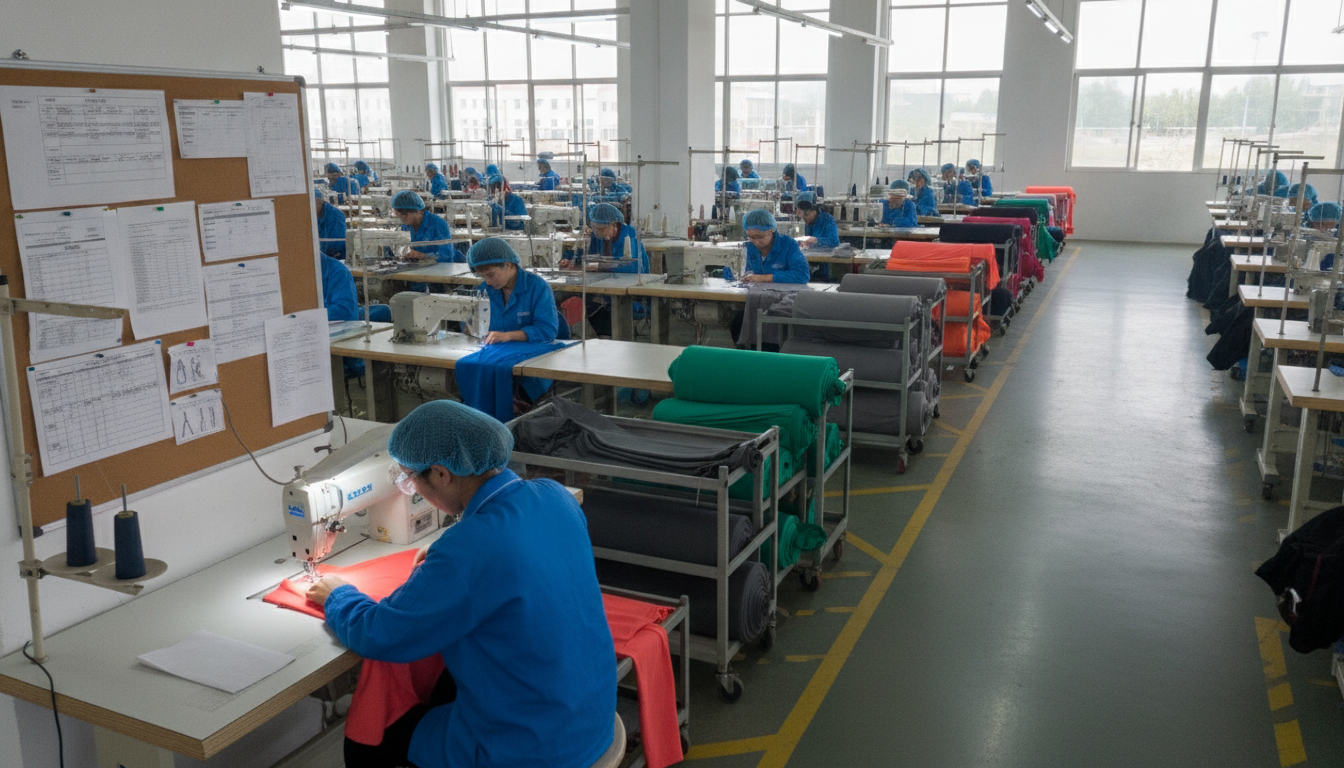
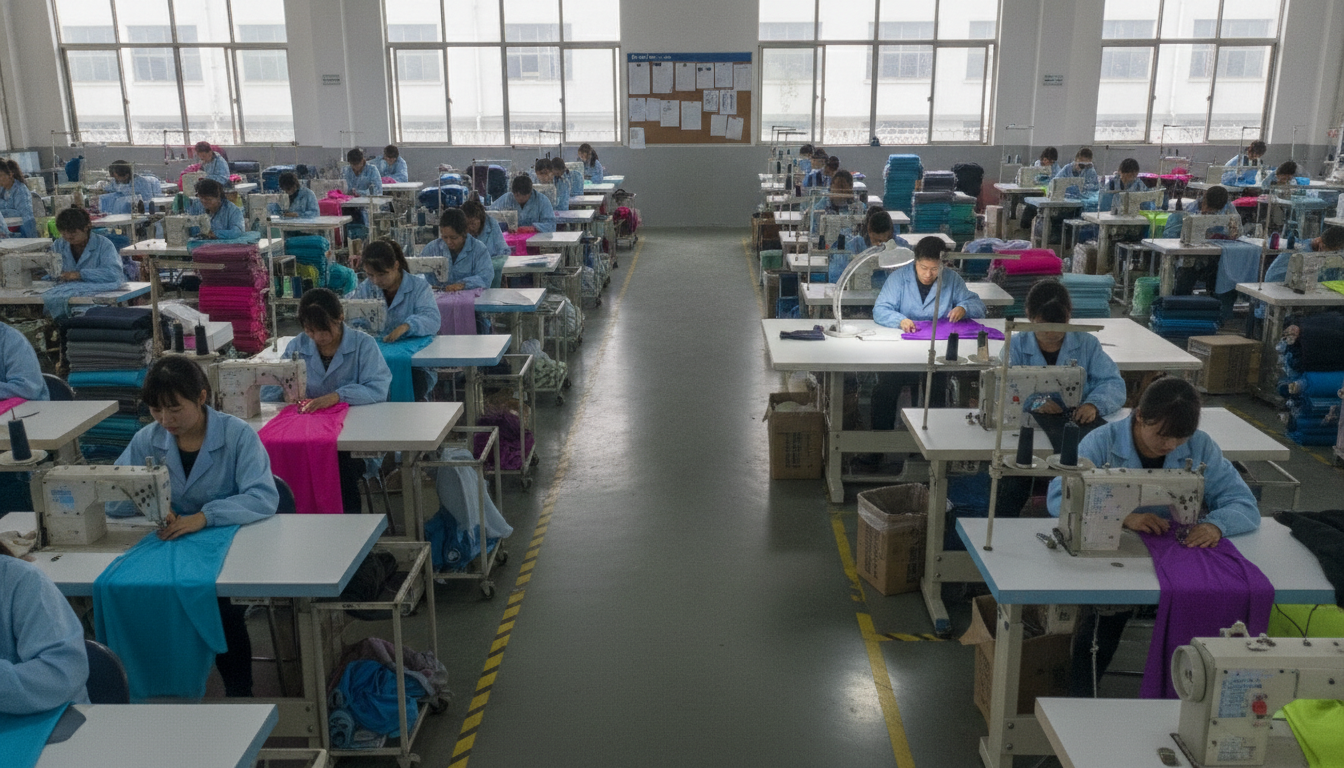
Technical activewear demands fabrics and construction methods that many general garment factories cannot deliver. The difference between a factory that makes T-shirts and one that produces squat-proof yoga leggings lies in fabric sourcing, pattern engineering, and seam technology.
China maintains vertically integrated supply chains for nylon-spandex, polyester-spandex, and recycled-polyester blends. Mills in Zhejiang and Fujian produce four-way stretch fabrics with 15-20% spandex content, moisture-wicking finishes, and compression grades from light (8-15 mmHg) to firm (20-30 mmHg). Factories can source fabric locally within 3-5 days, enabling rapid sampling and color matching.
Bangladesh imports most technical fabrics. Local mills focus on cotton, cotton-poly blends, and basic jersey knits. When a Bangladesh factory quotes activewear, it typically sources nylon-spandex from China or Taiwan, adding 10-14 days to the sampling timeline and increasing fabric cost by 12-18% due to import duties and freight.
Flatlock seams, coverstitch hems, and bonded waistbands require specialized machines and operator training. China’s yoga-apparel clusters in Yiwu, Shenzhen, and Dongguan have pattern studios that engineer gussets, compression panels, and multi-size grading for leggings and sports bras. Operators train specifically on activewear construction, not general apparel.
Bangladesh factories excel at basic lockstitch and overlock seams used in T-shirts, hoodies, and casual wear. Flatlock machines are less common, and operators may lack experience with stretch-fabric handling. Founders report that first samples often show puckered seams, uneven topstitching, or waistbands that roll during wear.
Seamless circular-knit machines (Santoni, Lonati, Pai Lung) produce sports bras, bike shorts, and bodysuits in a single piece, eliminating side seams. China has hundreds of seamless-knit facilities in Zhejiang and Guangdong. Bangladesh has fewer than a dozen seamless lines, concentrated in Dhaka, and most focus on basic shapewear rather than performance activewear.
In practice: A UK yoga brand requested 1-piece samples of a high-waisted legging with mesh panels and flatlock seams from both countries. China delivered in 8 days with accurate compression and clean seams. Bangladesh required 19 days and two revision rounds to correct puckering along the gusset.
.
Minimum order quantities lock up cash and inventory risk. For founders validating product-market fit, the difference between 30 pieces and 500 pieces per SKU can mean the gap between a controlled test launch and a warehouse full of unsold stock.
China’s specialized custom yoga apparel manufacturer facilities offer 1-piece sampling. You send a tech pack, receive a single prototype in 7-10 days, and iterate without committing to bulk. This model suits DTC founders testing multiple styles before selecting winners.
Bangladesh factories typically require 5-10 pieces per style for development samples, citing setup costs for cutting and sewing small runs. Some tier-one exporters waive sample fees for buyers committing to large production orders, but new brands without order history pay $80-$150 per sample garment.
China’s bulk minimums vary by factory type. Vertically integrated yoga-apparel manufacturers like Walundi start at 30 pieces per SKU. Trading companies and large-scale exporters require 300-500 pieces per color. General garment factories often quote 1,000-piece minimums because they lack the flexibility to run small batches profitably.
Bangladesh standard MOQ ranges from 300 to 1,000 pieces per color per style. Factories optimize for long production runs serving mid-market and mass-market brands. Smaller orders incur per-unit price premiums of 20-35% to cover setup and fabric waste.
FOB pricing depends on fabric, trims, and construction complexity. For a mid-rise yoga legging in 75% nylon, 25% spandex with a printed waistband:
The unit-cost advantage Bangladesh offers at 1,000-piece scale narrows significantly at 300-500 pieces and disappears entirely below 100 pieces.
China factories typically request 30% deposit, 70% before shipment. Established buyers with order history may negotiate 30/60 or 30/70 with a 15-day post-shipment balance. Bangladesh exporters often require 40% deposit, 60% against shipping documents, reflecting longer production cycles and higher working-capital needs.
Lead time affects cash flow, inventory planning, and the ability to respond to sales data. Founders launching seasonal collections need predictable timelines, not optimistic quotes that slip by three weeks.
China’s local fabric supply enables 7-10 day sampling for standard activewear styles. Complex designs with custom prints, laser-cut details, or bonded construction may extend to 12-14 days. Factories with in-house pattern studios and sample rooms control the entire process, reducing handoff delays.
Bangladesh sampling averages 14-21 days. Fabric import adds the bulk of the delay. Once fabric arrives, cutting and sewing proceed quickly, but coordination between fabric suppliers, trim vendors, and the sewing factory introduces variability. Founders report that promised 10-day samples often arrive in 18-22 days.
China bulk production for yoga apparel runs 25-35 days from deposit to ex-factory. This includes fabric procurement (3-5 days local), cutting (2-3 days), sewing (12-18 days depending on order size), QC (2-3 days), and packing (1-2 days). Factories with 200+ operators and vertically integrated workflows hit these timelines consistently.
Bangladesh bulk production spans 45-60 days. Fabric import consumes 12-16 days. Sewing and finishing take 20-28 days. QC and packing add another 3-5 days. Power outages, port congestion in Chittagong, and supplier coordination extend timelines unpredictably. Buyers building launch calendars around fixed retail windows face higher risk of delays.
First samples rarely match the tech pack perfectly. Adjustments to fit, seam placement, or fabric hand require a second round. China factories with local fabric access can turn a revised sample in 5-7 days. Bangladesh factories need 10-14 days for revisions if fabric changes are involved, and 7-10 days for construction-only tweaks.
Buyers consistently report that samples look perfect, but bulk production arrives with uneven stitching, fabric pilling, or colors that do not match the approved swatch. The gap between prototype and production stems from inconsistent QC processes and operator training.
China’s established yoga-apparel factories maintain in-house QC teams that check fabric, cutting accuracy, seam strength, and finishing at multiple stages. Walundi’s 18,000m² facility runs inline inspections during sewing, pre-packing checks, and final random sampling before shipment. This catches defects early, reducing the reject rate in bulk orders.
Bangladesh factories often rely on third-party inspection agencies hired by the buyer. Inline QC is less common, especially at smaller subcontractors. Defects discovered during final inspection require rework or replacement, delaying shipment by 5-10 days and increasing costs.
Certifications prove that fabrics, dyes, and factory conditions meet specific standards. Buyers selling in the EU, UK, or US increasingly require documentation to support sustainability claims and comply with chemical-safety regulations.
A sustainable yoga clothing manufacturer in China can provide GRS-certified recycled fabrics, OEKO-TEX test reports, and BSCI audit certificates within the same facility, simplifying compliance documentation for brands.
Yoga leggings must retain shape after repeated wear and washing. Stretch recovery measures how well fabric returns to its original dimensions after stretching. Poor recovery causes sagging knees, loose waistbands, and pilling.
China factories serving activewear brands test stretch recovery, pilling resistance (Martindale method), colorfastness (ISO 105), and seam slippage as standard QC steps. Bangladesh factories less commonly perform these tests in-house, relying instead on buyer-provided specifications and third-party lab testing, which adds cost and time.
FOB price is only part of the total cost. Duty rates, freight, insurance, and customs clearance vary by destination market. Comparing china vs bangladesh activewear manufacturing 2026 on a landed-cost basis reveals scenarios where China’s higher FOB is offset by shorter freight routes or lower duty rates.
US import duty on yoga leggings (HTS 6104.63.20, women’s synthetic-fiber trousers) is 28.2% for Bangladesh and 16% for China under most-favored-nation (MFN) rates. Bangladesh benefits from Generalized System of Preferences (GSP) duty-free treatment for certain apparel categories, but activewear in synthetic fabrics often falls outside GSP eligibility.
Ocean freight from Ningbo to Los Angeles averages $1,800-$2,400 per 40-foot container. Chittagong to Los Angeles runs $2,600-$3,200 due to fewer direct sailings and longer transit. For a 500-unit legging order:
The Bangladesh FOB advantage disappears after duty and freight. Faster China lead times reduce inventory holding costs and enable quicker response to sales trends.
UK import duty on synthetic-fiber activewear is 12% under the UK Global Tariff for both China and Bangladesh. Freight from China to Felixstowe averages $2,200-$2,800 per 40-foot container. Chittagong to Felixstowe runs $1,900-$2,400, giving Bangladesh a slight freight edge.
For a 500-unit order:
Bangladesh shows a clearer landed-cost advantage to the UK, but the 15-20 day longer production timeline must be factored into inventory planning and seasonal launch windows.
EU import duty on women’s synthetic-fiber trousers (CN code 6104 63 00) is 12% for both countries. Freight from China to Rotterdam or Hamburg averages $2,400-$3,000 per container. Chittagong to Rotterdam runs $2,000-$2,600.
Bangladesh holds a slight landed-cost edge to EU ports, similar to the UK scenario. Brands prioritizing speed-to-market or technical fabric performance often accept the small cost premium for China sourcing.
Australia applies 5% duty on apparel imports from both China and Bangladesh. Freight from China to Sydney or Melbourne averages $1,600-$2,000 per container. Chittagong to Australia runs $2,200-$2,800 due to fewer direct routes.
China offers both lower freight and faster transit (14-18 days vs 22-28 days), making it the clear landed-cost winner for Australian buyers.
Choosing between China and Bangladesh depends on your brand’s stage, product complexity, and cash position. The right answer for a founder validating product-market fit differs from the right answer for an established brand scaling to multi-thousand-unit orders.
China suits brands that need technical fabrics, low MOQ, and fast iteration. Specific scenarios include:
Bangladesh suits brands with proven SKUs, higher order volumes, and simpler construction. Specific scenarios include:
Some brands source technical activewear from China and cotton basics from Bangladesh. This splits risk, optimizes cost per category, and builds relationships in both countries. The operational overhead of managing two supply chains is justified when order volumes exceed $100,000 annually.
Regardless of country, certain factory behaviors signal problems:
In practice: An Australian activewear brand sourced 1,000 leggings from Bangladesh at $8.20 FOB but faced a 12-day shipping delay due to port congestion in Chittagong, missing their retail launch window. They switched to a China supplier at $9.80 FOB with 30-day guaranteed lead time, accepting the higher unit cost for calendar reliability.
.
China excels at technical activewear requiring four-way stretch fabrics, compression grading, flatlock seams, and low MOQ for product validation. Bangladesh suits brands with proven designs, higher order volumes, and simpler cotton-blend basics. Your choice depends on product complexity, order size, and lead-time requirements.
Bangladesh offers lower FOB pricing at high volumes (500-1,000+ pieces), but US import duty rates (28.2% vs 16% for China) and longer freight times often erase the cost advantage on a landed basis. For orders below 300 pieces, China’s low-MOQ factories provide better unit economics and faster time-to-market.
China’s vertically integrated yoga-apparel factories start at 30 pieces per SKU for bulk orders and 1 piece for sampling. Bangladesh standard MOQ ranges from 300 to 1,000 pieces per color per style, with 5-10 piece minimums for development samples. Low-MOQ access in China enables product testing without large inventory commitments.
China maintains local supply chains for nylon-spandex, polyester-spandex, and recycled-poly blends with four-way stretch, moisture-wicking, and compression performance. Bangladesh imports most technical fabrics from China or Taiwan, adding cost and lead time. For squat-proof leggings, seamless sports bras, and compression wear, China offers superior fabric access and construction expertise.
Bangladesh excels at cotton-blend T-shirts, hoodies, joggers, and casual athleisure. Technical activewear requiring four-way stretch, flatlock seams, seamless knit, or compression fabrics is less common due to limited local fabric mills and specialized equipment. Brands needing performance fabrics typically source from China, Taiwan, or South Korea, then cut and sew in Bangladesh, adding complexity and lead time.
Written by the Walundi Export Team.
Ready to compare real samples and MOQ terms for your yoga apparel line?
Request 1-Piece Samples →
Sample 1 piece · bulk from 30 · OEKO-TEX & GRS certified · reply in 24h. No gatekeeping.
Low MOQ. Sustainable fabrics. OEM ready. Tell us your vision.
Click the button below to open WhatsApp. If you're not logged in to WhatsApp Web yet, scan the QR code first — then come back here and copy the message into the chat.