📋 Table of Contents
Sourcing yoga apparel from an overseas manufacturer carries real financial risk when you cannot visit the facility in person. Founders launching DTC activewear brands often face a common dilemma: distinguishing between a vertically integrated factory with in-house cut-and-sew lines and a trading company that brokers orders to unknown subcontractors. Understanding how to check if a yoga clothing manufacturer is legitimate protects your deposit, ensures consistent quality, and prevents production delays that can derail a product launch.
Trading companies frequently present themselves as manufacturers, creating confusion for buyers who need direct factory access. Confirming a facility’s physical existence and operational status prevents costly mistakes before you commit to production.
Ask for the company’s business license, export registration, and tax identification number. In China, legitimate manufacturers hold a business license issued by the State Administration for Market Regulation with a unified social credit code. This 18-digit code can be verified through the National Enterprise Credit Information Publicity System. Cross-reference the registered business name, legal representative, and registered address with the information provided in quotations and contracts.
Export-focused factories also hold customs registration certificates that authorize them to ship goods internationally. Request a copy of the Customs Declaration Entity Registration Form, which includes the customs code used for all export declarations. This document confirms the entity has cleared customs compliance requirements and maintains active export status.
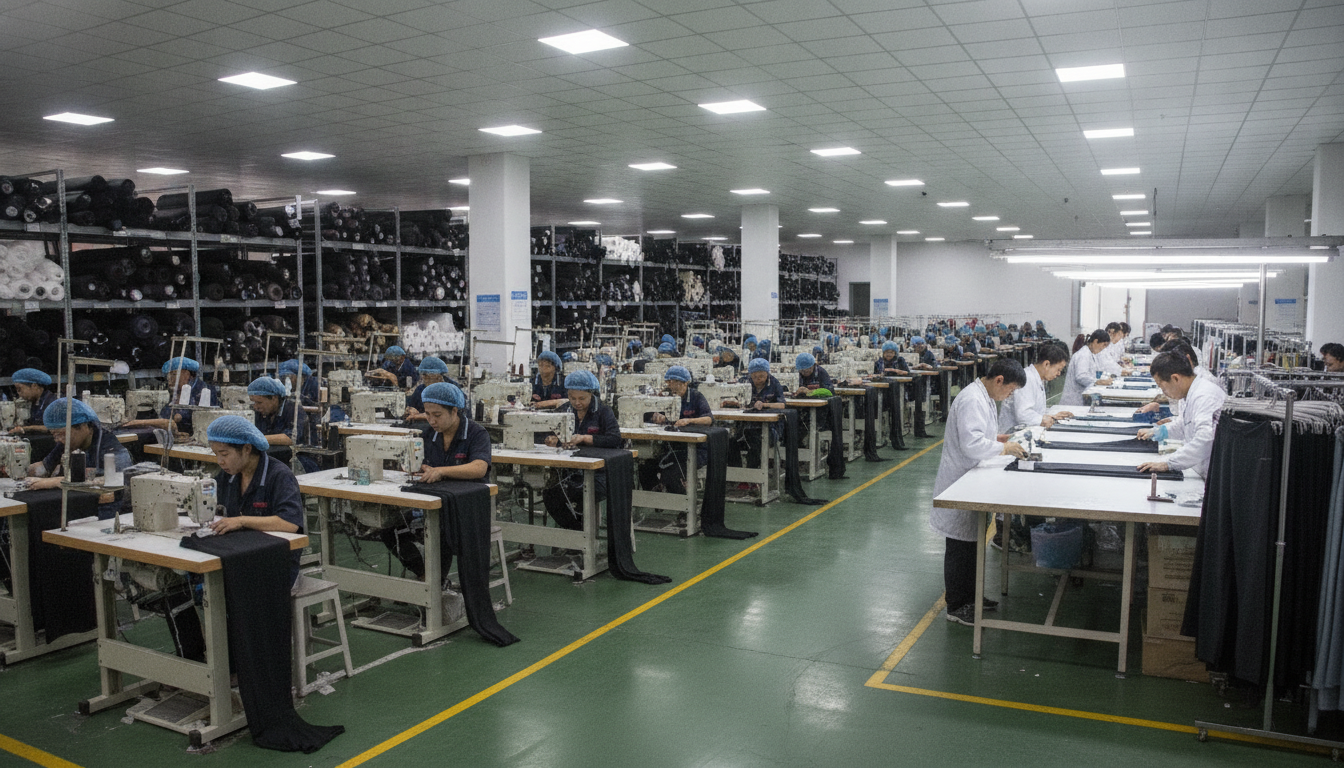
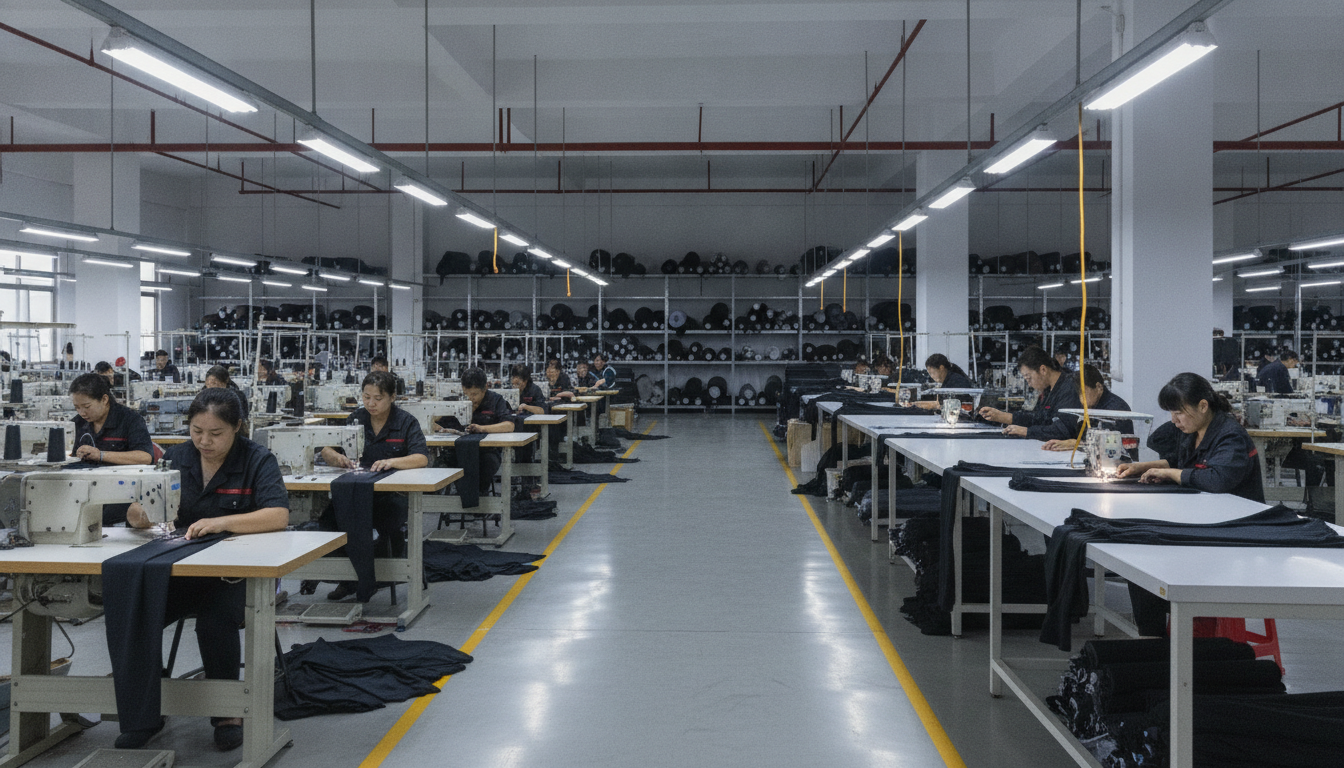
Schedule a live video call during the facility’s operating hours to observe production in real time. A legitimate manufacturer can walk you through the cutting floor, sewing lines, quality control stations, and fabric storage areas. Look for visible equipment such as computerized cutting machines, industrial sewing machines with specific needle types for stretch fabrics, and heat-press stations for labels and trims.
During the tour, ask the guide to show specific areas relevant to yoga apparel production. Request to see the pattern studio where technical designers create graded size sets, the sample room where prototypes are sewn, and the QC area where squat tests and stretch-recovery checks are performed. Trading companies typically cannot provide this level of facility access because they do not control the production floor.
Use mapping tools to confirm the factory address matches a commercial or industrial zone, not a residential apartment or virtual office. Search the address on Baidu Maps or Google Maps to view satellite imagery and street-level photos when available. Industrial facilities typically occupy multi-story buildings or warehouse complexes with visible signage and loading docks.
Test multiple contact channels to ensure consistency. Legitimate factories maintain a business phone number, official email domain, and often a company website. If the supplier only communicates through personal messaging apps or free email services without a corporate domain, this raises concerns about business legitimacy and long-term stability.
Certification claims are easy to make but harder to verify. Buyers must confirm that certificates are current, cover the specific products being ordered, and can be traced to the manufacturing facility.
OEKO-TEX Standard 100 certification tests textiles against harmful substances, covering fabric, thread, zippers, and labels. Each certificate includes a unique license number, the certified company name, the issuing institute, and an expiration date. Visit the OEKO-TEX website and use the label check tool to verify the certificate number matches the manufacturer’s name and product categories.
Certificates are product-specific, meaning a factory certified for cotton jersey may not be certified for polyester-spandex blends used in yoga leggings. Request the certificate that covers the exact fabric composition and weight you plan to order. Expired certificates or certificates issued to a different legal entity than your supplier indicate potential misrepresentation.
GRS certification verifies recycled content in textiles and requires chain-of-custody documentation at every production stage. A manufacturer claiming GRS-certified yoga leggings must provide a transaction certificate (TC) that links their facility to the certified fiber supplier. The TC includes a unique number, the certified entity’s name, the product description, and the percentage of recycled content.
Request the TC and verify it on the Textile Exchange database. The TC should list your supplier as the seller or processor, and the product category should match your order (knitted fabrics, finished garments, etc.). Without a valid TC, the manufacturer cannot legally label products as GRS-certified, even if they purchase recycled fabric from a certified mill.
Third-party audits such as BSCI, WRAP, or SA8000 assess labor practices, workplace safety, and environmental management. Request the most recent audit report and check the issue date, audit scope, and any corrective action plans. Reports older than 12 months may not reflect current facility conditions.
Review the audit findings section for major non-conformances related to working hours, wages, health and safety, or environmental compliance. A facility with unresolved major non-conformances poses supply-chain risk. Legitimate manufacturers address audit findings promptly and provide evidence of corrective actions in follow-up reports.
A manufacturer’s ability to produce high-quality yoga apparel depends on specialized equipment, skilled labor, and technical knowledge of stretch fabrics. Assessing these capabilities helps you determine whether a factory can meet your product specifications consistently.
Yoga leggings and sports bras require specific machinery that differs from standard garment production. Four-thread overlock machines create durable, stretchy seams that withstand repeated washing and high-intensity movement. Coverstitch machines produce flatlock seams with a smooth finish against the skin, essential for waistbands and hems. Computerized pattern-cutting systems ensure precise sizing across all SKUs, reducing fabric waste and improving fit consistency.
Ask the manufacturer to describe their equipment list and provide photos or video of the machines in operation. Factories that specialize in activewear typically run Juki, Brother, or Pegasus industrial machines configured for stretch fabrics. If the supplier cannot specify machine types or show equipment photos, they may be outsourcing production to subcontractors.
Yoga apparel requires fabrics with specific performance characteristics: four-way stretch, moisture-wicking, squat-proof opacity, and shape retention after washing. A knowledgeable manufacturer can explain the difference between nylon-spandex and polyester-spandex blends, recommend fabric weights for different garment types (leggings typically use 230-280 GSM), and discuss finishing treatments such as anti-microbial or UV protection.
Request fabric swatch books with detailed specifications for each material, including fiber content, weight, stretch percentage, and mill certifications. Legitimate factories maintain relationships with certified fabric mills and can provide mill test reports for colorfastness, pilling resistance, and dimensional stability. A common complaint buyers raise involves thin fabrics that become see-through during wear. Manufacturers experienced in yoga apparel conduct squat tests during sampling to confirm opacity before bulk production.
MOQ policies reveal a manufacturer’s business model and production flexibility. Trading companies often impose high MOQs because they aggregate orders to meet factory minimums. A vertically integrated low MOQ yoga manufacturer with in-house production can offer smaller quantities because they control the production schedule and can run mixed-SKU orders efficiently.
Sample MOQ: 1 piece. Bulk MOQ: 30 pieces per SKU. Sampling time: 7-10 days.
Ask about sampling terms before discussing bulk orders. A legitimate manufacturer confident in their production quality will produce samples at reasonable cost and lead time. Factories that require large sample fees or refuse to provide samples before committing to bulk orders may lack the technical capability to meet your specifications.
How a manufacturer communicates reveals their professionalism, reliability, and commitment to customer service. Consistent, transparent communication reduces misunderstandings and builds trust throughout the production process.
Professional manufacturers respond to inquiries within 24-48 hours during business days. Delays exceeding 48 hours without explanation suggest poor organization, understaffing, or lack of interest in your project. Track response times during the initial inquiry phase to establish baseline communication expectations.
Test the supplier’s availability across multiple time zones if you are based in North America or Europe. Factories serving international clients often assign account managers who work flexible hours to accommodate calls and video meetings. If the supplier only responds during their local business hours and cannot schedule calls outside that window, coordinating production updates and resolving urgent issues becomes difficult.
A detailed quotation demonstrates the manufacturer’s understanding of your requirements and their ability to deliver. The quote should itemize fabric cost, trim cost, labor cost, packaging, and shipping separately, rather than providing a single per-unit price. This transparency allows you to understand cost drivers and negotiate specific elements if needed.
Review the quotation for technical specifications that match your design brief: fabric composition, weight, color matching method (Pantone TPX, lab dip), size range, labeling requirements, and packaging format. Vague quotations that omit these details or provide wide price ranges signal insufficient production planning or a trading company that has not yet sourced the order.
Legitimate manufacturers use clear contracts that specify product specifications, quality standards, delivery timelines, payment terms, and dispute resolution procedures. Read the contract carefully and ensure it includes provisions for sample approval, pre-production meetings, inspection rights, and remedies for defective goods.
Payment terms typically follow a deposit-and-balance structure: 30-50% deposit upon order confirmation, with the balance due before shipment. Be cautious of suppliers requesting full payment upfront or using payment methods that offer no buyer protection, such as wire transfers to personal bank accounts. Established factories accept payment through trade-assurance platforms, letters of credit, or escrow services that protect both parties.
Samples and references provide tangible proof of a manufacturer’s production quality and customer satisfaction. These verification steps reduce risk before committing to bulk orders.
Request samples in your exact fabric, color, and size specifications before approving bulk production. Pre-production samples allow you to assess fabric hand-feel, stitching quality, fit accuracy, and construction details. Test the garment through multiple wash cycles to check for shrinkage, color fading, and seam integrity.
Perform a squat test to confirm the fabric remains opaque under stretch. Yoga leggings should not become see-through when the wearer bends or squats. Check the waistband for adequate compression without rolling or digging into the skin. Inspect seams for flat, smooth finishes that prevent chafing during movement. A factory that produces high-quality samples demonstrates their capability to replicate that quality in bulk production.
In practice: A California-based yoga brand ordered 1-piece samples from three manufacturers, testing each through 10 wash cycles and studio wear. Only one factory’s samples maintained opacity and shape retention, leading to a 30-unit-per-SKU first order without quality concerns.
Ask the manufacturer for contact information of current clients in your market segment. Speaking directly with other buyers provides insight into the factory’s reliability, communication style, and problem-solving approach. Prepare specific questions about lead time accuracy, quality consistency across multiple orders, responsiveness to issues, and willingness to accommodate design changes.
Legitimate manufacturers willingly share references because satisfied customers validate their capabilities. If a supplier refuses to provide references or only offers vague testimonials without contact details, this raises concerns about their track record. Cross-reference the provided references with online reviews, LinkedIn profiles, or industry directories to confirm they are genuine businesses.
Request a portfolio of completed projects similar to your product category. Photos should show finished garments with visible construction details: waistband stitching, gusset placement, flatlock seams, and label application. A diverse portfolio demonstrates the factory’s experience with various styles, fabrics, and complexity levels.
Be skeptical of portfolios that only show stock photos or images clearly taken from other brands’ websites. Ask the manufacturer to provide photos of garments currently on their production floor or recent shipments. Factories proud of their work document production stages and maintain visual records of completed orders.
Request official business registration documents including the business license and export registration certificate. Verify the unified social credit code through government databases. Conduct a live virtual facility tour during operating hours to observe production equipment, sewing lines, and quality control stations. Check that certifications such as OEKO-TEX or GRS are current and cover the specific products you plan to order.
MOQs vary widely based on the manufacturer’s business model. Trading companies often require 500-1,000 pieces per style to meet factory minimums. Vertically integrated factories with in-house production can offer lower MOQs, with some accepting 30 pieces per SKU for bulk orders and 1-piece sample orders. Lower MOQs provide flexibility for DTC brands testing new designs without locking up capital in large inventory orders.
Trading companies cannot provide detailed facility tours showing production equipment, cutting floors, and sewing lines. They often have vague business addresses in commercial office buildings rather than industrial zones. Real factories can describe their machinery (four-thread overlock, coverstitch machines), provide equipment photos, and explain technical production processes. Trading companies also impose higher MOQs because they aggregate orders to meet subcontractor minimums.
OEKO-TEX Standard 100 certifies that fabrics are free from harmful chemicals and substances. GRS (Global Recycled Standard) verifies recycled content and chain of custody for sustainable materials. BSCI or WRAP audits confirm social compliance, labor practices, and workplace safety. Each certification should include a unique license number, issue date, and expiration date. Verify certificates directly through the issuing organization’s database to confirm authenticity.
Request fabric swatch books with detailed specifications including fiber content, weight (GSM), stretch percentage, and mill certifications. Order pre-production samples in your exact fabric and color to test hand-feel, opacity, and performance. Perform squat tests to confirm the fabric remains opaque under stretch. Wash samples multiple times to check for shrinkage, color fading, and shape retention. Ask for mill test reports covering colorfastness, pilling resistance, and dimensional stability.
Ready to verify a manufacturer’s production capability with 1-piece samples?
Request Your Sample Today →
Written by the Walundi Export Team.
Sample 1 piece · bulk from 30 · OEKO-TEX & GRS certified · reply in 24h. No gatekeeping.
Low MOQ. Sustainable fabrics. OEM ready. Tell us your vision.
Click the button below to open WhatsApp. If you're not logged in to WhatsApp Web yet, scan the QR code first — then come back here and copy the message into the chat.