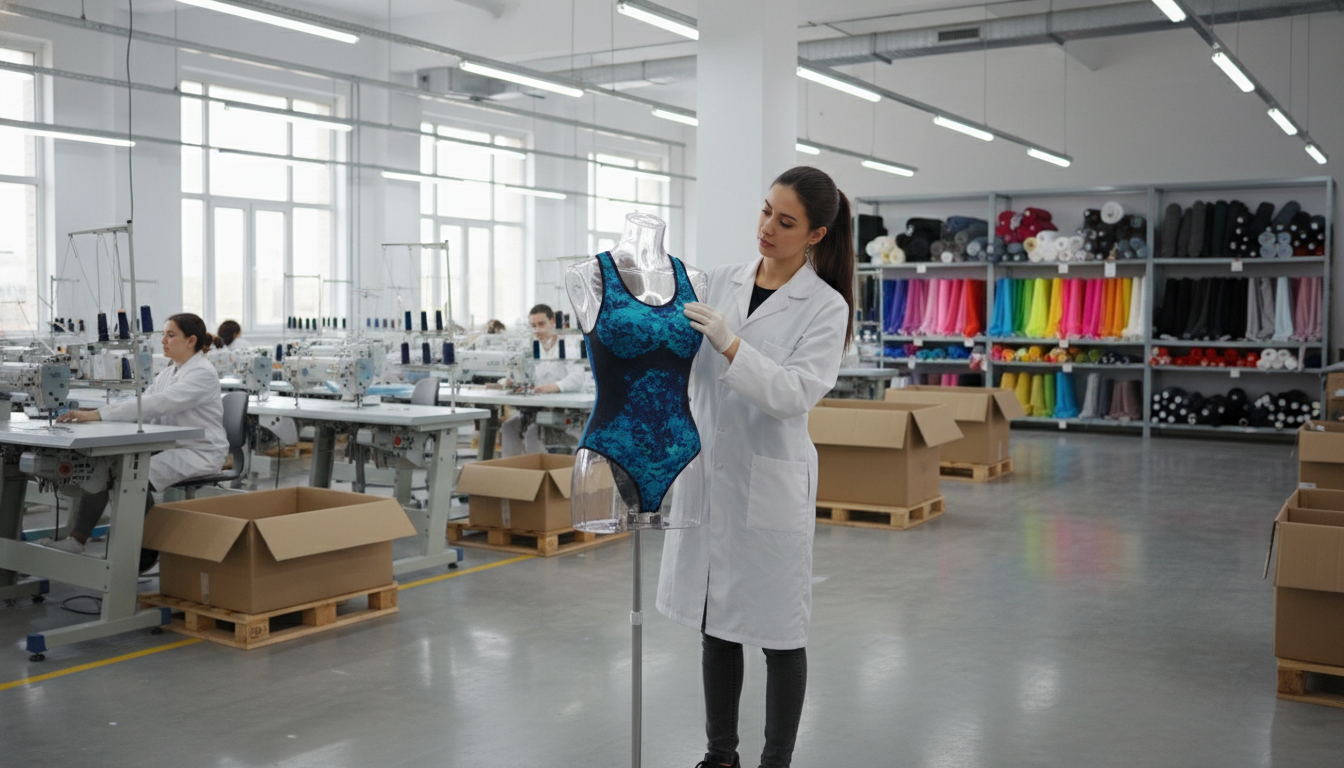
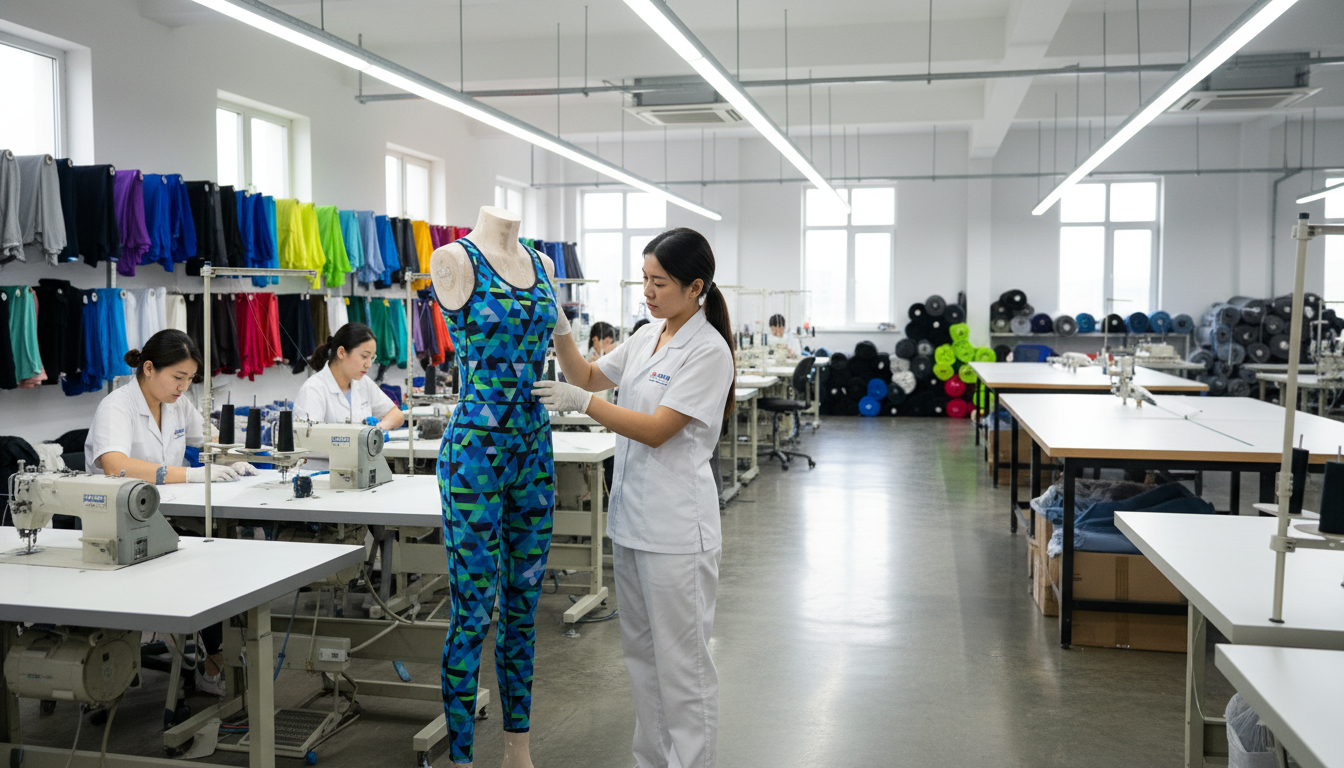
You’ve designed a sculpting activewear bodysuit but every factory you contacted demands 500 units per color before you’ve sold a single piece. A custom activewear bodysuit manufacturer with 1-piece sampling and a 30-piece bulk MOQ can become your true launch partner. In our 12+ years manufacturing yoga apparel in Yiwu, we’ve seen small brands turn a single sketch into a validated line within 4 weeks.
Executive Summary
Market growth: The global yoga apparel market exceeded $30 billion in 2024, growing at a high-single-digit CAGR, according to Grand View Research.
Sample MOQ: Based on Walundi’s 12+ years of production in Yiwu, sample turnaround for a custom activewear bodysuit ships within 7-10 days with a 1-piece minimum.
OEKO-TEX certification: OEKO-TEX Standard 100 screens finished textiles for more than 1,000 harmful substances, a baseline for US and EU market entry.
GRS recycled content: The Global Recycled Standard (GRS) requires at least 20% recycled material content before a product can carry the GRS label.
Compliance: The US Federal Trade Commission (FTC) mandates specific textile fiber disclosure under the Textile Fiber Products Identification Act for all apparel sold in the US.
What Is a Custom Activewear Bodysuit Manufacturer?
A custom activewear bodysuit manufacturer takes your design concept and produces finished garments to your exact specifications. Instead of stocking generic products, you can control fabric, fit, labels, and packaging. In a 2026 market where boutique brands compete on unique silhouettes, working with a factory that offers OEM and ODM paths is essential for protecting your product identity.
OEM vs ODM: Which Path Fits Your Bodysuit Line?
Aspect
OEM (Original Equipment Manufacturing)
ODM (Original Design Manufacturing)
Design Control
You provide tech pack, factory follows exactly
Factory offers pre-existing silhouettes you can customize
Development Time
Longer, as patterns are built from scratch
Faster, uses existing base blocks
IP Ownership
You own the design and pattern
Shared or limited exclusivity
Best For
DTC brands with unique fit IP
Boutique studios testing a first line quickly
Services That Accelerate Launch
Pattern engineering: Grading across sizes XS-3XL using your body measurement chart
Fit validation: In-house wear testing for compression and squat-proof opacity
Sustainable fabric sourcing: Access to GRS-certified recycled nylon and OEKO-TEX cotton blends
Private labeling: Custom woven labels, hang tags, and packaging ready for retail
How to Vet a Manufacturer for Activewear Bodysuits
Not every factory can engineer a bodysuit that passes the squat-test, maintains compression after 50 washes, and meets US labeling laws. A thorough vetting process must cover fit engineering, fabric test data, and compliance documentation.
Fit Engineering: Compression and Stretch Recovery
Activewear bodysuit returns often stem from fit issues. Ask for data on recovery after stretching (AATCC 135) and compression retention. A reliable partner tests that waist and bust elastic maintains over 90% recovery after 30 home launderings.
Building a yoga brand? Sample 1 piece, bulk from 30.
Fabric Performance Metrics to Test Before Ordering
Performance Factor
Test Method
Acceptance Threshold
Opacity (squat-proof)
Visual inspection under stretch
No visible skin or undergarment lines
Moisture Management
AATCC 79 (vertical wicking)
Wicking time <3 seconds
Pilling Resistance
ASTM D3512 (Martindale)
Grade 4 after 5,000 cycles
Colorfastness to Wash
AATCC 61 (accelerated laundering)
Grade 4-5
Red Flags: When a Factory Can’t Provide Test Reports
No third-party test reports for past orders: Reputable manufacturers share OEKO-TEX or BV/Intertek test certificates
Vague fabric sourcing claims: If they can’t name the mill or provide GRS transaction certificates, recycled-content claims are likely unverified
Unwillingness to run pre-production samples: Skipping the fit sample stage almost always results in flawed bulk, which can cost a startup thousands in chargebacks
Launching Your Bodysuit Line: Sampling, MOQs, and Costs
DTC founders need to validate product-market fit without overspending on inventory. A phased approach, starting with 1-piece samples, lowers risk and lets you test real customer response before committing to larger quantities.
Phase 1: Market Validation with 1-Piece Samples
A custom activewear bodysuit manufacturer that accepts a 1-piece sample order lets you get a physical garment for photoshoots, fit testing, and pre-order campaigns. Sampling costs range from $50 to $150 depending on fabric and trims. Turnaround is typically 7-10 days for a first sample.
Phase 2: Small-Batch Production and Bulk MOQ
Once you’ve confirmed fit, low-MOQ yoga manufacturing lets you order as few as 30 pieces per SKU. This 30-piece bulk MOQ is ideal for a first drop of 3-4 bodysuit styles without tying up $15,000+ in inventory. Many Yiwu-based vertically integrated factories support this with in-line QC checks throughout cutting and sewing.
Certifications and Compliance for US, EU, UK, and Australia Markets
Selling activewear bodysuits in Western markets requires proof that your fabrics are safe and your sustainability claims are verifiable. Without OEKO-TEX or GRS certificates, wholesale buyers will refuse to stock your line.
Key Certifications at a Glance
Certification
What It Covers
Why It Matters for Your Bodysuit Line
GRS
Recycled content and supply chain traceability
Must for brands claiming eco-friendly; 20% recycled minimum
OEKO-TEX Standard 100
Tests for more than 1,000 harmful chemicals
Baseline for US, EU, and Australian market entry
BSCI
Social compliance and factory working conditions
Required by many European retail chains
GOTS
Organic fiber processing and labeling
Needed for ‘organic cotton’ claims (95% organic min)
Regional Labeling and Safety Requirements
Region
Required Labels
Key Standards
US
Fiber content, care label, RN number
FTC Textile Fiber Products Identification Act
EU
Fiber composition, care symbols
EU 1007/2011, REACH regulation
UK
UKCA marking, fiber content
Mirrors EU requirements post-Brexit
Australia
Care labeling, fiber content
ACCC mandatory standard for care labeling
Key Takeaways
The global yoga apparel market exceeded $30 billion in 2024 and is growing at a high-single-digit CAGR, according to Grand View Research.
OEKO-TEX Standard 100 certification screens textiles for more than 1,000 harmful substances, a must for US and EU market entry.
GRS requires a minimum of 20% recycled material content before a product can be certified and labeled GRS.
GOTS certification requires at least 95% organic fibers for products labeled ‘organic’, according to the Global Organic Textile Standard.
The US Textile Fiber Products Identification Act requires clear fiber content disclosure in English, enforced by the FTC.
FAQ
What is the MOQ for a custom activewear bodysuit manufacturer?
The bulk MOQ for a custom activewear bodysuit is often 30 pieces per SKU from vertically integrated Yiwu factories. Sample MOQ is typically 1 piece, letting you validate the fit without large upfront costs. Higher MOQs of 500+ exist at some large-scale plants, but DTC-friendly manufacturers keep entry low.
How do I find a reliable custom activewear manufacturer?
Start by requesting third-party fabric test reports (OEKO-TEX, GRS) and a sample of a similar bodysuit. Video-call the factory floor in real time to see the pattern studio and cut-and-sew lines. A reliable partner will also provide clear timelines and a single point of contact who speaks fluent English.
What is the difference between OEM and ODM in activewear manufacturing?
OEM (Original Equipment Manufacturing) means the factory builds exactly to your tech pack, giving you full design ownership. ODM (Original Design Manufacturing) offers pre-developed silhouettes you can customize, which is faster but may limit exclusivity. Startups often begin with ODM and transition to OEM as they scale.
How long does custom activewear sampling take?
A first sample of a custom activewear bodysuit typically ships in 7-10 days from a ready pattern. If a new pattern is needed from scratch, add 3-5 days. Fit revisions usually take an additional 5-7 days per round. Always confirm the sampling timeline with your factory before placing a deposit.
What certifications should an activewear manufacturer have?
A manufacturer for US, EU, UK, and Australia markets should hold OEKO-TEX Standard 100 to prove chemical safety, and GRS if you use recycled fabrics. BSCI or SMETA social compliance audits are often required by European buyers. For organic cotton, GOTS is essential. Always verify certificates are current and cover your fabric batch.
Low MOQ. Sustainable fabrics. OEM ready. Tell us your vision.
Please complete this field.
Please complete this field.
Please complete this field.
Please enter a valid email address.
Please complete this field.
Please make a selection.
Please make a selection.
Please complete this field.
Inquiry Saved!
Click the button below to open WhatsApp. If you're not logged in to WhatsApp Web yet, scan the QR code first — then come back here and copy the message into the chat.