
📋 Table of Contents
DTC activewear founders often compare factory quotes from China and Turkey, then discover the unit price tells only part of the story. The china vs turkey activewear manufacturing comparison shifts dramatically when you layer in freight, customs duties, inspection costs, and the hidden cash burn from extended lead times. Small brands validating product-market fit face a different equation than established labels ordering containers at scale.
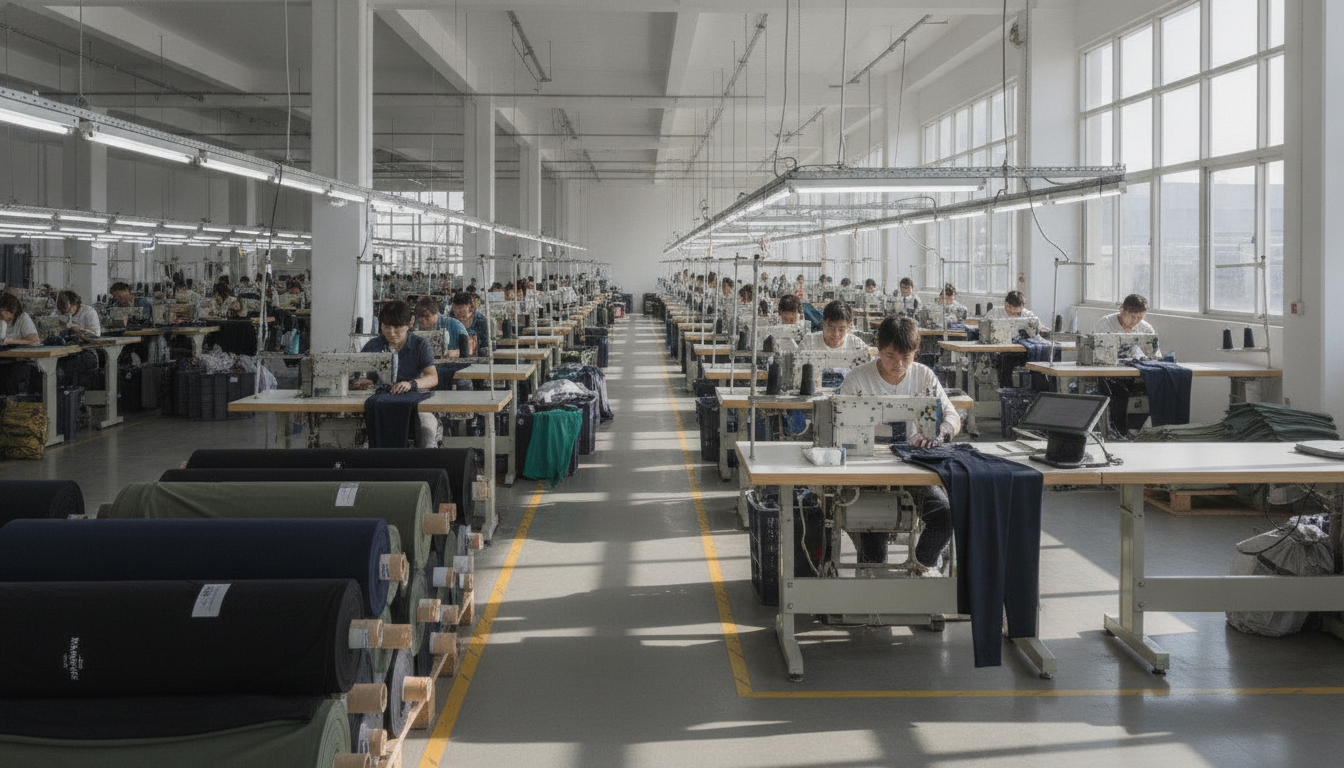
Buyers frequently focus on the factory gate price, then realize freight, duties, and quality-control travel expenses reshape the final number. The china vs turkey activewear manufacturing comparison becomes clearer when you model the full landed cost per unit.
Turkish factories typically quote 15-25 percent above comparable Chinese facilities for the same yoga legging or sports bra spec. Labor costs in Turkey are higher, and the country imports many technical yarns rather than producing them domestically. Chinese vertically integrated mills spin yarn, knit fabric, dye, and cut-and-sew under one roof, compressing margin at each stage.
Sea freight from Ningbo to Rotterdam takes 28-32 days, while road or combined sea-road from Istanbul to central Europe runs 10-14 days. Air freight from China costs roughly double the Turkey rate for the same weight, though DTC brands ordering 200-500 units per SKU rarely fill a container and often consolidate shipments. Ocean LCL (less than container load) from China to Northern Europe typically costs 180-220 USD per cubic meter, versus 120-150 USD for truck freight from Turkey.
Turkey benefits from a customs union with the EU, meaning zero tariffs on most textile and apparel imports into EU member states. China-origin activewear entering the EU faces a 12 percent ad-valorem duty on the CIF value. For a 1,000-piece shipment with a 15,000 USD FOB value, that duty alone adds 1,800-2,000 USD. UK buyers importing from China pay the UK Global Tariff rate of 12 percent, while Turkey enjoys preferential access under the UK-Turkey trade agreement.
Founders validating their first production run often fly to the factory for pre-production meetings and final inspections. A return flight from Paris to Istanbul costs 150-300 EUR and takes four hours. Paris to Shanghai runs 600-900 EUR and 11-12 hours. Over three sampling cycles and one bulk inspection, the travel delta can add 1,500-2,000 EUR to the China option.
In this scenario, the landed cost converges within one cent. European brands ordering 500-1,000 units per style find Turkey and China nearly equivalent on total cost. Buyers shipping to the US face a different duty structure: China-origin activewear entering the US typically incurs Section 301 tariffs plus standard apparel duties, while Turkey enjoys duty-free access under the Generalized System of Preferences for many categories, though specific HS codes and trade rules shift annually.
Small brands complain that factories push high minimums or refuse trial runs, forcing founders to lock up cash before validating demand. The china vs turkey activewear manufacturing comparison on MOQ depends more on factory business model than geography.
Large-scale Turkish contract manufacturers typically require 300-500 pieces per color per style for woven activewear and 500-1,000 pieces for knit leggings or sports bras. Chinese export-focused facilities serving mid-market brands often set similar floors: 500-1,000 pieces per SKU to justify loom setup and dye-lot runs.
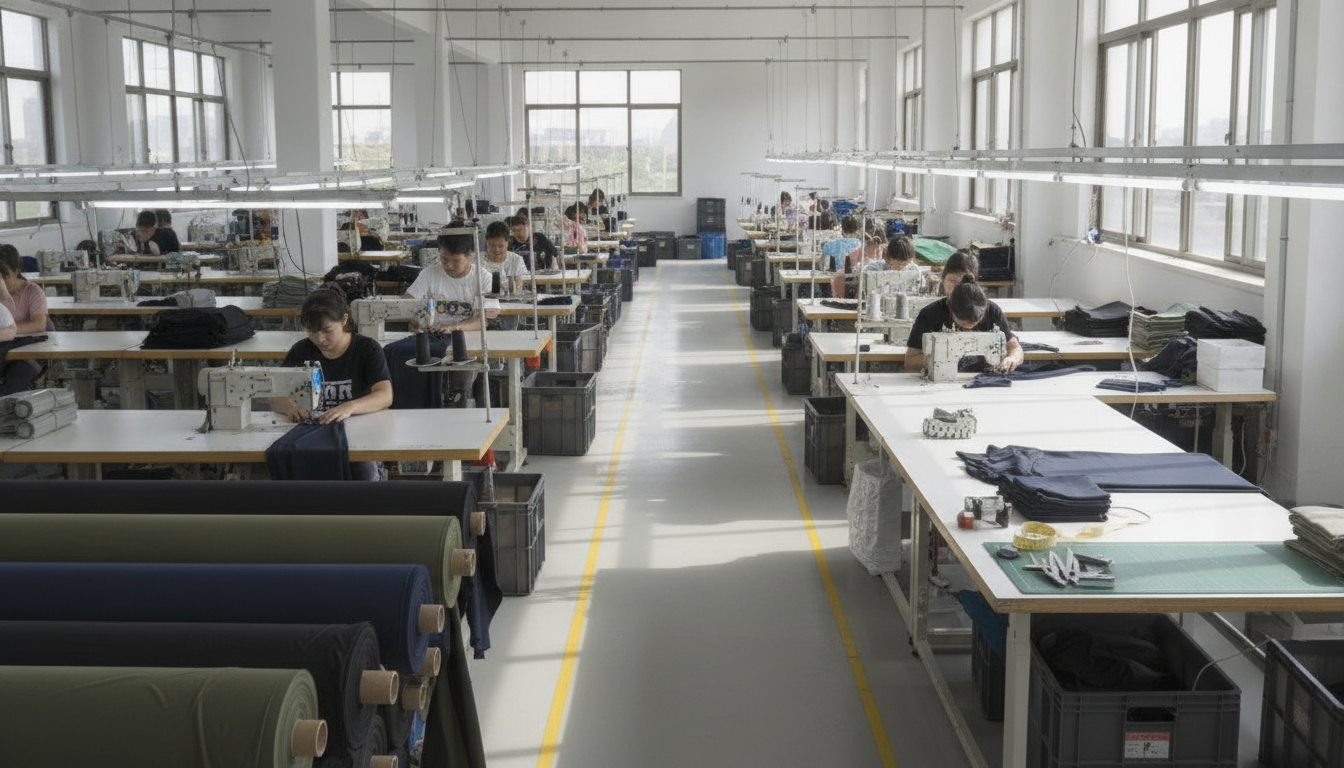
Vertically integrated factories that control fabric knitting in-house can offer lower minimums because they avoid third-party mill MOQs. At our Yiwu facility, we run Sample MOQ of 1 piece and Bulk MOQ of 30 pieces per SKU, enabling DTC founders to test three colorways and two sizes without committing 1,500 units and 18,000-25,000 USD upfront.
Turkey imports much of its technical knit fabric from China, Taiwan, and South Korea. A Turkish cut-and-sew facility ordering custom-dyed four-way stretch nylon from an external mill faces a 500-1,000 meter fabric minimum. Chinese vertical mills knit and dye in the same complex, so they can run 200-meter custom dye lots and still maintain margin.
Turkish factories near Istanbul or Izmir typically charge 50-100 USD per sample garment and deliver in 10-14 days. Chinese facilities quote 40-80 USD per sample with a 7-10 day turnaround from pattern approval. Both countries offer air-courier delivery (DHL, FedEx) at 30-50 USD for a 2 kg package, reaching European buyers in 3-5 business days.
Sample MOQ: 1 piece. Bulk MOQ: 30 pieces per SKU. Sampling time: 7-10 days from our Yiwu facility with in-house pattern studio and knit lines.
Founders say communication across time zones slows revisions and approval cycles. Lead time includes sampling iterations, bulk production, and transit, not just the factory floor.
A typical DTC brand refines fit and fabric over two to three sample rounds before approving production. Turkish factories operate in the same or adjacent time zone as European buyers (UTC+2 to UTC+3), so email exchanges happen within the same working day. China sits at UTC+8, creating a 6-7 hour gap with Central Europe and a 13-hour gap with US East Coast buyers. A revision request sent from Berlin at 16:00 reaches the Yiwu team at 22:00 local time, and the response arrives the next European morning.
In practice, responsive Chinese factories staff evening shifts or delegate account managers who overlap European afternoons. Over 12 years manufacturing for European and North American brands, we have found that clear tech packs and pre-agreed tolerance specs compress iteration time more than time-zone proximity.
Both China and Turkey quote 25-35 days for a 500-1,000 piece activewear order after sample approval. Turkey’s shorter production window (often 20-28 days) reflects smaller factory scale and less complex order queues. Chinese facilities juggle multiple large orders simultaneously, but their vertical integration eliminates waiting for external fabric mills or trim suppliers.
Sea freight from Ningbo to Rotterdam takes 28-32 days, plus 3-5 days for customs clearance and inland delivery. Road freight from Istanbul to central Europe runs 10-14 days total, including border crossings. Air freight from Shanghai to Paris takes 2-3 days in transit but costs 6-8 USD per kilogram versus 1.20-1.80 USD per kg for ocean LCL, making it viable only for sample shipments or urgent small replenishments.
Turkey delivers a first production run roughly 2-3 weeks faster end-to-end. For seasonal activewear launches or brands testing a capsule before a trade show, that window matters. Established brands with predictable reorder cadences absorb the longer China lead time by ordering further in advance.
Buyers report that some factories excel at basic apparel but struggle with technical activewear details like compression, recovery, and moisture management. The china vs turkey activewear manufacturing comparison diverges sharply on fabric engineering depth.
High-performance yoga leggings and sports bras require polyester or nylon yarns engineered with capillary channels that pull sweat away from skin. China’s Jiangsu and Zhejiang provinces host dozens of mills that extrude and texturize performance yarns in-house, then knit them into interlock, single-jersey, or double-knit constructions with programmed stretch and recovery. Turkey imports most technical yarns from Asian suppliers, limiting the ability to customize denier, filament count, or moisture-transport geometry without long lead times and high minimums.
Compression leggings blend nylon or polyester with spandex (elastane) at 15-25 percent by weight, then knit on circular machines programmed for tight gauge and controlled stretch. Chinese mills routinely produce 250-280 GSM four-way stretch fabrics with 40-60 percent horizontal and vertical elongation. Turkish cut-and-sew facilities source these fabrics from China or South Korea, adding a 10-15 percent markup and 3-4 weeks to the supply chain.
The Global Recycled Standard requires at least 20 percent recycled material content and mandates chain-of-custody documentation from post-consumer waste through spinning, knitting, dyeing, and garment assembly. Chinese vertical mills that spin recycled polyester (rPET) from plastic bottles in the same province where they knit and sew can issue a single GRS transaction certificate covering the entire supply chain. Turkish garment factories must coordinate GRS paperwork across yarn importers, fabric mills, and dye houses in different countries, increasing administrative complexity and audit cost.
At our GRS-certified Yiwu facility, we knit recycled polyester and recycled nylon in-house, maintaining chain-of-custody records from bale to finished legging without cross-border handoffs.
OEKO-TEX Standard 100 screens textiles against harmful substances, but it does not measure stretch recovery, pilling resistance, or colorfastness under repeated wash cycles. Chinese mills serving activewear brands routinely run AATCC and ISO tests for abrasion (pilling), dimensional stability (shrinkage), and dye migration. Turkish facilities offer similar testing, though the infrastructure is concentrated in Istanbul and Izmir rather than distributed across multiple provinces.
Small brands often discover mid-production that a specific zipper, elastic waistband, or reflective trim is unavailable locally, delaying the entire order. Supply-chain depth determines how quickly a factory can source or substitute components without breaking the critical path.
China’s Yiwu and Guangzhou markets stock thousands of SKUs of knit elastic, woven tape, silicone-printed waistbands, and branded drawcord tips. A factory in Yiwu can source a replacement elastic in the same city within 24 hours. Turkish facilities import many trims from China or Italy, adding 7-14 days and customs paperwork to the procurement cycle.
YKK operates factories in both China and Turkey, so branded zipper lead times are comparable. Generic metal snaps, plastic buckles, and adjustable bra clasps are manufactured at scale in Guangdong and Zhejiang, giving Chinese garment factories access to hundreds of styles at 0.05-0.15 USD per unit. Turkey imports most hardware from China or Europe, raising unit cost to 0.10-0.25 USD and extending lead time.
Woven labels, printed care tags, and custom poly mailers are commodity products in China, with minimums as low as 500-1,000 pieces and 5-7 day production. Turkish label printers quote 1,000-2,000 piece minimums and 10-14 day turnaround. For DTC brands launching with multiple SKUs, the ability to order small-batch custom packaging without locking up inventory capital matters as much as garment MOQ.
Vertically integrated Chinese mills maintain greige (undyed) fabric inventory in standard constructions, enabling them to dye small lots on demand. A reorder for 200 black leggings can pull from greige stock, dye to match the original batch within 3-5 days, and cut-and-sew in the same facility. Turkish cut-and-sew shops ordering fabric from external suppliers face minimum dye-lot constraints and 14-21 day fabric lead times, even for repeat colors.
Brands serving Western markets worry about product safety, labeling, and customs documentation. Compliance infrastructure varies more by factory than by country, but regulatory frameworks differ.
OEKO-TEX Standard 100 certification verifies that finished textiles meet strict limits for formaldehyde, heavy metals, phthalates, and other restricted substances. Both Chinese and Turkish activewear factories obtain OEKO-TEX certification by submitting fabric and trim samples to accredited labs (Hohenstein, SGS, Intertek) and paying annual fees of 1,500-3,000 EUR per product class. The certification is product-specific, not facility-wide, so a factory certified for cotton T-shirts must separately certify polyester-spandex leggings.
The EU REACH regulation restricts thousands of chemical substances in consumer products. Activewear importers must obtain supplier declarations of conformity and test reports for dyes, finishes, and trims. Chinese suppliers serving European brands routinely provide REACH-compliant documentation, as do Turkish exporters. California Proposition 65 requires warning labels if a garment contains trace amounts of lead, cadmium, or phthalates above threshold levels. Both countries can meet Prop 65 requirements, but the onus is on the brand to specify the testing standard and acceptable limits in the purchase order.
US Customs requires country-of-origin labels on all imported apparel. A yoga legging sewn in Turkey from Chinese fabric carries “Made in Turkey” marking because substantial transformation (cutting and sewing) occurred in Turkey. EU rules are similar: the country where the garment was assembled determines origin for tariff purposes. Brands must ensure sewn-in care labels or neck labels clearly state the country of manufacture in English (US, UK, Australia) or the local language (French for France, German for Germany).
The Business Social Compliance Initiative (BSCI) audits factories on labor practices, working hours, and safety standards. Both China and Turkey have thousands of BSCI-certified garment facilities. Our Yiwu factory holds BSCI certification and undergoes annual third-party audits covering wages, overtime, and workplace safety. European retailers increasingly require BSCI or equivalent (WRAP, SMETA) before onboarding new suppliers.
The optimal choice between China and Turkey depends on order volume, target market, product complexity, and cash-flow constraints. No single answer fits every brand.
Founders testing three legging styles and two sports bras across four colorways need low MOQ, fast sampling, and flexible payment terms. A vertically integrated Chinese facility offering 1-piece sample MOQ and 30-piece bulk MOQ per SKU enables validation without tying up 20,000-30,000 USD in inventory. Turkey’s proximity to Europe shortens lead time by 2-3 weeks, but standard 300-500 piece minimums force founders to commit capital before proving demand.
In practice: A Paris-based yoga instructor launched a DTC legging line by ordering 1-piece samples in three fabrics from a Yiwu manufacturer, then placed a 90-unit first order (30 pieces each in black, navy, and olive) to validate sizing and customer feedback before scaling.
Studios with 200-500 active members want co-branded leggings, sports bras, and tanks to sell at retail or include in membership packages. Order volumes typically run 100-300 pieces per style per season. Turkish factories near Istanbul can deliver these quantities with 20-28 day production and 10-14 day transit to Western Europe, ideal for studios launching apparel ahead of a seasonal retreat or teacher training. Chinese factories match the timeline if the studio orders 8-10 weeks before the target delivery date, and the lower FOB price improves retail margin.
Brands with proven SKUs and predictable reorder cadences can China’s supply-chain depth and cost advantage. A 2,000-piece order (five styles, four colors, four sizes) benefits from economies of scale in fabric knitting, dye-lot efficiency, and freight consolidation. Turkey remains competitive for European brands prioritizing speed-to-market and willing to pay a 15-20 percent FOB premium, but the landed-cost gap widens as order volume grows and container shipping becomes viable.
US importers face Section 301 tariffs on Chinese goods (rates fluctuate by administration and trade policy) plus standard apparel duties, while Turkey enjoys GSP duty-free access for many categories. UK buyers importing from Turkey benefit from the UK-Turkey trade agreement, avoiding the 12 percent tariff applied to Chinese activewear. Australian importers pay a 5 percent general tariff on apparel from both countries, so the FOB price and freight cost dominate the decision. Brands should model landed cost including current duty rates, as trade agreements and tariff schedules change annually.
High-compression leggings, seamless knit sports bras, and moisture-wicking tops with engineered ventilation zones require advanced fabric construction and precise pattern grading. China’s vertically integrated mills and experienced technical teams handle these products routinely. Turkey excels at woven activewear (joggers, woven shorts, lightweight jackets) and basic cotton-blend styles, but complex knit engineering often requires imported fabrics and longer development cycles.
FOB prices from Turkey typically run 15-25 percent higher than China for comparable yoga leggings or sports bras, but shorter transit times, zero EU tariffs under the customs union, and lower inspection travel costs can narrow or reverse the landed-cost gap for European buyers. Brands should model total landed cost including freight, duties, and quality-control expenses rather than comparing factory gate prices alone.
Vertically integrated Chinese facilities that knit fabric in-house can offer bulk MOQs as low as 30 pieces per SKU, while most Turkish cut-and-sew factories require 300-500 pieces per color per style due to external fabric mill minimums. DTC founders validating product-market fit benefit from lower MOQ thresholds that reduce upfront inventory investment and cash-flow risk.
Turkey delivers a first production run roughly 2-3 weeks faster end-to-end than China, with 20-28 day bulk production and 10-14 day road freight to central Europe versus 25-35 day production and 28-32 day sea freight from Ningbo. Sampling turnaround is comparable at 7-14 days in both countries, though time-zone alignment simplifies revision cycles for European buyers working with Turkish suppliers.
China maintains deeper supply-chain infrastructure for performance-knit fabrics, including in-house yarn extrusion, moisture-wicking polyester engineering, and four-way stretch nylon production. Turkish garment factories import most technical yarns from Asia, limiting customization and adding 3-4 weeks to fabric lead times. Brands requiring advanced compression, seamless construction, or recycled-content yarns typically find broader options and faster development cycles in China.
DTC brands should evaluate total landed cost (FOB price plus freight, duties, and inspection travel), minimum order quantities that align with cash-flow constraints, sampling speed and revision responsiveness, technical fabric capabilities for performance activewear, and compliance documentation (OEKO-TEX, GRS, BSCI) required by target markets. Founders validating product-market fit prioritize low MOQ and flexible sampling, while scaling brands optimize for unit cost and supply-chain reliability.
Ready to compare landed costs and sampling timelines for your activewear line?
Request 1-Piece Samples and MOQ Details →
Written by the Walundi Export Team.
Sample 1 piece · bulk from 30 · OEKO-TEX & GRS certified · reply in 24h. No gatekeeping.
Low MOQ. Sustainable fabrics. OEM ready. Tell us your vision.
Click the button below to open WhatsApp. If you're not logged in to WhatsApp Web yet, scan the QR code first — then come back here and copy the message into the chat.