📋 Table of Contents
Founders looking for a small launch often struggle because many manufacturers still push high minimums, making a tiny test run hard to execute profitably. If you’re trying to figure out how to start sustainable activewear brand 1000 budget, you need a clear line-item breakdown, a factory willing to run 30-piece production minimums, and a product strategy tight enough to preserve cash for reorders and marketing. This guide walks through the exact allocation, fabric choices, and manufacturing pathways that let you validate demand without locking up capital in unsold inventory.
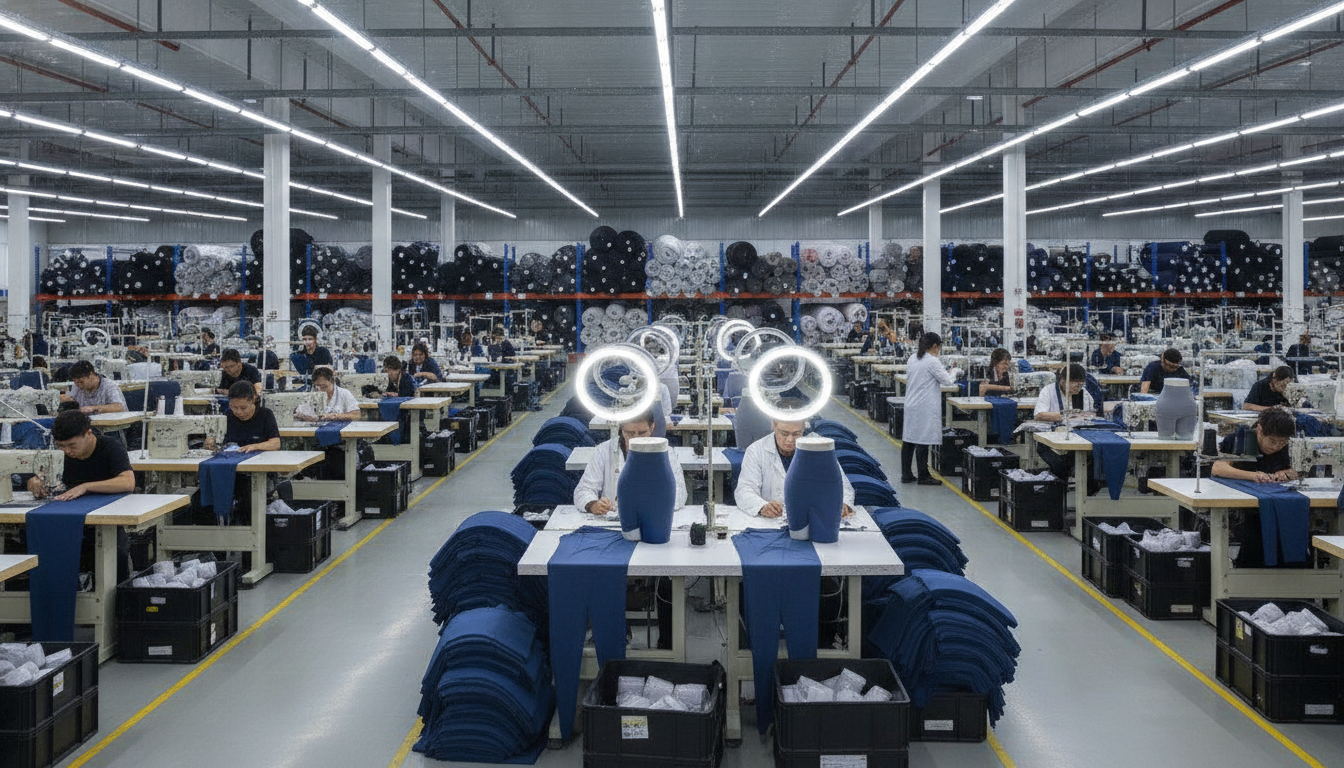
A realistic $1,000 budget for how to start sustainable activewear brand 1000 budget splits across five line items: sampling, first production run, packaging and labels, inbound freight, and a small marketing reserve. Founders who skip detailed costing discover hidden expenses mid-process and run out of cash before the first sellable unit ships.
Allocate $150-$200 for one to three sample iterations. Independent brands frequently struggle to get consistent fit, fabric hand-feel, and squat-proof performance right in the first sample round. A custom yoga apparel manufacturer running 1-piece sample MOQ lets you test a high-waist legging in GRS-certified recycled nylon-spandex, adjust the gusset or waistband construction, and approve final fit before bulk. Sampling time runs 7-10 days per iteration, so budget two rounds to refine seam placement and compression.
Reserve $400-$500 for a 30-piece bulk order in one colorway and three sizes (S, M, L). At a typical $13-$16 per-unit cost for a mid-rise legging in recycled poly-spandex, 30 pieces land around $390-$480. Founders say they need a factory that can handle startup quantities without becoming unreliable once demand increases, so verify the facility runs vertically integrated cut-and-sew with in-house QC rather than outsourcing to subcontractors.
Set aside $100-$150 for woven brand labels, hang tags, poly mailers, and size stickers. Small brands report that sampling, freight, labels, and packaging can consume budget fast. Order labels in quantities of 100-200 to get per-unit costs under $0.50, and choose stock-size recycled poly mailers instead of custom-printed bags to keep packaging spend below $1.50 per unit.
Budget $150-$200 for sea or air freight from the factory to your warehouse or fulfillment center. A 30-piece shipment weighs roughly 6-8 kg; air express from Ningbo to a US address runs $80-$120, while consolidated sea freight drops to $40-$60 but adds 25-35 days. Include estimated duties (activewear typically 16-28% ad valorem for US imports) in your landed-cost calculation.
Hold $50-$100 for initial marketing: Instagram creator seeding (send two sample units to micro yoga influencers), a simple Shopify store setup, or Facebook ad testing. Validation before scale relies on community feedback and preorder conversions, so allocate enough to drive 20-30 site visits and capture email signups before your first drop ships.
Boutique yoga studios building branded apparel lines and DTC founders validating product-market fit should start with one hero product in a single fabric and colorway. Spreading a $1,000 budget across multiple styles dilutes quality control, increases sampling costs, and complicates inventory forecasting.
Pick a high-waist 7/8 legging or a longline sports bra as your anchor product. Both styles have strong repeat-purchase behavior in the yoga and studio fitness segments, and a well-fitted legging serves as proof of your pattern-making and fabric-selection capability. Avoid launching with a full collection; shoppers say some activewear brands look premium online but disappoint in durability, so focus on one style that delivers squat-proof opacity, four-way stretch recovery, and flatlock seam construction.
Choose a GRS-certified recycled nylon-spandex blend (typically 78-82% recycled nylon, 18-22% spandex) or a recycled polyester interlock if you need a softer hand. GRS certification requires at least 20% recycled content and full chain-of-custody documentation, which supports your sustainability claims with verifiable paperwork. Pair the fabric with OEKO-TEX Standard 100 certification to confirm the dye and finish chemistry meet skin-contact safety limits for harmful substances.
Launch in one neutral colorway (black, navy, or charcoal) across three core sizes: S, M, L. A tight size range keeps your 30-piece minimum spread at 10 units per size, enough to test fit feedback and conversion rates without excess stock. Reserve trend colors and extended sizing (XS, XL, XXL) for your second drop after validating demand.
Sample MOQ: 1 piece. Bulk MOQ: 30 pieces per SKU. Sampling time: 7-10 days.
Sustainable fabric sourcing for how to start sustainable activewear brand 1000 budget requires balancing certification costs, minimum yardage, and fabric performance. Founders often assume eco-friendly textiles carry prohibitive premiums, but recycled-content blends now price within 10-15% of virgin polyester when sourced in stock-fabric programs.
Stock fabrics are pre-dyed, pre-finished textiles held in inventory by mills or converters, available in smaller yardage minimums (50-100 meters) without custom-dye setup fees. Custom dyeing requires 500-1,000 meter minimums and adds $200-$400 in lab-dip and strike-off costs. For a 30-piece legging run, stock fabric in black or navy keeps fabric spend under $150 and eliminates the 15-20 day custom-dye lead time.
GRS certification is held at the mill or spinner level, not per order, so verify your sustainable yoga clothing manufacturer sources from GRS-licensed suppliers and can provide transaction certificates (TCs) for traceability. OEKO-TEX Standard 100 testing screens textiles against more than 1,000 harmful substances and costs the mill $1,500-$3,000 annually; you inherit the cert by sourcing certified fabric, with no per-order fee. Request a copy of the OEKO-TEX certificate and GRS scope certificate before approving your fabric selection.
GRS requires a minimum of 20% recycled material content, but many activewear blends now reach 50-80% recycled nylon or polyester. Higher recycled percentages improve your sustainability narrative but typically add 8-12% to fabric cost. Balance recycled content against your retail price target: a $68 legging can absorb the premium, while a $48 price point may require a 50% recycled blend instead of 80%.
Four manufacturing pathways serve founders learning how to start sustainable activewear brand 1000 budget: private-label stock programs, low-MOQ cut-and-sew, print-on-demand platforms, and stock-blank customization. Each pathway trades off control, cost, and speed differently.
Private-label programs offer pre-designed legging and bra styles in stock fabrics, ready for your woven label and hang tag. Minimums run 50-100 pieces per style, higher than a true micro launch but fast (10-15 days from label approval to ship). Per-unit costs drop to $9-$12 for basic styles, leaving more budget for packaging and marketing. The tradeoff is limited design differentiation; your legging silhouette will match other brands using the same stock mold.
A low-MOQ yoga manufacturer running 30-piece minimums per SKU provides full pattern customization, fabric selection, and construction control. Sampling starts at 1 piece, letting you refine waistband height, leg length, and gusset shape before bulk. Per-unit costs run $13-$18 for a mid-complexity legging in recycled nylon-spandex, higher than private label but delivering unique fit and design IP. Lead time spans 25-35 days from sample approval to finished goods, so plan your launch calendar accordingly.
Print-on-demand (POD) services print and ship individual units as orders arrive, eliminating inventory risk but sacrificing margin and sustainability credibility. POD leggings typically use sublimation-printed polyester (not recycled), cost $22-$28 per unit, and carry 7-10 day fulfillment times. POD works for testing graphic prints and niche designs but struggles to support GRS or OEKO-TEX claims because most POD suppliers lack certified fabric and dye programs.
Stock blanks are plain activewear garments (leggings, bras, tanks) you purchase in small quantities (10-20 units) and customize with screen-printed logos, embroidered patches, or heat-transfer labels. Blank leggings cost $8-$14 per unit, and decoration adds $2-$5. This pathway suits boutique yoga studios building branded retail shelves quickly, but fabric and construction quality vary widely across blank suppliers, and sustainability certifications are rare.
In practice: A US yoga brand founder validated three legging styles with 1-piece samples in GRS recycled nylon, then placed a 30-unit-per-SKU first order in black across S/M/L sizes, preserving $400 for reorder inventory and Instagram creator seeding
Validation before scale prevents the common trap of producing 100+ units before confirming demand. Preorder campaigns, community wear-testing, and micro-influencer seeding give you conversion data and fit feedback before committing your full budget to inventory.
Launch a 10-14 day preorder window offering your hero legging at a 15-20% early-bird discount. Set a minimum order threshold (15-20 units) to trigger production; if you hit the threshold, use preorder revenue to fund part of your bulk order and reduce out-of-pocket cash. If you miss the threshold, refund deposits and revise your product or positioning before trying again. Preorder platforms like Kickstarter, Indiegogo, or a Shopify preorder app handle payment holds and fulfillment logistics.
Send 5-8 sample units to local yoga instructors, studio owners, or fitness micro-influencers in exchange for structured feedback on fit, opacity during movement, waistband comfort, and fabric recovery after washing. Ask testers to complete a Google Form covering squat-proof performance, sizing accuracy, and purchase intent at your target retail price. Aggregate feedback into a simple scorecard (fit, fabric, value) and adjust your pattern or fabric weight before bulk production.
Identify 3-5 yoga or activewear creators with 2,000-10,000 followers and strong engagement rates (4-8% likes-per-post). Send each a sample unit with a personalized note explaining your sustainability story and asking for an honest review post or Story. Track referral traffic and discount-code usage to measure conversion. Micro-influencer seeding costs $50-$100 in product and shipping but delivers social proof and early sales momentum.
Unit economics determine whether your $1,000 launch can fund a second production run from first-drop revenue. Founders often underestimate landed cost or set retail prices too low to cover reorder inventory and marketing.
Landed cost includes production cost, packaging, freight, and duties. For a 30-piece legging order at $15 per unit, packaging at $1.50, and freight plus duties at $6 per unit, your landed cost is $22.50. Add a $2 per-unit allocation for payment processing and fulfillment (Shopify fees, shipping to customer), bringing total cost to $24.50 per sale.
Price your hero legging at $58-$68 to compete with mid-tier DTC activewear brands while preserving margin for reorders. At a $64 retail price and $24.50 landed cost, your gross margin is $39.50 per unit (62% margin). After allocating $8-$12 per sale for customer acquisition (ads, influencer gifting, discounts), your net contribution is $27.50-$31.50 per unit.
To break even on your $1,000 initial investment, you need to sell 18-20 units at full retail price ($1,000 ÷ $50 average net contribution). Your remaining 10-12 units provide reorder capital: selling all 30 pieces generates roughly $1,200-$1,400 in net contribution, enough to fund a 50-60 piece second order and increase your marketing budget to $200-$300.
Starting an activewear brand requires $1,000-$5,000 depending on your manufacturing pathway and initial order size. A $1,000 budget covers 1-3 sample iterations, a 30-piece bulk order in one style and colorway, packaging and labels, inbound freight, and a small marketing reserve. Founders using low-MOQ cut-and-sew manufacturers with 30-piece minimums can validate product-market fit without tying up capital in excess inventory, while private-label programs requiring 50-100 piece minimums push startup costs to $2,000-$3,000.
Yes, you can start a clothing brand with $1,000 by focusing on one hero product, using stock fabrics to avoid custom-dye minimums, and partnering with a yoga clothing manufacturer for startups that offers 1-piece sample MOQ and 30-piece bulk minimums. Allocate $150-$200 for sampling, $400-$500 for a 30-unit first production run, $100-$150 for packaging and labels, $150-$200 for freight and duties, and $50-$100 for marketing. Preorder campaigns and community wear-testing validate demand before committing your full budget to inventory.
The cheapest way to start a sustainable fashion brand is to source GRS-certified recycled fabrics in stock colorways, launch with one core style in three sizes, and use a low-MOQ manufacturer with 30-piece bulk minimums. Stock fabrics eliminate custom-dye setup fees and 500-1,000 meter minimums, while GRS and OEKO-TEX certifications held at the mill level let you inherit sustainability credentials without per-order testing costs. Focus on a high-waist legging or longline sports bra in black or navy recycled nylon-spandex to maximize repeat-purchase potential and simplify quality control.
Find a manufacturer for activewear by searching for vertically integrated facilities with in-house pattern studios, cut-and-sew lines, and QC departments that run low startup minimums. Request sample portfolios showing squat-proof leggings and sports bras in recycled or performance fabrics, verify GRS and OEKO-TEX certifications with scope certificates, and confirm sample MOQ (1 piece ideal) and bulk MOQ (30-50 pieces per SKU for micro launches). Ask for references from other DTC founders or boutique brands to validate consistent quality and reliable lead times as order volumes increase.
Minimum order quantity for activewear varies by manufacturing pathway: low-MOQ cut-and-sew manufacturers offer 30 pieces per SKU, private-label stock programs require 50-100 pieces per style, and traditional OEM factories set minimums at 300-500 pieces per colorway. For founders learning how to start sustainable activewear brand 1000 budget, a 30-piece MOQ per SKU enables a realistic first drop across three sizes (S, M, L) in one colorway without locking up capital in unsold inventory. Sample MOQ of 1 piece allows fit and fabric testing before committing to bulk production.
Ready to launch your sustainable activewear brand without locking up cash in high minimums?
Request 1-Piece Samples →
Written by the Walundi Export Team.
Sample 1 piece · bulk from 30 · OEKO-TEX & GRS certified · reply in 24h. No gatekeeping.
Low MOQ. Sustainable fabrics. OEM ready. Tell us your vision.
Click the button below to open WhatsApp. If you're not logged in to WhatsApp Web yet, scan the QR code first — then come back here and copy the message into the chat.