
When you search for a sample turnaround time activewear 7 days, most factory websites promise fast prototyping. But founders quickly discover the real clock starts later than expected-often only after tech packs, fabric swatches, and payment clear. The difference between a headline turnaround and a landed sample can stretch from one week to six, depending on what you send on day zero and where the factory ships from.
Factories advertise sample turnaround time activewear 7 days, but the clock does not start when you send an email. It starts when the manufacturer receives every input needed to cut fabric and sew a prototype. Buyers who skip this clarity often wait three weeks for a sample they expected in one.
To hit a true 7-day window, the manufacturer must have all of the following before production begins:
When any of these inputs arrive late or incomplete, the 7-day countdown pauses. A common scenario: a founder sends a sketch and fabric idea on Monday, the factory requests a tech pack, the founder hires a designer, the tech pack arrives Friday, and the actual sampling begins the following Monday-already six business days after the initial inquiry.
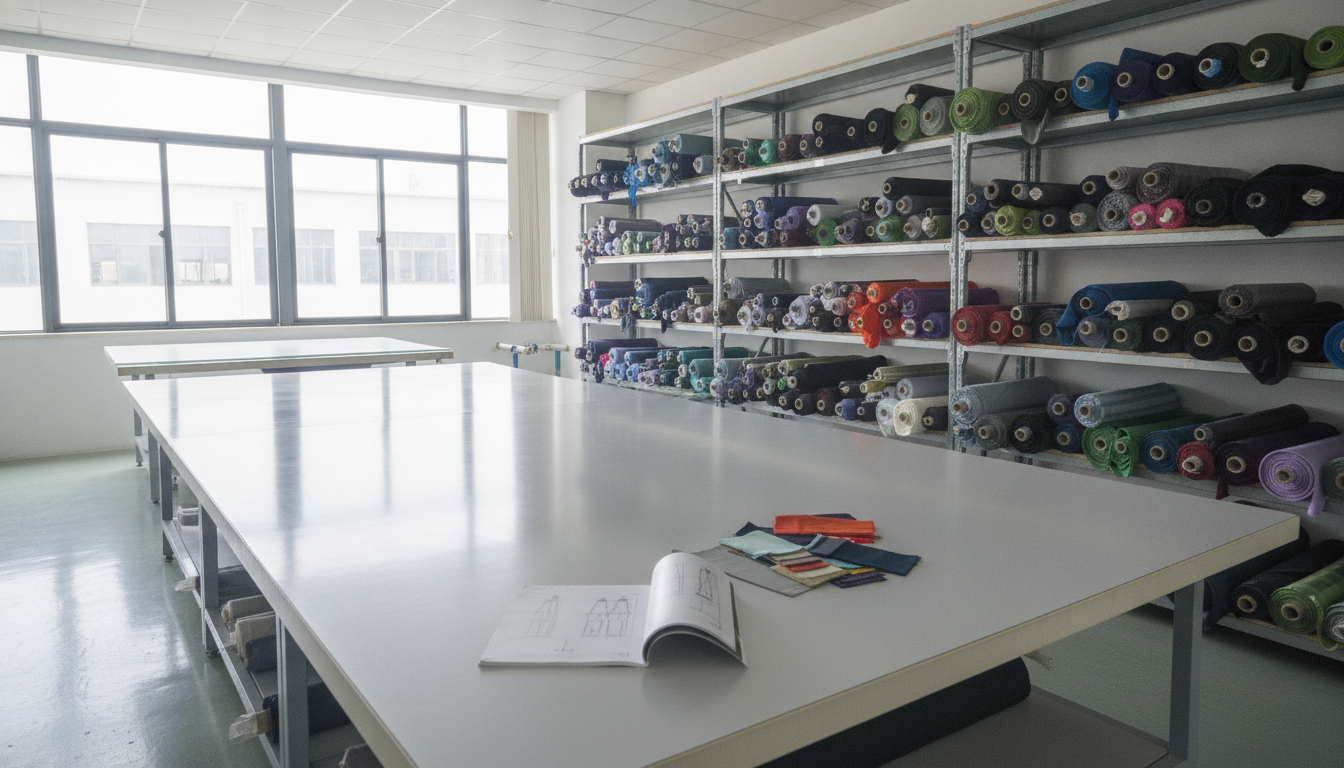
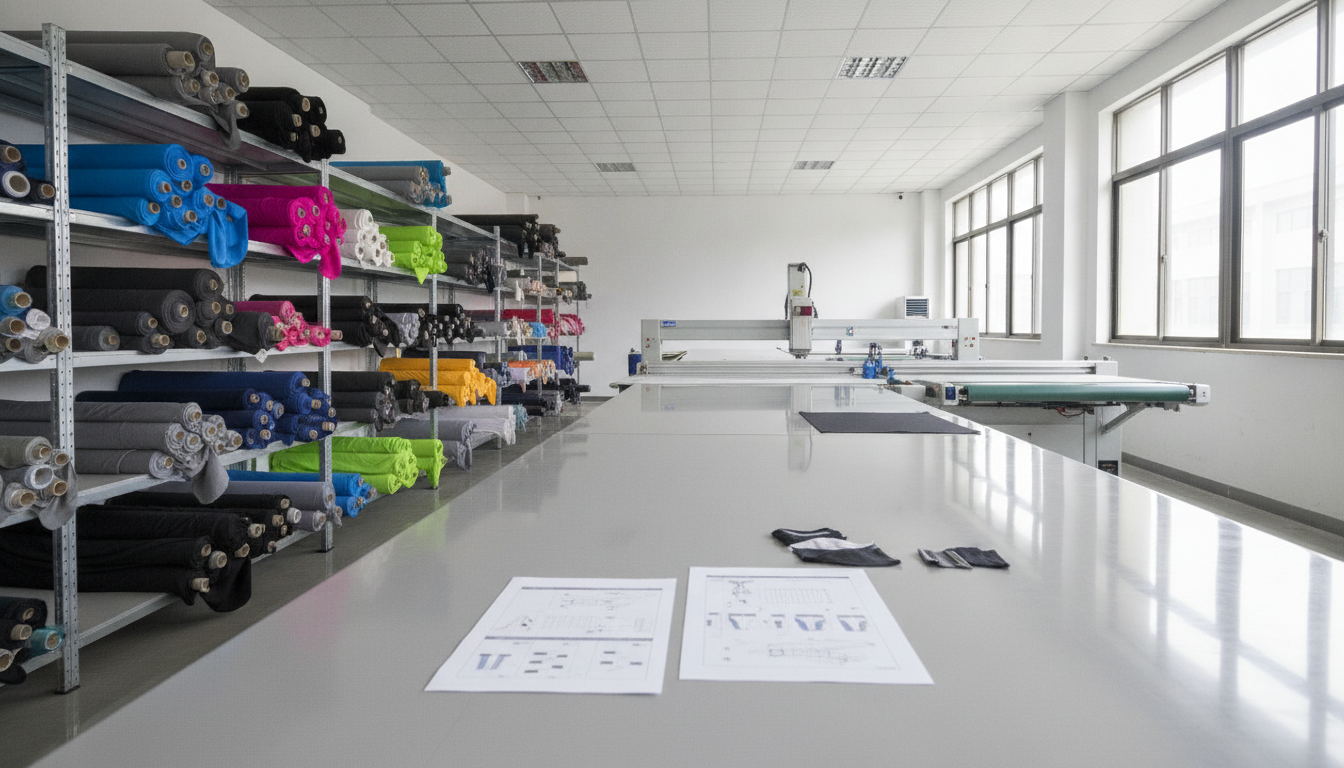
The sample turnaround time activewear 7 days promise hinges on fabric availability. Factories with vertically integrated operations and in-house fabric libraries can pull stock nylon-spandex blends, recycled polyester jerseys, or brushed interlock from inventory and begin cutting immediately. Custom-dyed fabrics, specialty prints, or materials sourced from external mills add 10-21 days before the sample clock even starts.
At our 18,000m² Yiwu facility, we maintain a rotating stock of GRS-certified recycled polyester, OEKO-TEX Standard 100 tested nylon blends, and organic cotton French terry specifically to support rapid sampling for custom yoga apparel projects. When a founder selects from this library, the 7-day window is realistic. When they request a custom Pantone dye lot or a new jacquard knit, we quote 18-25 days to source, dye, test, and receive the material before sampling begins.
Not every garment is a candidate for rapid prototyping. Complexity, fit sensitivity, and trim count determine whether a 7-day target is feasible or sets the project up for rushed mistakes.
Founders often underestimate the iteration risk. A startup apparel brand may receive a 7-day sample that fits the tech pack but fails the squat test or rides up during movement. The second sample, incorporating fit corrections, takes another 7-10 days, meaning the total validation cycle stretches to three weeks even when the factory executes quickly.
A fast sample does not guarantee a fast launch. Bulk production timelines are structurally different from sampling, and conflating the two is one of the most common planning mistakes new brands make.
Sampling involves a single garment or a small size run sewn by a senior sample-room technician. Bulk production requires fabric procurement at scale, cutting-room efficiency, assembly-line coordination, and multi-stage quality control. The processes are not comparable.
Founders validating product-market fit need to map the full timeline from sample request to delivered inventory, not just the sample turnaround time activewear 7 days window:
Total time from initial sample request to inventory in hand: 14-15 weeks when everything runs smoothly, 18-20 weeks when revisions or fabric delays occur. The 7-day sample is just the first gate.
In practice: A California yoga studio owner requested samples of three legging styles with stock nylon-spandex fabric, received them in 9 days (7 days production + 2 days FedEx), approved one style, and placed a 90-piece bulk order (30 per size S/M/L). The bulk order took 38 days to produce and shipped via ocean freight, arriving at her Long Beach warehouse 52 days after sample approval.
The sample leaves the factory in 7 days, but it does not land on your desk in 7 days. Shipping and customs add material time, and the variance between regions is significant.
Our Yiwu facility coordinates all outbound shipments through Ningbo port, approximately 200 kilometers east. Courier pickups occur daily, and transit times to major markets are:
Customs clearance is typically included in the courier timeline for samples under the de minimis threshold (USD 800 for the U.S., GBP 135 for the U.K., EUR 150 for the EU, AUD 1,000 for Australia). Samples above these values trigger formal customs entry, adding 1-3 days and requiring commercial invoices and HS code classification.
Once the sample is approved and the bulk order is placed, shipping method becomes the final variable in total lead time:
Brands optimizing for speed often air-freight the first 100-200 pieces to validate market response, then switch to ocean freight for reorders. This hybrid approach balances the sample turnaround time activewear 7 days advantage with cost-effective scaling.
Even when the factory executes flawlessly, external dependencies and approval bottlenecks can extend timelines beyond the quoted window. Buyers who understand these risks plan buffer time into their launch calendars.
The first sample rarely fits perfectly. Compression leggings may gap at the waist, sports bras may ride up, or inseam length may need adjustment. Each revision cycle adds 7-10 days, and brands validating a full size run (XS through XL) often need two or three iterations before approving bulk production.
Founders can reduce revision risk by providing detailed fit preferences upfront: rise height in centimeters, preferred compression level (light/medium/firm), and movement-test criteria (squat-proof opacity, no camel-toe, stays in place during downward dog). The more specific the initial tech pack, the fewer surprises in the sample.
Custom colors and prints require approval steps before bulk fabric production begins. A lab dip is a small swatch dyed to match a Pantone reference, and a strike-off is a printed sample showing pattern placement and color accuracy. Each approval step adds 5-7 days to the pre-production timeline.
Brands working with sustainable yoga clothing manufacturers face additional lead time when using low-impact dyes or recycled fibers, as these materials often require longer processing windows and third-party certifications before fabric release.
Factories do not start sampling until payment clears, and international wire transfers can take 2-4 business days depending on the buyer’s bank and intermediary routing. Brands using PayPal, Wise, or Payoneer often see faster clearing times (same-day to 1 business day), but transaction fees are higher.
Approval delays on the buyer side are equally common. A founder receives the sample, shares it with a co-founder or advisor, waits for feedback, then requests minor changes. That internal decision cycle can stretch a 7-day sample into a 21-day validation process through no fault of the manufacturer.
Founders often assume domestic manufacturing is faster than overseas production, but more nuanced. Domestic factories in the U.S., U.K., or Australia may offer shorter shipping times, but their sampling and bulk production lead times are often longer due to higher labor costs, smaller production runs, and less vertical integration.
Vertically integrated factories in China, Vietnam, or Bangladesh maintain in-house fabric mills, dye houses, and trim suppliers, enabling true 7-day sampling when materials are in stock. The trade-off is longer shipping and potential communication friction, but for brands prioritizing cost and scalability, the total landed cost and bulk production efficiency often outweigh the shipping delay.
In our 12+ years manufacturing yoga apparel in Yiwu, we have seen DTC founders successfully launch with both domestic and overseas partners. The decision hinges on order volume, budget, and whether the brand values speed-to-sample or speed-to-scale. A low MOQ yoga manufacturer with in-house fabric stock and daily courier pickups can deliver a landed sample to Los Angeles in 10-11 days total (7 days production + 3-4 days FedEx), which is competitive with many domestic shops once their batching delays are factored in.
Not every brand needs a 7-day sample. The value of speed depends on where the founder is in the product-development cycle and how much iteration risk they are willing to accept.
Founders who answer yes to the first three questions and have a clear launch timeline are ideal candidates for rapid sampling. Those still iterating on design or fabric benefit more from a manufacturer who offers design support and collaborative development, even if sampling takes 10-14 days.
Yes, a clothing sample can be made in 7 days when the tech pack is complete, fabric is in stock, and payment has cleared. The 7-day window starts after the factory receives all inputs needed to cut and sew the prototype, not from the initial inquiry. Complex garments, custom fabrics, or incomplete specs extend the timeline to 10-15 days or more.
Activewear sampling typically takes 7-10 days for basic styles like leggings or sports bras when fabric is in stock, and 10-15 days for complex pieces such as seamless knit or garments with multiple trims. Custom fabric sourcing, lab dips, or print strike-offs add 10-21 days before sampling begins. Shipping adds 3-7 days depending on destination.
Sample turnaround slows when the tech pack is incomplete, fabric needs custom dyeing or sourcing, trims require approval, or payment processing delays. Fit revisions, lab dip approvals, and print strike-offs each add 5-10 days. Founders who finalize all specs, select stock fabrics, and pay upfront avoid most delays and hit 7-10 day windows consistently.
Overseas manufacturers with vertically integrated facilities and in-house fabric libraries often achieve 7-day sampling more consistently than domestic shops, which may batch samples weekly or rely on external fabric suppliers. Domestic factories offer shorter shipping (1-3 days versus 5-7 days) but often have longer production queues and higher sample costs. Total landed time can be similar once batching delays are factored in.
To get a fast sample quote, send a complete tech pack with graded specs, fabric swatch or stock fabric selection, trim and hardware details, label artwork files, and your preferred shipping method. Factories can quote accurately within 24-48 hours when all inputs are provided. Missing any of these elements delays the quote and extends the overall timeline.
Written by the Walundi Export Team.
Ready to validate your activewear designs without locking up cash in large minimums?
Request a 1-Piece Sample Quote →
Sample 1 piece · bulk from 30 · OEKO-TEX & GRS certified · reply in 24h. No gatekeeping.
Low MOQ. Sustainable fabrics. OEM ready. Tell us your vision.
Click the button below to open WhatsApp. If you're not logged in to WhatsApp Web yet, scan the QR code first — then come back here and copy the message into the chat.