
📋 Table of Contents
When you’re building a yoga or activewear brand, finding an oeko-tex standard 100 certified leggings factory china that actually delivers on compliance, quality, and reasonable minimums can feel like searching for a needle in a haystack. Buyers consistently report two frustrations: factories advertise certifications without providing verifiable certificate numbers, and many suppliers focus on generic marketing claims while leaving out the technical details you need to make a sourcing decision.
This guide walks through the verification workflow, technical specifications, MOQ realities, and cost structures you should expect when sourcing OEKO-TEX Standard 100 certified leggings from China in 2026.
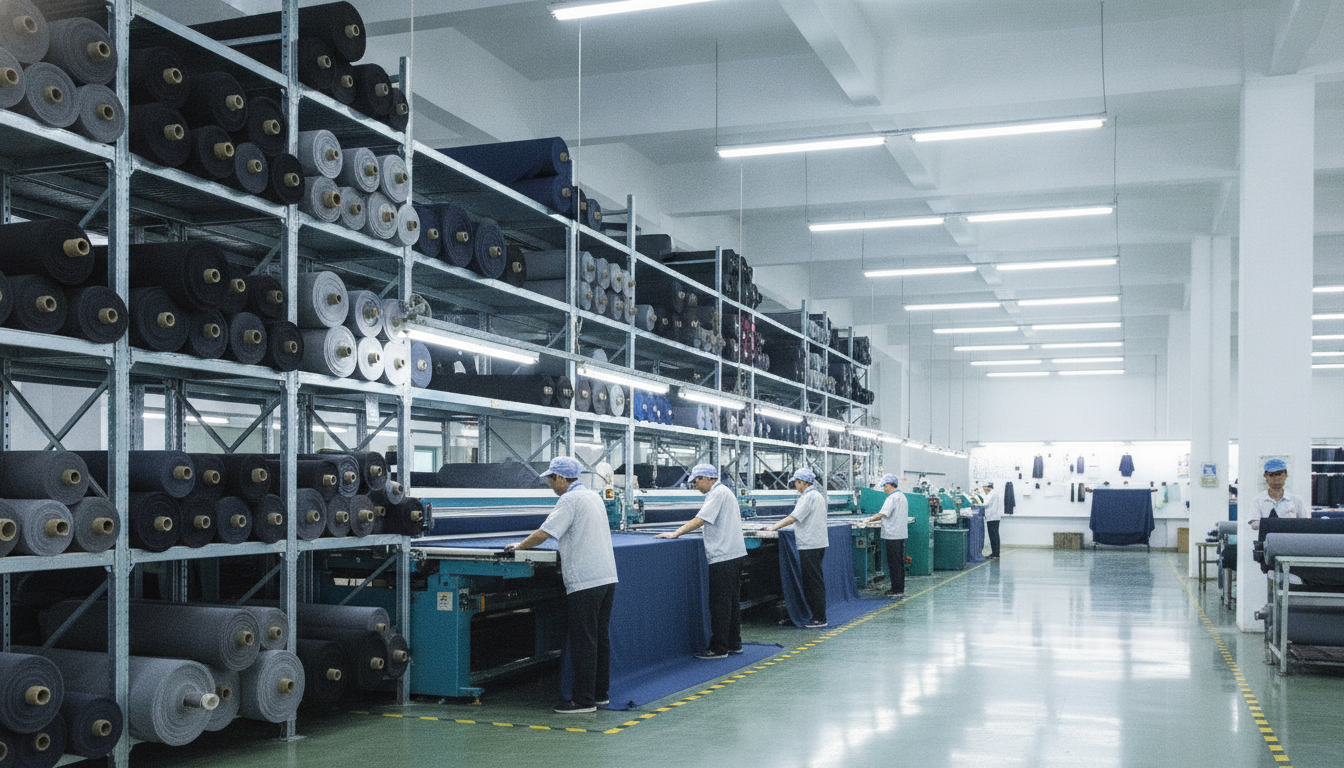
OEKO-TEX Standard 100 is an independent textile testing and certification system that verifies fabrics and finished garments are free from harmful substances. The certification applies to every component of a product, including fabric, thread, zippers, elastic waistbands, and printed or dyed finishes.
OEKO-TEX Standard 100 divides products into four classes based on end-use intensity:
Most yoga and activewear leggings fall under Product Class II, which means they must meet limits for pH value, formaldehyde, extractable heavy metals, pesticides, chlorinated phenols, and organotin compounds.
An oeko-tex standard 100 certified leggings factory china holds a certificate that lists specific product categories, fabric types, and sometimes even color ranges. Certificates are valid for 12 months from the date of issue and must be renewed annually with fresh testing. Buyers often discover that a factory’s certificate covers polyester jersey for T-shirts but not the nylon-spandex blend used in leggings, which creates a compliance gap.
Verification is the step most buyers skip, and it’s the reason many brands unknowingly source from factories with expired or mismatched certificates. Buyers report that some suppliers claim OEKO-TEX compliance but provide only a screenshot or badge, which is not sufficient proof.
Ask the factory for a PDF copy of the complete OEKO-TEX Standard 100 certificate. The document should include:
Visit the OEKO-TEX Label Check portal at oeko-tex.com/label-check and enter the certificate number. The database will confirm whether the certificate is current, expired, or non-existent. If the factory’s certificate number does not appear in the search results, the certification is invalid.
A factory may hold a valid OEKO-TEX certificate for woven fabrics but not for the knit nylon-spandex blend you need for leggings. Read the product scope section carefully. If your fabric type or GSM falls outside the listed range, the certificate does not cover your order, and the factory must submit new samples for testing before you can claim OEKO-TEX compliance on your finished goods.
If you’re introducing a custom fabric blend, ask the factory whether they’ve already tested it under their existing certificate or whether they need to submit it as a new sample. Testing typically takes 4 to 6 weeks and costs between $800 and $1,500 per fabric type, depending on the number of colorways.
OEKO-TEX certification proves chemical safety, but it doesn’t guarantee squat-proof opacity, stretch recovery, or seam durability. Buyers consistently mention that many factory pages focus on certifications without stating the technical details needed to evaluate production fit for leggings.
GSM (grams per square meter) is the primary indicator of fabric density and squat-proof performance. Leggings intended for yoga, barre, or high-intensity interval training should use fabrics in the 240 to 320 GSM range. Fabrics below 220 GSM often become see-through during deep squats, while fabrics above 340 GSM can feel stiff and restrict movement.
Leggings fabrics typically blend nylon or polyester with spandex (also called elastane or Lycra). A common ratio is 80% nylon and 20% spandex, which provides four-way stretch and good recovery. Fabrics with less than 15% spandex may lose shape after repeated wear and washing, leading to sagging knees and a baggy waistband.
A diamond-shaped gusset panel sewn into the crotch area reduces seam stress and improves comfort during lunges, squats, and splits. Buyers looking to differentiate their brand often specify gusset construction as a non-negotiable feature, but many factories omit it to save on labor cost unless explicitly requested.
High-waisted leggings with a 7 to 9 cm waistband are the most popular style for yoga and activewear. The waistband should include a hidden elastic or silicone gripper to prevent roll-down during movement. Some brands add a small interior pocket for keys or cards, which requires an additional pattern piece and increases cut-and-sew time by 1 to 2 minutes per unit.
Minimum order quantities remain one of the biggest barriers for early-stage brands. Many China-based factories set MOQs at 300 to 1,000 pieces per color per style, which locks up significant cash before a founder has validated product-market fit. Buyers frequently mention that high MOQs force them to choose between overbuying inventory and settling for less customized products.
Most custom yoga apparel manufacturers in China operate on a tiered MOQ model:
A small number of vertically integrated facilities offer low-MOQ production designed for DTC founders and boutique studios. At Walundi’s 18,000m² Yiwu facility, we run Sample MOQ of 1 piece and Bulk MOQ of 30 pieces per SKU, which allows founders to validate three or four legging styles without committing to 1,000+ units upfront.
Pre-production samples from a vertically integrated factory with in-house pattern-making and cut-and-sew typically require 7 to 10 days. Factories that outsource pattern work or fabric sourcing may need 14 to 21 days. Sample costs range from $30 to $80 per piece, depending on fabric complexity, print or dye requirements, and whether the factory needs to create a new pattern or can adapt an existing block.
Sample MOQ: 1 piece. Bulk MOQ: 30 pieces per SKU. Sampling time: 7-10 days.
Understanding the full cost structure helps founders budget accurately and avoid surprises during the sampling and first-production phases. Buyers often focus on the per-unit FOB price but overlook certification fees, pattern development, and pre-production sample costs.
If you’re working with a factory that provides private-label services, pattern development is usually included in the sampling fee. If you’re bringing a custom design, expect to pay $150 to $400 for a new pattern, graded across 4 to 6 sizes. Tech pack creation, if outsourced to a freelance designer, typically costs $200 to $500 per style.
OEKO-TEX certified nylon-spandex fabrics in the 240 to 280 GSM range cost approximately $4.50 to $6.50 per meter when purchased in bulk (500+ meters). Trims, including elastic waistband, care labels, and hang tags, add $0.30 to $0.80 per unit. Factories typically require a minimum fabric purchase of 300 to 500 meters per color, which covers approximately 200 to 300 pairs of leggings, depending on size distribution.
Cut-and-sew labor for a standard pair of yoga leggings with a gusset, flatlock seams, and a high waistband ranges from $2.80 to $4.20 per unit in China’s Zhejiang and Guangdong provinces. Labor costs have risen approximately 8% to 12% over the past three years due to wage increases and stricter labor-compliance requirements under BSCI and other social-responsibility audits.
If your fabric is not already covered under the factory’s existing OEKO-TEX certificate, you’ll need to budget for testing. OEKO-TEX Standard 100 testing costs between $800 and $1,500 per fabric type, and results take 4 to 6 weeks. Some factories absorb this cost for orders above 1,000 pieces, but most pass it through to the buyer for smaller runs.
For a founder ordering 100 pieces of a single legging style in two colors (50 pieces per color), the total first-order investment typically falls between $1,200 and $1,800, including samples, pattern development, and production. This assumes the factory’s existing OEKO-TEX certificate already covers your fabric type. If new testing is required, add $800 to $1,500 to the total.
In practice: A California-based yoga brand founder validated three legging styles with 1-piece samples from Walundi’s Yiwu facility, then placed a 30-unit-per-SKU first order (90 pieces total across three styles) without locking up cash in 1,000+ unit minimums. The founder used the remaining budget to test three additional colorways in the second production run.
OEKO-TEX Standard 100 is an independent textile testing and certification system that verifies fabrics and finished garments are free from harmful substances. The certification screens products against more than 1,000 chemicals, including formaldehyde, heavy metals, pesticides, and restricted dyes. Certificates are valid for 12 months and must be renewed annually with fresh testing. Most yoga and activewear leggings fall under Product Class II, which applies to products with direct skin contact.
Request a PDF copy of the complete OEKO-TEX Standard 100 certificate from the factory, which should include the certificate number, issue and expiration dates, product scope, and certificate holder name. Visit the OEKO-TEX Label Check portal at oeko-tex.com/label-check and enter the certificate number to confirm whether the certificate is current, expired, or non-existent. Read the product scope section carefully to ensure your fabric type and GSM fall within the listed range. If your fabric is not covered, the factory must submit new samples for testing before you can claim OEKO-TEX compliance on your finished goods.
Most China-based leggings factories set MOQs at 300 to 1,000 pieces per color per style for first production runs. Reorder MOQs are often reduced to 200 pieces per color once the factory has your patterns and specs on file. A small number of vertically integrated facilities offer low-MOQ production designed for DTC founders and boutique studios, with bulk MOQs as low as 30 pieces per SKU. Sampling MOQs typically range from 1 to 5 pieces per style, charged at 2x to 3x the bulk unit price.
Start by verifying certifications in public databases, such as the OEKO-TEX Label Check portal and the Global Recycled Standard certificate search. Request references from brands in your target market and ask for photos or videos of the factory’s cut-and-sew lines, pattern studio, and QC area. Order pre-production samples to evaluate seam quality, fit consistency, and fabric performance before committing to a bulk order. Look for factories with vertically integrated capabilities, including in-house pattern-making, fabric sourcing, and quality control, which reduce lead times and communication handoffs.
OEKO-TEX Standard 100 certified leggings are tested to ensure they are free from harmful substances that can cause skin irritation, including formaldehyde, heavy metals, pesticides, and restricted dyes. Products that fall under Product Class II, which applies to items with direct skin contact, must meet strict pH value and chemical residue limits. OEKO-TEX certification does not guarantee hypoallergenic properties, but it significantly reduces the risk of chemical-related skin reactions. Buyers with customers who have sensitive skin should also verify that the factory uses low-impact or natural dyes and avoids harsh finishing treatments.
Written by the Walundi Export Team.
Ready to source OEKO-TEX Standard 100 certified leggings with verified compliance and low MOQs?
Request 1-Piece Samples →
Sample 1 piece · bulk from 30 · OEKO-TEX & GRS certified · reply in 24h. No gatekeeping.
Low MOQ. Sustainable fabrics. OEM ready. Tell us your vision.
Click the button below to open WhatsApp. If you're not logged in to WhatsApp Web yet, scan the QR code first — then come back here and copy the message into the chat.