📋 Table of Contents
Starting a yoga apparel line means navigating dozens of factory options, each promising low minimums and fast turnarounds. The wrong questions to ask a yoga clothing factory before starting can lock you into a 100% upfront payment with no sample approval, or a 15% defect rate the supplier calls “normal range.” This guide walks through the exact questions that protect your capital, quality standards, and brand reputation when sourcing leggings, sports bras, and matching sets from overseas manufacturers.
The first questions to ask a yoga clothing factory before starting center on order minimums and sampling costs. A common complaint buyers raise is that manufacturers lock them into 500-unit minimums across multiple SKUs before they’ve validated product-market fit. This ties up capital and leaves founders with unsold inventory if the first design doesn’t resonate.
Ask the factory to clarify sample minimum order quantity separately from bulk production minimums. Professional manufacturers offer 1-piece sample MOQs so you can test fabric hand-feel, squat-proof opacity, and size grading without committing to full production. Sample costs typically range from $25 to $80 per piece depending on construction complexity, with sports bras at the higher end due to multi-panel cutting and elastic insertion.
Request a breakdown of what the sample cost covers. Some factories charge a flat fee that’s refundable against your first bulk order, while others charge per-piece and keep the fee regardless. Clarify turnaround time for samples as well. A 7-10 day sampling window is standard for custom yoga apparel manufacturer operations with in-house pattern studios, while factories relying on external contractors may stretch to 15-20 days.
Once samples are approved, bulk minimums determine your first order size. Ask whether the factory quotes MOQ per style, per colorway, or per size run. A 30-piece-per-SKU minimum means you can order 30 black leggings in sizes XS-XL without ordering 30 of every color. A 300-piece total minimum might force you to order across multiple styles to hit the threshold.
In practice: A California DTC yoga brand validated three legging styles with 1-piece samples, then placed a 30-unit-per-SKU first order across two colorways without locking up $15,000 in untested inventory
Clarify whether the factory allows mixed-size ratios within each SKU. Some manufacturers require equal quantities per size (10 pieces each in XS, S, M, L, XL), while others let you weight toward your best-selling sizes (5 XS, 10 S, 15 M, 8 L, 2 XL). This flexibility prevents overstocking sizes that don’t move.
Ask if the factory offers MOQ reductions for repeat orders or multi-style commitments. A supplier might drop from 100 to 50 pieces per SKU if you commit to ordering three styles simultaneously. Vertically integrated facilities with in-house fabric knitting and dyeing often have more MOQ flexibility than cut-and-sew-only operations that purchase pre-dyed fabric in minimum rolls.
Quality failures destroy brand reputation faster than any other sourcing mistake. The questions to ask a yoga clothing factory before starting must include specific QC protocols and contractual defect thresholds. One buyer reported receiving production leggings with a 15% defect rate, only to have the factory claim it was “within normal range.”
Ask which Acceptable Quality Limit (AQL) standard the factory follows. AQL 2.5 is the industry benchmark for activewear, allowing 2.5 defects per 100 pieces for major issues (non-functional zippers, fabric holes, misaligned seams) and 4.0 defects per 100 for minor issues (loose thread ends, slight color variation). Factories claiming AQL 4.0 or no formal AQL protocol present higher risk.
Request a copy of the factory’s inspection checklist. Professional manufacturers inspect every garment for squat-proof opacity (holding fabric against light), four-way stretch recovery (stretching fabric to 150% and checking snapback), and flatlock stitch tension (tugging seams to verify no puckering). Factories without written checklists often skip steps under production pressure.
Ask whether the factory conducts in-process inspections during cutting, sewing, and finishing stages, or only final inspections after garments are packed. In-process QC catches issues early, reducing the defect rate in finished goods. Final-only inspection means defective pieces are already sewn and can’t be corrected without full rework.
Ask the factory to include a written defect rate threshold in your contract. A standard clause might state that if defects exceed 3% of the order, the factory will replace defective units at no cost or issue a pro-rated refund. Without this clause, you have no recourse when a batch arrives with 10% unusable pieces.
Clarify who pays for third-party inspection if you hire an independent QC firm. Some factories cover inspection costs if defects exceed the agreed threshold, while others require buyers to pay upfront regardless of results. This distinction matters when budgeting for your first order.
Payment structure determines your financial risk. The questions to ask a yoga clothing factory before starting must address deposit percentages, payment timing, and refund policies. One founder reported a factory demanding 100% upfront payment before producing a single sample, a red flag for potential fraud.
Ask what percentage deposit the factory requires to start production. Industry-standard terms are 30% deposit on order confirmation, 70% balance on pre-shipment inspection approval. Some factories request 50% upfront, which is acceptable if they provide production progress photos and allow third-party inspection before final payment.
Avoid factories demanding 100% payment before production starts or before you approve pre-production samples. This structure offers zero buyer protection and is common among shell companies that collect payments and disappear. Legitimate manufacturers understand that buyers need to verify quality before releasing full payment.
Ask which payment methods the factory accepts. Wire transfer (T/T) is standard for established suppliers but offers no chargeback protection. PayPal and Alibaba Trade Assurance provide dispute resolution if the factory fails to deliver as promised, though they add 2-4% transaction fees.
Ask what happens to your deposit if you need to cancel the order before production starts, or if samples don’t meet your specifications. Some factories refund 50-70% of the deposit if you cancel within 48 hours of order confirmation, while others keep the full amount to cover administrative costs and fabric reservation.
Clarify the refund process if the factory delivers defective goods. A professional supplier will state in writing that if defects exceed the agreed AQL threshold, they’ll either replace the defective units at their expense or refund the pro-rated cost. Factories that refuse to put this in writing present high risk.
Certifications verify that a factory meets environmental, safety, and labor standards. The questions to ask a yoga clothing factory before starting must include requests for certification documents and audit reports. Buyers increasingly face scrutiny from customers and retailers about supply chain ethics.
Ask if the factory holds OEKO-TEX Standard 100 certification for their fabrics. This certification screens textiles against more than 1,000 harmful substances, including formaldehyde, heavy metals, and azo dyes. Factories providing OEKO-TEX certificates can prove their fabrics are safe for direct skin contact, a key selling point for yoga apparel worn during sweaty workouts.
Request a copy of the certificate and verify it on the OEKO-TEX website. Some suppliers show expired certificates or certificates issued to a different facility. The certificate should list the specific fabric types covered (polyester-spandex blends, nylon-spandex, recycled polyester) and the issuing date within the past 12 months.
If you plan to market sustainable or recycled-content leggings, ask whether the factory is GRS-certified. The Global Recycled Standard requires a minimum of 20% recycled material content before a product can carry the GRS label. The certification also audits the factory’s chemical use, water treatment, and social responsibility practices.
GRS certification involves annual third-party audits, so factories cannot fake it. Request the factory’s GRS scope certificate, which lists the product categories covered (cut-and-sew apparel, knitted fabrics, etc.) and the certificate’s expiration date. A valid GRS certificate lets you legally market products as “GRS-certified recycled polyester” and appeal to eco-conscious buyers.
Ask if the factory has passed a Business Social Compliance Initiative (BSCI) audit or equivalent labor-standards assessment. BSCI audits cover working hours, wages, health and safety, and the prohibition of child labor. Factories with recent BSCI audit reports (within the past 12 months) demonstrate they meet European retailer requirements for ethical sourcing.
Request a copy of the most recent audit report. The report will grade the factory on 13 performance areas and flag any non-compliances. A factory that refuses to share audit results or claims audits are “confidential” may be hiding poor labor practices. Reputable manufacturers understand that buyers need this documentation to satisfy their own customers and retail partners.
Production delays disrupt product launches and marketing campaigns. The questions to ask a yoga clothing factory before starting must nail down exact timelines and written penalties for late delivery. One brand reported a 45-day delay blamed on “seasonal busy time” that the factory never disclosed upfront.
Ask how many days the factory needs to produce and ship pre-production samples after you submit your tech pack. A low MOQ yoga manufacturer with in-house pattern-making typically delivers samples in 7-10 days. Factories outsourcing pattern work or fabric sourcing may require 15-20 days.
Clarify whether the quoted sampling time includes shipping to your location or only production time. A factory quoting “7 days” might mean 7 days to produce plus 5-7 days for international courier, totaling 12-14 days door-to-door. Misunderstanding this can throw off your product development schedule.
Ask for a written production timeline from deposit payment to shipment. Standard bulk production for yoga apparel spans 25-35 days for orders under 1,000 units, assuming the factory has your fabric in stock or can source it within 7 days. Orders requiring custom fabric dyeing or printing add 10-15 days.
Request a breakdown of the production phases: fabric procurement (5-7 days), cutting (2-3 days), sewing (10-15 days), quality inspection (2-3 days), and packing (1-2 days). This breakdown helps you identify where delays are most likely and plan contingencies.
Ask about the factory’s current production capacity and peak busy seasons. A facility running at 90% capacity may struggle to meet your deadline if a larger client places an order simultaneously. Factories in China typically face peak demand from August to October (preparing for Western holiday season) and February to April (preparing for summer activewear).
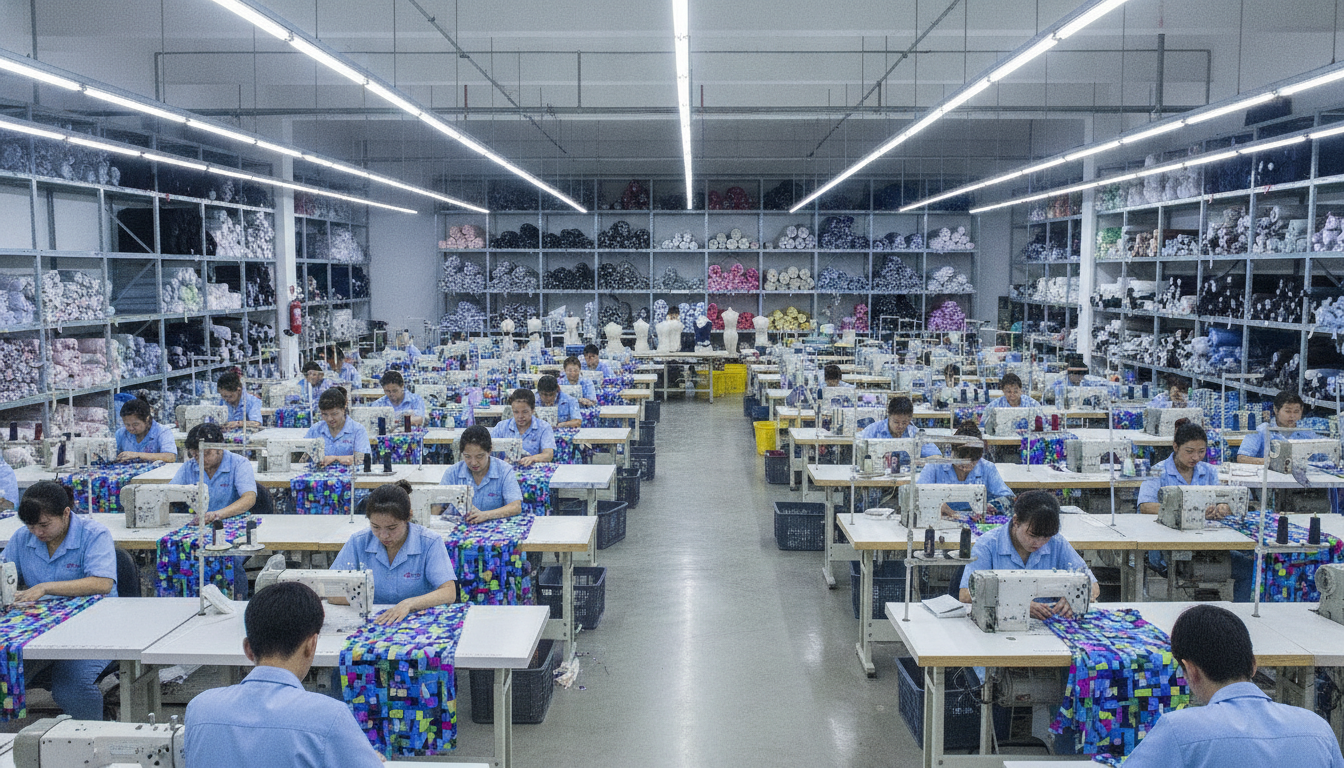
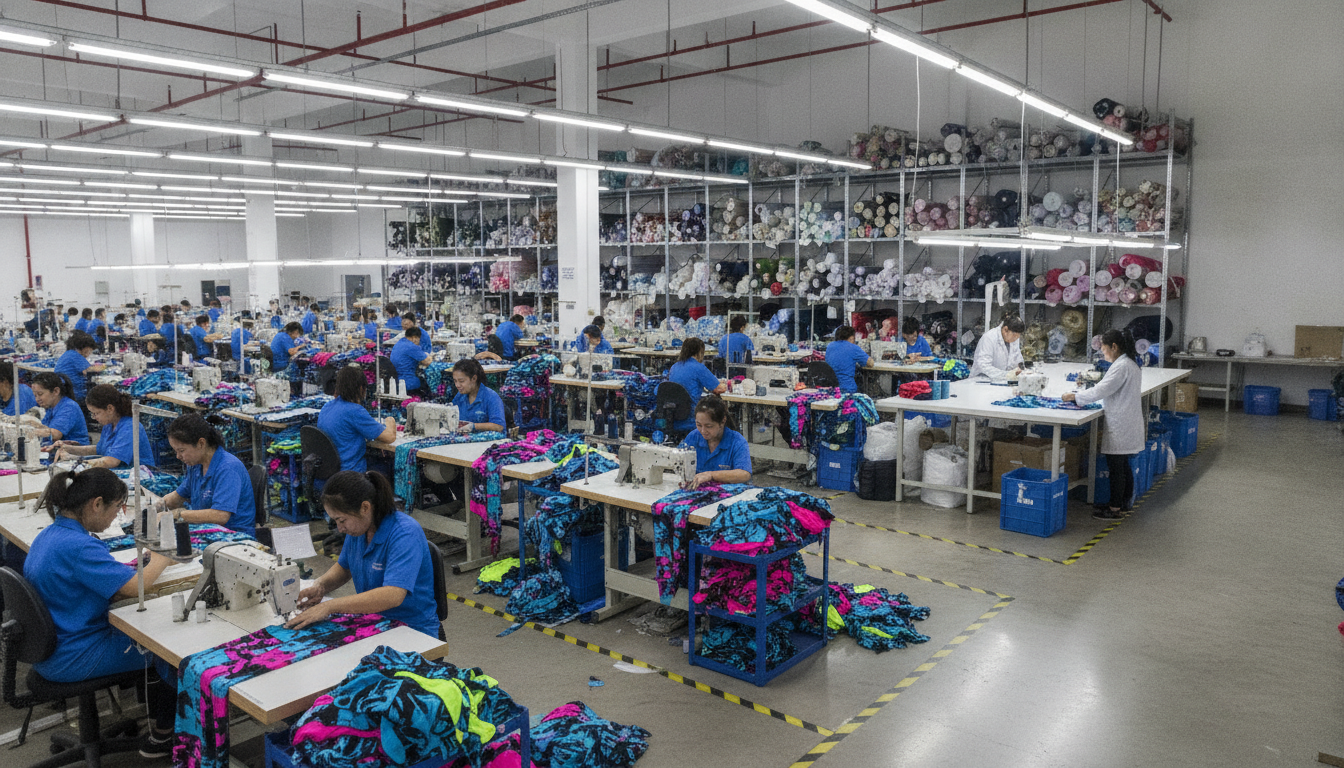
Production capacity signal: Ask how many yoga leggings the factory produces per day. A mid-sized facility with 200 workers typically outputs 1,500-2,500 leggings daily, meaning a 500-unit order requires 1-2 days of sewing time, not counting cutting and finishing.
Ask the factory to include a delivery date penalty clause in your contract. A standard clause might state that if shipment is delayed beyond the agreed date by more than 7 days, the factory will refund 1-2% of the order value per week of delay, capped at 10% total. This incentivizes on-time delivery and compensates you for lost sales.
Clarify which events constitute force majeure (excusable delays). Most contracts exclude natural disasters, government shutdowns, and port strikes from penalty clauses. However, “fabric supplier delay” or “worker shortage” should not be excusable, as professional factories maintain buffer stock and stable workforces.
Communication breakdowns are one of the most common complaints buyers raise. The questions to ask a yoga clothing factory before starting must establish daily update protocols and escalation contacts. One buyer reported WeChat messages going unanswered for 3 weeks during production, with no way to reach a manager.
Ask if the factory will assign a dedicated account manager to your project. A single point of contact who speaks fluent English (or your language) and understands your brand’s quality standards prevents miscommunication. Factories that rotate multiple salespeople across your order create confusion and lost context.
Request the account manager’s direct contact details: email, WhatsApp or WeChat ID, and phone number. Test responsiveness by sending a message and noting how long it takes to receive a reply. A 24-hour response window is acceptable for non-urgent questions; same-day response is ideal for time-sensitive issues.
Ask how often the factory will provide production progress updates. Professional manufacturers send photo updates at key milestones: fabric arrival, cutting completion, 50% sewing progress, final inspection, and packing. These updates let you spot issues early and adjust timelines if needed.
Ask who you should contact if your account manager is unresponsive or if a quality issue arises. Request the name and contact details of the production manager or factory owner. Knowing you can escalate to senior management prevents situations where problems get ignored for weeks.
Clarify the factory’s policy on after-hours or weekend communication. Some suppliers operate Monday-Friday only and ignore messages on weekends, which can be frustrating if you’re in a different time zone and your workday overlaps with their off-hours. Factories serving Western clients often have staff available on WeChat or WhatsApp outside standard business hours.
Material substitution is a frequent source of buyer complaints. The questions to ask a yoga clothing factory before starting must include strict no-substitution clauses and pre-production sample approval. One buyer reported the factory using cheaper fabric than the approved sample, resulting in leggings that were see-through and had a 2-inch wider waistband.
Ask the factory to document the exact fabric specifications in your contract: fiber content (80% polyester, 20% spandex), GSM weight (typically 240-280 GSM for squat-proof leggings), and fabric supplier name. This prevents the factory from switching to a cheaper fabric mill after you approve samples.
Request a fabric swatch from the bulk production roll before cutting begins. This swatch should match the sample fabric in weight, stretch, and opacity. If the factory claims the approved fabric is “out of stock” and proposes a substitute, you have the right to reject the substitution or cancel the order with a full refund.
Ask if the factory provides a pre-production sample (also called a “golden sample” or “PP sample”) before starting bulk production. This sample is sewn from the actual bulk fabric and serves as the quality benchmark for the entire order. You sign off on the PP sample, and the factory must match it in all production units.
Clarify whether PP sample approval is a contractual requirement or optional. Some factories skip this step to save time, which increases the risk of bulk production not matching your expectations. Insist on PP sample approval for your first order, even if it adds 3-5 days to the timeline.
Ask about trims and hardware: elastic waistbands, drawcords, zippers, and logo labels. Specify brand names or quality grades where possible (YKK zippers, Italian elastic). Factories sometimes substitute lower-quality trims to save a few cents per unit, resulting in waistbands that lose elasticity after a few washes or zippers that snag.
Request photos of the actual trims the factory will use before production starts. A private label yoga clothing project depends on consistent branding details, and a cheap-looking zipper pull or frayed drawcord damages your brand perception.
Factory transparency builds trust and reveals operational red flags. The questions to ask a yoga clothing factory before starting must include requests for facility tours and third-party audit permissions. One buyer reported a factory refusing a visit, citing “security reasons,” which turned out to be a front for a broker operation with no actual manufacturing floor.
Ask if you can visit the factory in person or request a live video tour via WeChat or Zoom. A legitimate manufacturer will show you the cutting tables, sewing lines, QC stations, and fabric warehouse. Factories that refuse or make excuses (“too busy,” “confidential clients”) may be brokers reselling production from undisclosed subcontractors.
During a video tour, ask to see specific areas: the pattern-making studio (if they claim in-house design), the fabric inspection station (where GSM and color are checked), and the final QC area (where finished garments are inspected). Seeing these areas confirms the factory has the capabilities they advertise.
Ask if the factory allows third-party inspection agencies to visit during production. Services like SGS, Bureau Veritas, and Intertek conduct on-site inspections to verify quality before shipment. Factories that refuse third-party audits or charge excessive “audit fees” may be hiding quality issues.
Clarify the cost and logistics of third-party inspection. Most inspection agencies charge $200-400 per visit for a half-day inspection of a small order. The factory should provide access during business hours without additional fees beyond the inspection agency’s invoice.
Ask if the factory subcontracts any production steps to external workshops. Some manufacturers handle cutting and QC in-house but outsource sewing to smaller workshops. This isn’t necessarily a problem, but you need to know which facilities will touch your product and whether those subcontractors meet the same quality and ethical standards.
Request the names and locations of any subcontractors. If the factory refuses to disclose this information, consider it a red flag. Transparent suppliers understand that brands need full supply chain visibility to satisfy their own customers and comply with import regulations.
Written by the Walundi Export Team.
Ready to start your yoga apparel line with a factory that answers every question upfront?
Request 1-Piece Samples Now →
Minimum order quantities vary by factory scale and production model. Sample MOQs typically start at 1 piece for design validation, while bulk production minimums range from 30 pieces per SKU for small-batch manufacturers to 300-500 pieces for large-scale facilities. Vertically integrated factories with in-house fabric knitting often offer lower MOQs than cut-and-sew-only operations that purchase pre-dyed fabric in minimum rolls. Always clarify whether the quoted MOQ is per style, per colorway, or per size run to avoid locking up capital in untested inventory.
Request a copy of the factory’s QC inspection checklist and ask which AQL standard they follow (AQL 2.5 is the activewear industry benchmark). Professional manufacturers conduct in-process inspections at cutting, sewing, and finishing stages, not just final inspections after packing. Ask to see photos or videos of their QC stations, fabric inspection equipment, and defect tracking system. Include a written defect rate threshold in your contract (typically 3% maximum) with penalty clauses for batches exceeding this limit. Third-party inspection agencies like SGS or Bureau Veritas can conduct independent audits before shipment for $200-400 per visit.
Industry-standard payment terms are 30-50% deposit on order confirmation and 50-70% balance on pre-shipment inspection approval. Avoid factories demanding 100% upfront payment before producing samples or starting bulk production, as this offers zero buyer protection. Payment methods with dispute resolution (PayPal, Alibaba Trade Assurance) add 2-4% in fees but provide recourse if the factory fails to deliver. Letters of Credit offer bank-guaranteed payment released only when the factory provides shipping documents, adding $500-1,500 in bank fees but maximizing security for large orders. Always request written refund policies for order cancellations and defective goods before making any deposit.
OEKO-TEX Standard 100 certification verifies that fabrics are screened against more than 1,000 harmful substances, ensuring safe skin contact during workouts. Global Recycled Standard (GRS) certification requires a minimum of 20% recycled material content and audits the factory’s environmental and social practices. BSCI or equivalent social compliance audits verify ethical labor standards, working hours, and workplace safety. Request copies of current certificates (issued within the past 12 months) and verify them on the issuing organization’s website. Factories that refuse to share certification documents or show expired certificates present compliance risks that can damage your brand reputation.
Sampling turnaround for yoga leggings typically requires 7-10 days for factories with in-house pattern studios, or 15-20 days for facilities outsourcing pattern work. This timeline covers production only, not international shipping (add 5-7 days for courier delivery). Bulk production spans 25-35 days for orders under 1,000 units, assuming the factory has fabric in stock. Orders requiring custom fabric dyeing or printing add 10-15 days. Request a written production timeline broken down by phase (fabric procurement, cutting, sewing, QC, packing) and include delivery date penalty clauses (1-2% refund per week of delay) to ensure on-time shipment.
Sample 1 piece · bulk from 30 · OEKO-TEX & GRS certified · reply in 24h. No gatekeeping.
Low MOQ. Sustainable fabrics. OEM ready. Tell us your vision.
Click the button below to open WhatsApp. If you're not logged in to WhatsApp Web yet, scan the QR code first — then come back here and copy the message into the chat.