
📋 Table of Contents
Most DTC yoga apparel founders hit the same wall: manufacturers quote 500-piece minimums per design, locking up cash before you validate market fit. Custom printed leggings require even higher MOQs at traditional factories because print setup, color matching, and pattern placement add fixed costs that only spread across large batches.
This guide walks through real MOQ structures, print durability specs, and fabric-weight trade-offs that determine whether your leggings show sweat or hold up to hot yoga. You’ll see exactly what sample and bulk minimums look like at a custom yoga apparel manufacturer built for small-batch production.
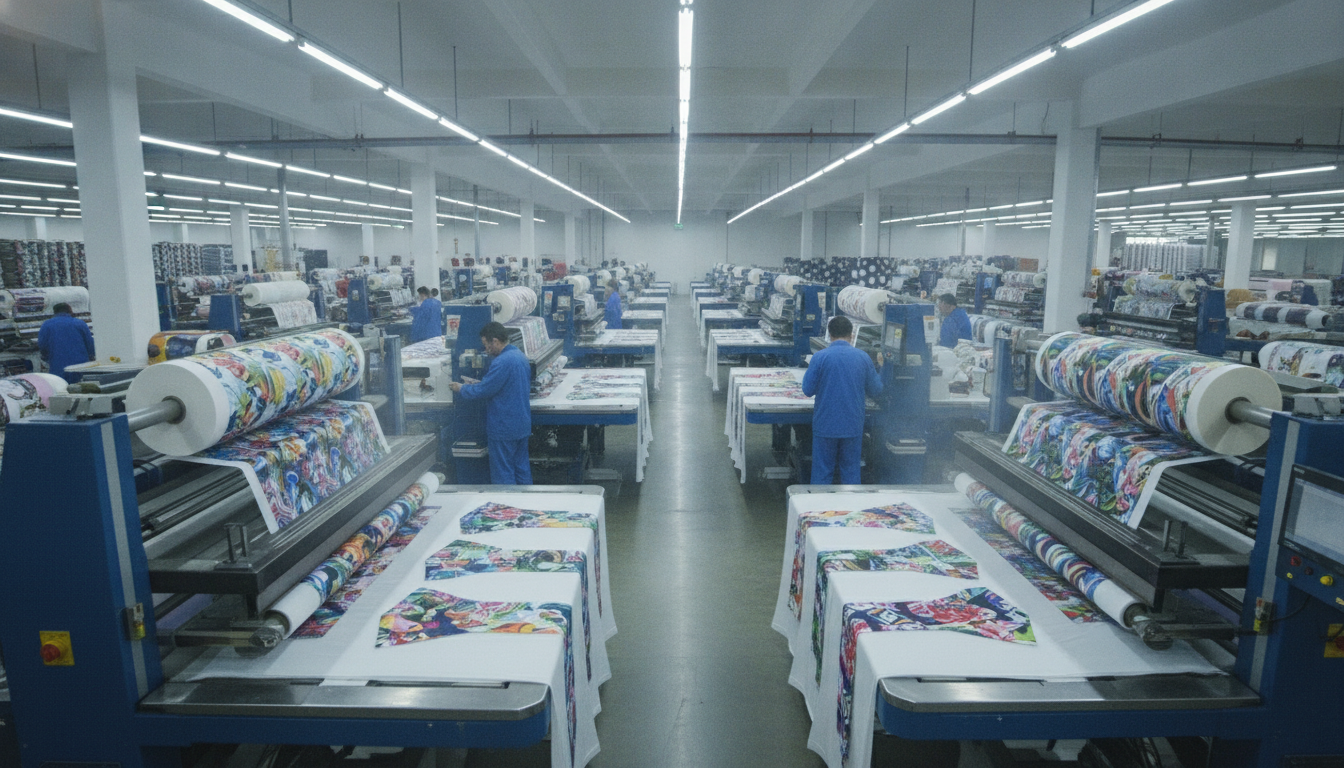
Pricing splits into three cost layers: base fabric, print application, and order-size economics. A plain black legging in 240 GSM recycled polyester-spandex runs one unit cost at bulk. Adding an all-over sublimation print increases material cost by 18-25% because sublimation requires white or light-base polyester and a separate dye-transfer step.
Single-piece samples carry full setup allocation. Print film generation, color calibration, and pattern grading for one unit distribute fixed costs across a single garment. A fully custom sublimation legging sample typically runs $45-$65 depending on print complexity and fabric grade. This covers pattern adjustment, print proof, and one wearable prototype shipped within 7-10 days.
At 30 pieces per design, setup costs spread enough to drop unit economics by 60-70%. The same sublimation legging that cost $55 as a sample falls to $18-$24 per piece at 30-unit MOQ. Factories achieve this by batching print runs: three designs totaling 90 pieces share one sublimation setup day, one QC inspection block, and consolidated shipping.
Traditional high-MOQ factories quote $12-$16 per legging at 500-piece minimums because their cut-and-sew lines, print equipment, and QC workflows optimize for long runs. The per-unit savings plateau after 1,000 pieces; a 2,000-piece order drops cost another 8-12%, but founders rarely need that volume for initial market validation.
A common buyer complaint surfaces across founder forums: manufacturers refuse to negotiate MOQ even when the brand is willing to pay higher per-unit costs. One ethical-fashion group noted the difficulty finding a factory that accepts 70 pieces across five sizes per color while maintaining quality standards for women’s performance apparel.
Cut-and-sew lines at scale-optimized facilities run 8-12 hour shifts. Switching from one legging design to another requires pattern changeover, thread-color swaps, print-film replacement, and QC recalibration. A 30-piece run consumes the same setup labor as a 300-piece run but generates one-tenth the output. Factories built for volume reject small orders because the opportunity cost exceeds the margin.
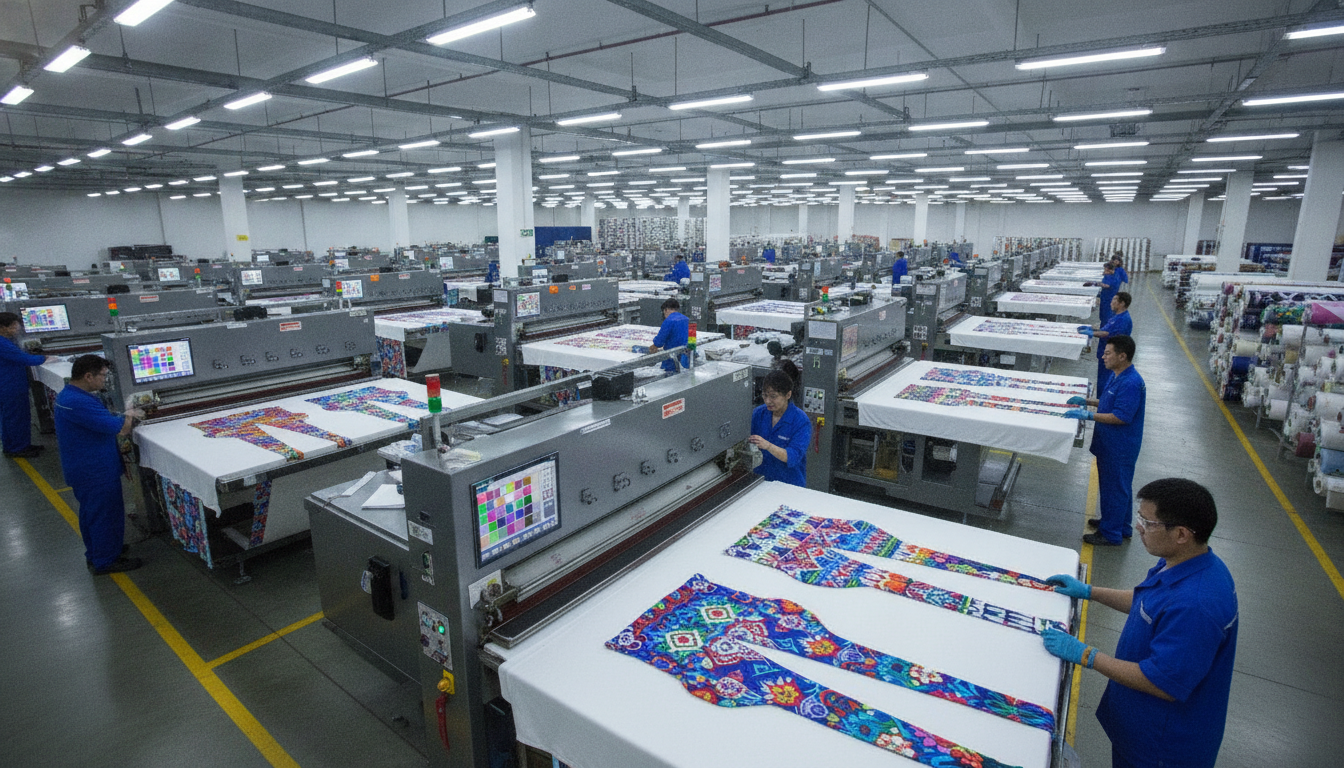
Vertically integrated facilities that handle small batches profitably structure workflows differently. Our 18,000m² Yiwu plant runs modular production cells rather than continuous lines. One cell processes samples and micro-batches (1-50 pieces) with dedicated pattern tables, single-head embroidery stations, and small-format sublimation presses. A second cell handles mid-volume orders (100-500 pieces), and a third runs scale production.
This setup lets a low MOQ yoga manufacturer quote 30 pieces per SKU without cross-contaminating production schedules. Sample orders ship in 7-10 days because they never wait in queue behind 5,000-piece bulk runs.
Custom printed leggings sold DTC typically need five sizes (XS, S, M, L, XL). A 30-piece minimum per design allows six units per size, enough to test size-distribution assumptions without overstocking slow-moving sizes. Founders ordering 500 pieces face 100 units per size, a risky bet when 68% of activewear returns cite fit issues.
Sample MOQ: 1 piece. Bulk MOQ: 30 pieces per SKU. Sampling time: 7-10 days.
Print durability determines whether your custom printed leggings maintain color vibrancy and graphic sharpness after 20-30 wash cycles. Performance fabrics endure more mechanical stress than cotton tees: four-way stretch, high-heat yoga studios, and friction from floor poses accelerate print degradation.
Sublimation chemically bonds dye into polyester fibers under heat and pressure. The print becomes part of the fabric rather than a surface layer. Sublimated leggings survive 50+ industrial wash cycles without cracking, peeling, or color fade because there is no topical ink film to degrade. This method works only on polyester or polyester-dominant blends; natural fibers like cotton cannot accept sublimation dyes.
Design limitations: sublimation requires a white or light-colored base fabric. Printing white ink onto dark fabric is not possible with standard sublimation. Full-coverage prints (all-over patterns, photo-real graphics) showcase sublimation’s strength because there is no per-color cost penalty.
Heat-transfer vinyl cuts graphic shapes from colored film and heat-presses them onto fabric. This method handles any base fabric color and produces opaque whites and metallics that sublimation cannot. Durability depends on adhesive quality and fabric stretch: cheap vinyl cracks after 10-15 washes, while commercial-grade plastisol transfers rated for activewear last 30-40 cycles.
Design limitations: each color requires a separate film layer, making multi-color graphics labor-intensive. Large solid areas (full-leg color blocks) feel stiff and restrict breathability. Heat transfer works best for small logos, text, and accent graphics rather than all-over prints.
Screen printing applies ink through a mesh stencil. Specialized stretch inks flex with the fabric and cure under heat to lock pigment. Screen-printed leggings achieve 25-35 wash cycles before noticeable fade, shorter than sublimation but acceptable for limited-edition designs or lower-price-point products.
Design limitations: setup costs scale with color count. A five-color graphic requires five screens, five ink mixes, and five print passes. Minimum order quantities rise accordingly; screen printing becomes cost-effective at 100+ pieces per design.
In practice: A California DTC activewear brand ordered 1-piece sublimation samples in three print designs, tested them through 15 home wash cycles, then placed a 90-piece first order (30 per design) split across five sizes without locking up capital in untested inventory.
A recurring complaint among activewear buyers: thinner stretch fabrics cause see-through issues, especially in white and light colors, but increasing fabric weight kills stretch and raises cost. Balancing opacity, compression, and recovery requires specific GSM ranges and knit structures.
Grams per square meter (GSM) measures fabric density. Leggings below 200 GSM typically show skin tone and undergarment outlines during deep squats or forward folds. The 240-280 GSM range provides squat-proof coverage in most solid colors while retaining four-way stretch and moisture-wicking performance. Fabrics above 300 GSM achieve full opacity but compress less and take longer to dry.
White and pastel leggings require 280+ GSM or a double-layer gusset to prevent show-through. Some manufacturers add a second layer of fabric in the seat and inner-thigh zones, increasing material cost by 12-15% but solving the transparency problem without making the entire garment heavier.
Four-way stretch comes from knit construction, not just spandex content. Interlock knits (two layers of fabric knitted together) offer better opacity than single-jersey knits at the same GSM because the double-layer structure blocks more light. Interlock also resists pilling and holds shape through repeated wear-wash cycles.
Spandex content typically ranges from 18% to 25% in performance leggings. Higher percentages increase stretch but reduce durability; spandex fibers break down faster under heat and chlorine exposure. A 78% polyester, 22% spandex blend balances compression, recovery, and lifespan for yoga and studio use.
Our QC team runs a standardized opacity test: stretch the fabric over a black-and-white checkerboard card under 500-lux lighting (simulating bright studio conditions), then photograph the fabric at rest and at 50% stretch. If the checkerboard pattern is visible through the fabric at 50% stretch, the sample fails squat-proof criteria and goes back for fabric-weight adjustment or gusset reinforcement.
This test catches transparency issues before bulk production. Founders receive photo documentation with each sample so they can verify opacity standards before committing to a 30-piece or larger order.
Sampling custom printed leggings involves more steps than ordering plain black stock because print proofs, color matching, and pattern placement require iteration. A realistic timeline prevents founders from missing launch windows or pre-order deadlines.
Submit print-ready artwork in vector format (AI, EPS, or high-resolution PDF) along with Pantone color codes or RGB values. The factory pattern team maps your graphic onto the legging pattern pieces, accounting for seam placement and stretch distortion. You receive a digital print proof showing how the design wraps around the leg, where seams interrupt the pattern, and how the graphic scales across sizes.
Revisions at this stage cost nothing. Founders typically request 1-2 adjustments: shifting a graphic higher on the thigh, resizing a logo, or tweaking color saturation.
Once you approve the print proof, the factory generates sublimation film or cuts heat-transfer vinyl, knits or sources the base fabric, and produces one wearable sample. The garment goes through the same cut-sew-finish process as a bulk order: pattern cutting, flatlock or overlock seaming, waistband attachment, and final pressing.
A yoga clothing manufacturer for startups ships samples via express courier (DHL, FedEx) with 3-5 day transit to North America or Europe. Total time from proof approval to sample in hand: 10-14 days.
First samples rarely require zero changes. Common requests include waistband height adjustment (raise or lower by 1-2 cm), inseam length modification, or gusset reinforcement. Each revision round adds 5-7 days. Founders ordering multiple design variations simultaneously can test different specs in parallel rather than sequentially, compressing the timeline.
After final sample approval, bulk orders enter the production queue. A 30-90 piece order typically completes in 21-28 days: fabric procurement (if not in stock), cutting, printing, sewing, QC inspection, and packing. Larger orders (200+ pieces) extend to 30-35 days because cut-and-sew capacity allocates across multiple production days.
Shipping from Ningbo port to Los Angeles takes 14-18 days by ocean freight, or 5-7 days by air for time-sensitive launches. Total timeline from sample approval to inventory in your hands: 35-50 days by sea, 26-35 days by air.
Certifications verify claims about fabric content, chemical safety, and labor conditions. DTC brands selling on platforms like Amazon, Shopify, or wholesale to yoga studios face increasing requests for documentation proving sustainability and safety standards.
GRS certifies recycled-content claims and tracks material chain-of-custody from post-consumer waste through spinning, knitting, dyeing, and garment assembly. The standard requires minimum 20% recycled content before a product can carry the GRS label, though most performance leggings use 50-80% recycled polyester to meet both the certification threshold and performance specs.
GRS certification covers the entire supply chain. Our Yiwu facility holds GRS transaction certificates that let us source GRS-certified yarns, knit them into fabric, and cut-sew them into finished leggings without breaking chain-of-custody. Brands receive a GRS hangtag template and transaction certificate with each order, enabling them to label products as GRS-certified recycled polyester.
OEKO-TEX Standard 100 tests finished textiles for more than 1,000 harmful substances, including formaldehyde, heavy metals, pesticides, and carcinogenic dyes. The certification applies to the final product as worn against skin, not just raw fabric, so trims, elastics, threads, and printed inks must all pass testing.
Our factory maintains OEKO-TEX certification for our core fabric library: recycled polyester-spandex blends, organic cotton-spandex, and nylon-spandex performance knits. Custom print jobs require separate testing if you introduce new dye chemistries, but standard sublimation inks on our certified base fabrics remain compliant without additional testing.
BSCI audits verify labor practices, workplace safety, and fair wages. The certification matters most to brands selling wholesale into European retail chains or partnering with studios that require ethical-manufacturing documentation. BSCI covers working hours, child-labor prevention, health-and-safety protocols, and grievance mechanisms.
Walundi underwent BSCI audit in 2022 and maintains compliance through annual surveillance audits. Buyers receive a copy of our current BSCI certificate and audit summary report, which many use to satisfy retailer due-diligence requirements without conducting their own factory audits.
A sustainable yoga clothing manufacturer provides certification documentation at no extra cost when the order uses certified materials and standard production processes. Custom requests (non-standard dyes, experimental fabrics, unconventional trims) may require additional testing, typically $800-$1,200 per test depending on scope.
Sample MOQ is 1 piece, allowing founders to test print quality, fabric performance, and fit before placing a bulk order. Bulk MOQ is 30 pieces per SKU, which spreads setup costs across a viable first production run without requiring 500-piece minimums that lock up working capital in untested inventory.
Design submission to print proof takes 2-3 days. Print proof approval to finished sample production requires 5-7 days. Express shipping to North America or Europe adds 3-5 days. Total timeline from artwork submission to sample in hand is 10-14 days, assuming no major revisions after the initial print proof.
Sublimation printing lasts longest, surviving 50+ industrial wash cycles without cracking or fading because the dye chemically bonds into polyester fibers rather than sitting on the surface. Heat transfer and screen printing last 30-40 cycles and 25-35 cycles respectively. Sublimation works only on polyester or polyester-dominant blends and requires light-colored base fabrics.
Fabric weight between 240-280 GSM provides squat-proof coverage in most solid colors while retaining four-way stretch and compression. White and pastel colors require 280+ GSM or a double-layer gusset in the seat and inner-thigh zones. Interlock knit structures offer better opacity than single-jersey knits at the same GSM because the double-layer construction blocks more light.
GRS certification verifies recycled-content claims and requires minimum 20% recycled material with full chain-of-custody tracking. OEKO-TEX Standard 100 tests finished garments against more than 1,000 harmful substances, covering dyes, fabric, trims, and inks. BSCI certification audits labor practices and workplace safety, required by many European wholesale retailers and ethical-brand partnerships.
Ready to validate your custom legging designs without locking up cash in 500-piece minimums?
Request 1-Piece Samples →
Written by the Walundi Export Team.
Sample 1 piece · bulk from 30 · OEKO-TEX & GRS certified · reply in 24h. No gatekeeping.
Low MOQ. Sustainable fabrics. OEM ready. Tell us your vision.
Click the button below to open WhatsApp. If you're not logged in to WhatsApp Web yet, scan the QR code first — then come back here and copy the message into the chat.