
📋 Table of Contents
You approved the sample. The factory confirmed your order. Then silence. Three weeks pass, and you realize your yoga wear manufacturing lead time after sample approval just doubled without warning. For DTC founders validating product-market fit and boutique studios launching branded lines, a blown timeline means missed launch windows, cash tied up in delayed inventory, and customers asking where their orders are.
Most manufacturers quote 30 to 45 days for production after sample approval. That number rarely includes sample revision rounds, fabric sourcing delays, or the 15 to 30 days sea freight adds. When you account for real-world friction, the clock starts ticking weeks before you think it does.
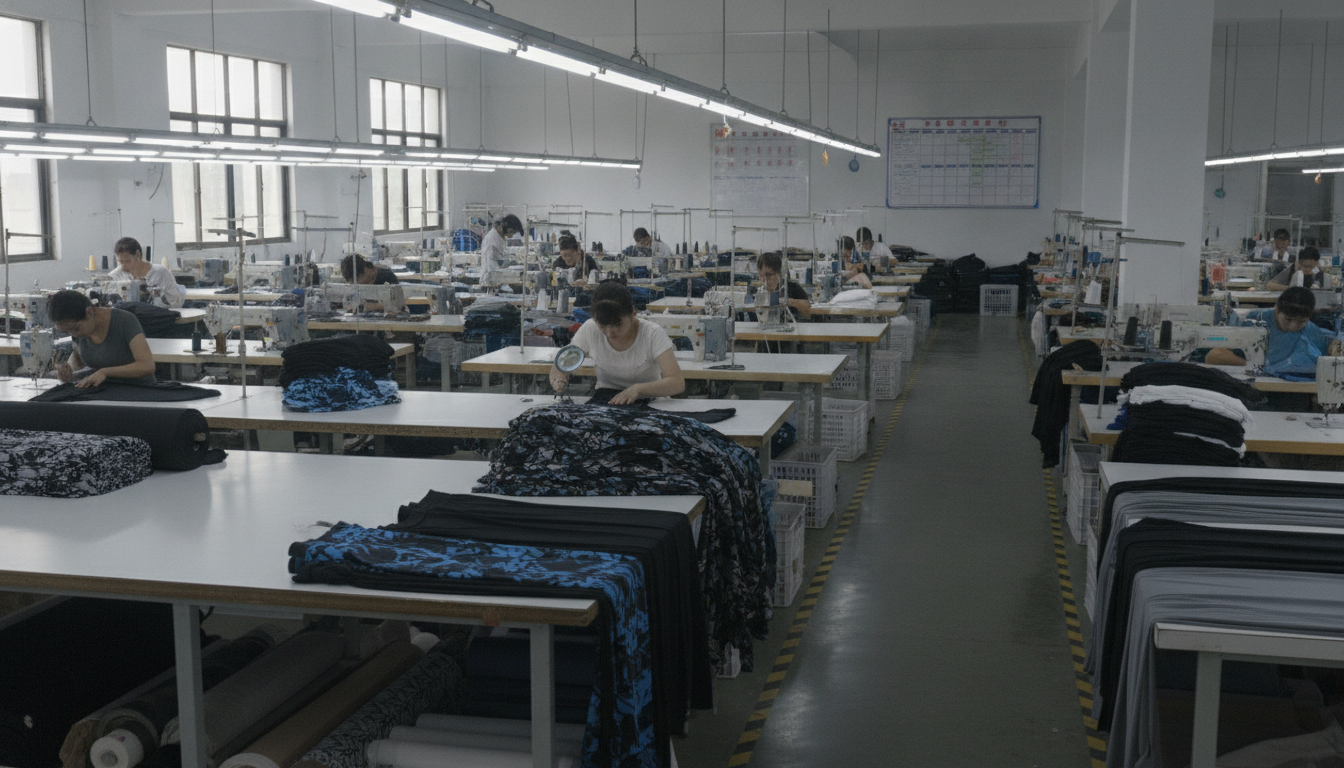
Once you approve the pre-production sample, the clock starts on bulk production. A custom yoga apparel manufacturer typically needs 30 to 45 days to cut, sew, finish, and pack your order. This window assumes the factory has your fabric in stock or can source it within 7 days, and that your order does not require custom dyeing or printing.
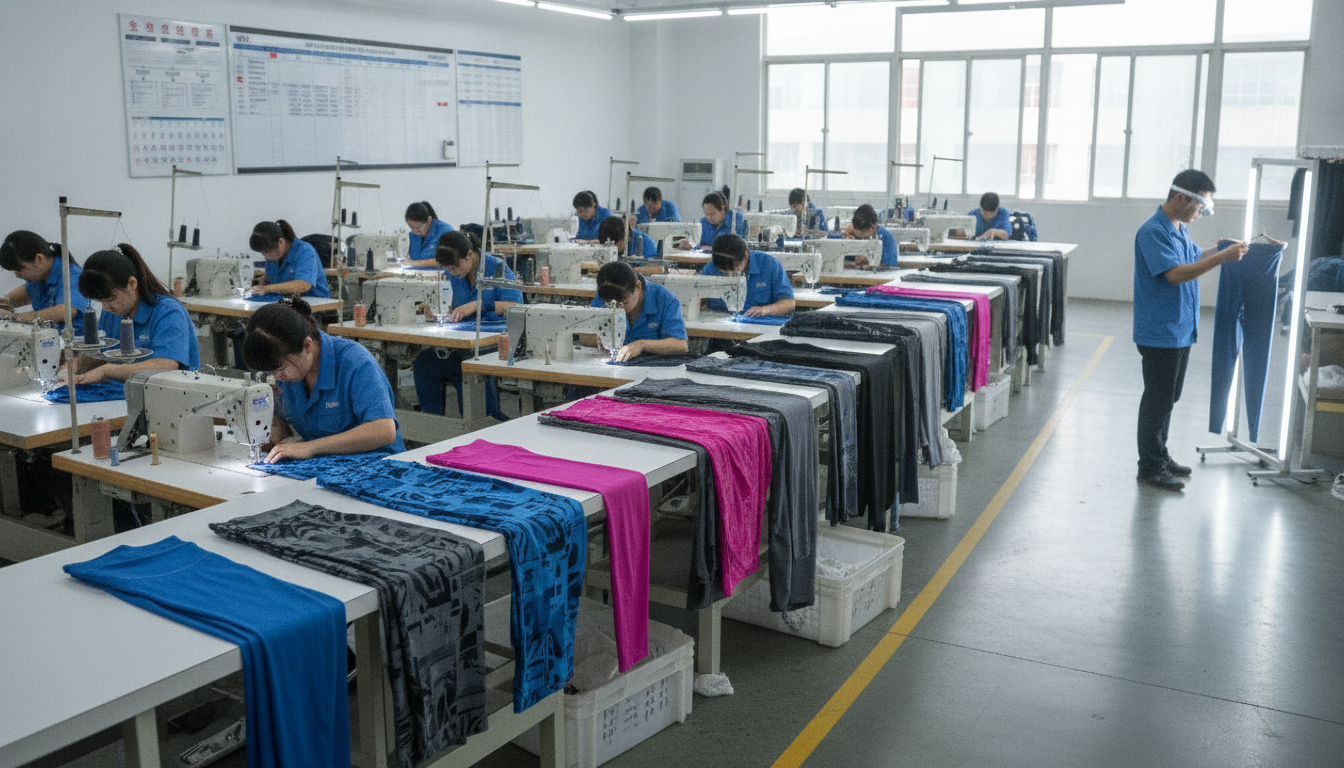
Production moves through distinct phases. Fabric inspection and relaxation take 2 to 3 days. Pattern grading and marker making add another 1 to 2 days. Cutting occupies 2 to 4 days depending on order size. Sewing lines run 10 to 15 days for a typical 500-piece order across 3 styles. Finishing (trimming loose threads, steaming, folding) takes 3 to 5 days. Final QC and packing require 2 to 3 days before the cartons leave the factory floor.
Smaller orders move faster through the sewing line but often wait longer for fabric. A low MOQ yoga manufacturer offering 30 pieces per SKU may batch your order with others to justify fabric minimums. That batching can add 5 to 10 days to the lead time. Bulk orders of 1,000+ pieces per style usually get priority fabric allocation and dedicated sewing lines, shaving 5 to 7 days off the timeline.
Walundi production specs: Sample MOQ 1 piece, Bulk MOQ 30 pieces per SKU. Standard lead time 30 days for in-stock fabrics, 40 days for custom-dyed orders. Sampling time 7 to 10 days.
Sea freight from Ningbo to Los Angeles takes 15 to 20 days, to New York 30 to 35 days. Customs clearance adds 3 to 7 days. Air freight cuts transit to 3 to 5 days but costs 5 to 8 times more per kilogram. For a 100-piece legging order weighing 50 kg, air freight runs $400 to $600, sea freight $80 to $120. DTC founders validating a first launch often choose air to hit a launch date, then switch to sea for restocks.
Buyers report the yoga wear manufacturing lead time after sample approval stretching to 60+ days without warning. The delays cluster around four friction points: sample revision loops, fabric sourcing lags, factory communication blackouts, and customs surprises.
A common complaint from DTC founders is that sample approval takes 3 rounds instead of the promised 1. Each round adds 7 to 10 days for the factory to adjust patterns, cut a new sample, and ship it for your review. The root cause is usually an incomplete tech pack. If your spec sheet lists “high-waisted legging” without grading measurements for each size, the factory guesses. The first sample comes back with a waistband that sits 2 inches lower than you expected. You request a revision. The second sample has the right waistband but the inseam is too short. Another round.
In practice: A US yoga brand founder submitted a tech pack without detailed grading for sizes S through XL. The factory produced 3 sample rounds over 28 days before the fit matched the founder’s vision, delaying the bulk order start by a full month.
Standard fabrics like 230 GSM nylon-spandex are usually in stock. Custom colors, prints, or sustainable materials require lead time. Custom dyeing adds 10 to 15 days. A GRS-certified recycled polyester blend may need 20 to 30 days if the mill does not have it ready. Buyers often discover this lag after sample approval, when the factory mentions fabric is on order. The production clock you thought started is actually on hold.
Buyers report factories going silent during peak seasons. Chinese New Year shuts down production for 2 to 3 weeks in late January or early February. Workers return slowly over 10 days. If your order was supposed to ship February 15 and you did not account for the holiday, you lose 3 weeks. Port strikes, typhoons delaying container ships, and unexpected power rationing in manufacturing zones also create blackouts. A yoga clothing manufacturer for startups with transparent communication protocols will flag these risks upfront.
Sea freight quoted as 20 days can stretch to 45+ days when you factor in port congestion, customs inspections, and last-mile trucking. The Red Sea crisis in 2024 rerouted container ships around Africa, adding 10 to 15 days to Europe-bound shipments. US port strikes in late 2023 created 2-week backlogs. Buyers need all-inclusive lead time estimates that account for production plus logistics, not just factory-door timelines.
Certain design choices and order parameters push the yoga wear manufacturing lead time after sample approval past the standard 30 to 45 days. Fabric customization, eco-certifications, and order complexity are the three biggest drivers.
Custom dyeing a solid color adds 10 to 15 days. Sublimation printing (all-over patterns) requires fabric to go through a separate print mill, adding 12 to 18 days. If you want a custom jacquard knit or a proprietary fabric blend, the mill may need 30 to 45 days just to produce the greige goods before dyeing. Standard stock fabrics eliminate this lag entirely.
A sustainable yoga clothing manufacturer offering GRS-certified recycled polyester or GOTS-certified organic cotton needs extra time for two reasons. First, certified mills have longer lead times because they batch production to maintain chain-of-custody documentation. Second, the factory must complete traceability paperwork and arrange third-party audits before shipment. GRS certification can add 7 to 10 days to the production calendar. GOTS-certified organic cotton may add 15 to 20 days if the mill does not have the specific weight and blend in stock.
A simple 2-style order (legging + sports bra) in 3 sizes and 2 colors moves faster than a 6-style order with custom labels, hang tags, and poly-bag inserts. Each additional SKU adds 1 to 2 days to cutting and QC. Custom packaging (branded boxes, tissue paper, stickers) requires coordination with a separate supplier, adding 5 to 7 days. If you need each piece individually folded and tagged for retail display, finishing time doubles.
Factories run at full capacity from August through October, preparing inventory for the Western holiday season. Lead times stretch by 10 to 15 days during this window because sewing lines are booked solid. If you place an order in September expecting 30-day delivery, the factory may not start cutting until mid-October. Planning orders for May through July or November through January avoids the bottleneck.
A realistic timeline for launching a yoga apparel line includes sample development, revision rounds, bulk production, and shipping buffers. Most DTC founders underestimate the calendar by 30 to 45 days.
Submit your tech pack with detailed specs, grading for all sizes, and reference images. The factory reviews for feasibility and quotes fabric options. If you choose an in-stock fabric, the sample ships within 7 to 10 days. Custom fabrics add 10 to 20 days to this phase.
The sample arrives. You check fit, fabric hand-feel, stitching quality, and color accuracy. If adjustments are needed, you provide written feedback with photos. The factory produces a revised sample in 7 to 10 days. International shipping adds 3 to 5 days each way.
The revised sample arrives. If fit and quality match your spec, you approve for bulk production. If a second revision is needed, add another 10 days. Lock in your MOQ, confirm fabric availability, and sign the purchase order.
The factory cuts, sews, finishes, and packs your order. Standard lead time is 30 days for in-stock fabrics, 40 days for custom-dyed orders. Add 5 days if you request third-party QC inspection before shipment.
Cartons leave the factory and truck to Ningbo port. Sea freight to the US West Coast takes 15 to 20 days, East Coast 30 to 35 days. Customs clearance adds 3 to 7 days. Trucking from port to your warehouse takes 2 to 5 days.
Total timeline: 12 to 15 weeks from tech pack submission to inventory in your warehouse, assuming one sample revision and sea freight to the US West Coast.
Add a 2-week buffer to every phase. If your launch date is firm, work backward from that date and add 14 days to the total timeline. A yoga studio planning a January launch should submit tech packs by mid-August, approve samples by early October, and have goods shipping by late November.
Buyers report manufacturers increasing quoted MOQ from 50 to 200 pieces after initial discussions. Lock in MOQ terms in writing before you invest time in sampling. A private label yoga clothing partner offering 30 pieces per SKU eliminates the cash-lock risk for founders validating product-market fit with small test batches.
Third-party QC inspections add 2 to 3 days to the production calendar but catch defects before shipment. Buyers report seam splitting, wrong labels, and color mismatches arriving in bulk orders when no pre-shipment inspection was done. A QC agent checks 10% of finished pieces against your approved sample, verifies measurements, tests fabric stretch recovery, and inspects stitching for loose threads or skipped stitches.
Bulk production typically takes 30 to 45 days after you approve the pre-production sample. This window covers fabric inspection, pattern grading, cutting, sewing, finishing, and QC. Custom dyeing or eco-certified fabrics can extend the timeline to 40 to 50 days. Sea freight and customs add another 18 to 42 days depending on destination port.
Low-MOQ orders of 30 to 100 pieces per style usually take 30 to 40 days for production, similar to bulk orders. The difference is that factories may batch small orders with others to justify fabric minimums, which can add 5 to 10 days. Sampling time is 7 to 10 days for a single piece, allowing founders to validate fit before committing to bulk.
From tech pack submission to inventory in your warehouse, plan 12 to 15 weeks. This includes 7 to 10 days for initial sampling, 10 to 14 days for one revision round, 30 to 45 days for bulk production, and 18 to 42 days for sea freight and customs. Add a 2-week buffer for unexpected delays like port congestion or fabric sourcing lags.
Yes. Custom solid dyeing adds 10 to 15 days for lab dip approval and bulk dyeing. Sublimation printing adds 12 to 18 days for print mill runs and heat-set curing. GRS-certified recycled fabrics can add 15 to 25 days if the mill does not have your specific weight and blend in stock. Standard stock fabrics eliminate these lags entirely.
Sea freight from Ningbo to the US West Coast takes 15 to 20 days, to the East Coast 30 to 35 days. Customs clearance adds 3 to 7 days, and trucking from port to your warehouse takes 2 to 5 days. Total shipping time ranges from 20 to 47 days depending on destination. Air freight cuts transit to 3 to 5 days but costs 5 to 8 times more.
Ready to lock in a realistic production timeline for your yoga apparel launch?
Request 1-Piece Samples + Timeline Quote →
Written by the Walundi Export Team.
Sample 1 piece · bulk from 30 · OEKO-TEX & GRS certified · reply in 24h. No gatekeeping.
Low MOQ. Sustainable fabrics. OEM ready. Tell us your vision.
Click the button below to open WhatsApp. If you're not logged in to WhatsApp Web yet, scan the QR code first — then come back here and copy the message into the chat.