
📋 Table of Contents
Finding a custom yoga apparel manufacturer that accepts small orders without compromising quality is the number-one sourcing challenge DTC founders face. White label yoga apparel lets you launch branded leggings, sports bras, and matching sets without building a factory, but most suppliers impose 500-1000 piece minimums per style that lock up cash before you validate product-market fit.
White label yoga apparel refers to finished garments manufactured by a third-party factory that you brand with your own hang tags, labels, and packaging. The factory owns the pattern library, fabric relationships, and production infrastructure. You select styles from their catalog, customize colorways and minor design details, then apply your brand identity.
White label yoga apparel lets you test market demand without pattern-making costs or large inventory risk. You skip the 3-6 month custom development cycle and go straight to sampling proven styles. A boutique yoga studio in Austin can order 30 high-waisted leggings in their signature color, add woven labels, and sell them in 8 weeks total.
In practice: A US yoga brand founder validated 3 legging styles with 1-piece samples, then placed a 30-unit-per-SKU first order without locking up cash
Get a Tiered QuoteBuilding a yoga brand? Sample 1 piece, bulk from 30.OEM / ODM / private label · OEKO-TEX & GRS certified · 24h quote
The 500-piece-per-style barrier exists because traditional cut-and-sew facilities optimize for long production runs. Setup time for pattern grading, fabric spreading, and quality control stays constant whether the factory cuts 50 units or 500. Larger minimums spread fixed costs across more pieces and keep per-unit labor competitive.
A 500-piece minimum across 5 sizes in one colorway ties up significant working capital before you sell a single unit. If your landed cost per legging is 12 USD and you order 500 pieces, you commit 6,000 USD plus shipping and duties. Many DTC founders launching their first collection cannot afford that risk without pre-orders or outside funding.
Sample MOQ: 1 piece. Bulk MOQ: 30 pieces per SKU. Sampling time: 7-10 days.
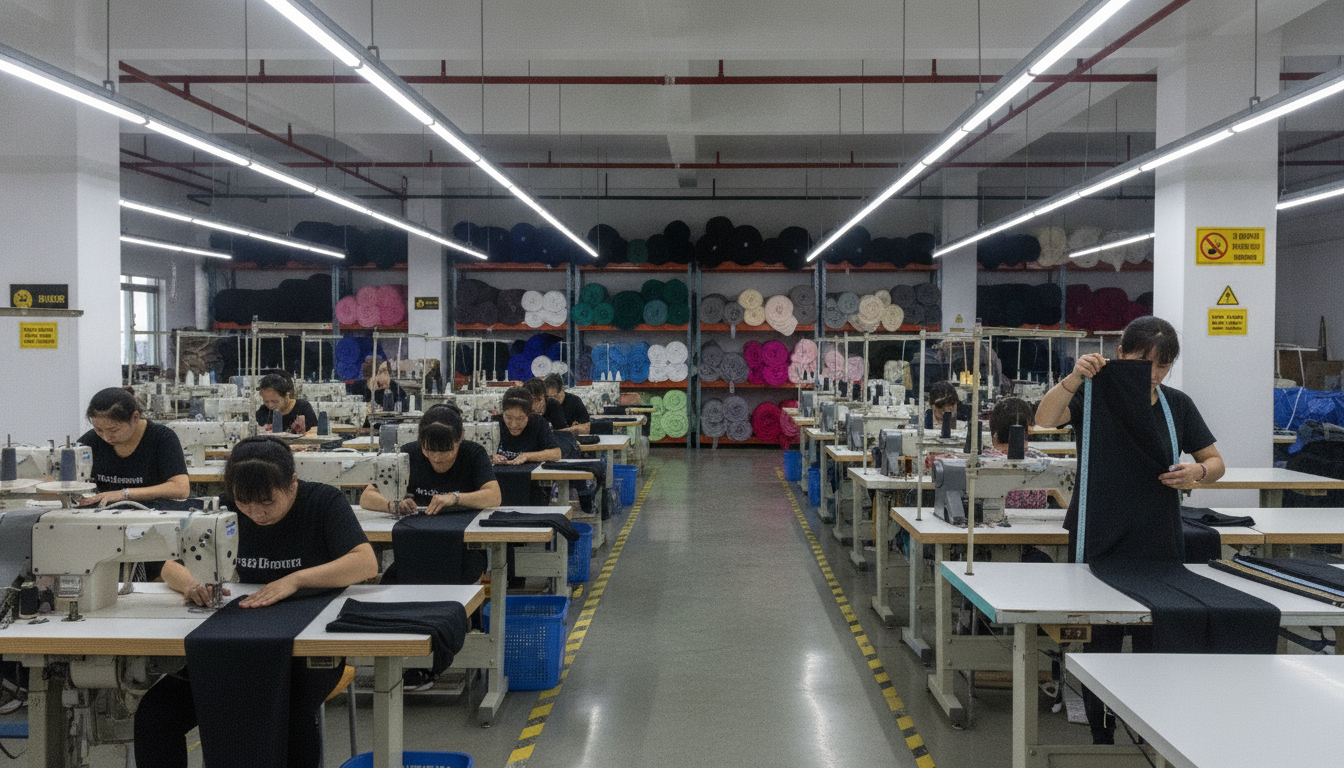
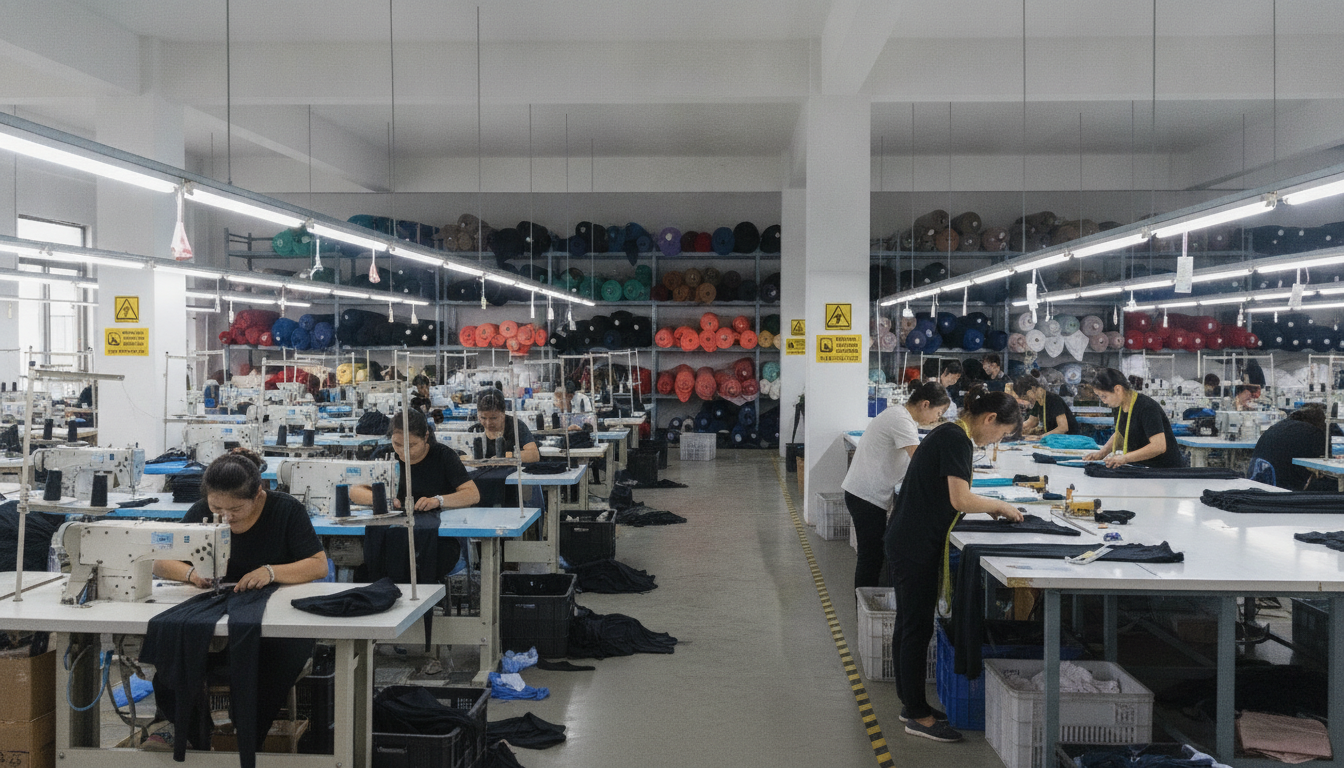
Vertically integrated manufacturers that own fabric knitting, dyeing, cut-and-sew, and finishing lines under one roof can batch small orders from multiple clients on the same fabric base. A low MOQ yoga manufacturer running an 18,000m² facility with 200+ workers can group three 30-piece orders for black Supplex leggings onto a single cutting table, spreading setup costs across 90 total units instead of forcing each brand to hit 500 alone.
Squat-proof performance is the single most-cited quality concern in yoga apparel reviews. A common complaint buyers raise is that thinner stretch fabrics cause see-through or show-through issues, especially in white and pastel colorways, while switching to a thicker blend kills the four-way stretch that makes leggings comfortable and raises the per-unit cost.
Most yoga leggings use 230-280 GSM (grams per square meter) nylon-spandex or polyester-spandex blends. Fabrics below 230 GSM feel lightweight but risk transparency during deep squats. Fabrics above 280 GSM offer full opacity but reduce stretch recovery and breathability, making them better suited for outerwear than high-movement yoga practice.
Reputable white label yoga apparel suppliers run physical squat tests on every fabric batch before cutting. A technician wears the sample garment, performs deep squats under bright overhead lighting, and photographs the fabric at maximum stretch. If skin tone is visible through the material, the batch is flagged for colorway restriction or rejected entirely.
Sustainability messaging without third-party certification exposes your brand to greenwashing accusations. Buyers expect verifiable proof when you claim recycled polyester, organic cotton, or non-toxic dyes. The three most recognized certifications in sustainable yoga clothing manufacturing are GRS, OEKO-TEX Standard 100, and BSCI.
GRS verifies recycled content in finished products and tracks the chain of custody from post-consumer waste through spinning, knitting, dyeing, and garment assembly. A product must contain at least 20% recycled material to qualify for GRS certification. Most yoga leggings marketed as recycled polyester use 50-85% post-consumer PET bottles blended with virgin polyester and spandex for stretch.
OEKO-TEX Standard 100 screens finished textiles against more than 1,000 harmful substances, including formaldehyde, heavy metals, pesticides, and carcinogenic dyes. The certification applies to every component that touches skin: fabric, elastic waistbands, stitching thread, and printed labels. Factories must renew testing annually, and each fabric batch receives a unique certificate number you can share with customers.
BSCI (Business Social Compliance Initiative) audits cover labor practices, workplace safety, and environmental management. Third-party auditors inspect the factory floor, interview workers, review payroll records, and verify emergency exits and ventilation systems. BSCI certification reassures buyers that your white label yoga apparel is not produced under exploitative conditions.
The sampling phase determines whether a white label yoga apparel partnership will work long-term. You need to validate fit, fabric hand-feel, construction quality, and color accuracy before committing to bulk inventory. A structured sampling workflow reduces costly surprises and aligns expectations on both sides.
Request the factory’s current catalog with flat sketches, fabric swatches, and size specs. Identify 2-3 core styles that match your target customer’s preferences. Confirm fabric composition, weight (GSM), and available colorways. Ask for physical swatches of each fabric option so you can assess stretch, recovery, and opacity before ordering samples.
Order one sample garment per style in your most popular size, typically size Medium or Large for women’s yoga apparel. A 1-piece sample MOQ lets you test multiple styles without bulk commitment. Include your brand’s Pantone color codes if you plan custom dyeing. Sampling lead time is typically 7-10 days from payment confirmation to shipment via express courier.
Wear the sample during an actual yoga class or high-intensity workout. Check waistband compression, gusset reinforcement, flatlock stitching durability, and fabric transparency during deep squats. Measure the garment flat and compare to the factory’s size chart. Note any adjustments needed: waistband height, leg length, or compression level.
If you requested fit or construction changes, order a second pre-production sample incorporating those tweaks. This step is optional for white label orders using stock patterns but critical for private label yoga clothing with custom details like logo embroidery placement or unique waistband construction.
Once you approve the sample, place your bulk order with a detailed purchase order specifying style numbers, colorways, size breakdown, labeling requirements, and delivery timeline. A 30-piece-per-SKU minimum lets you order one colorway across five sizes (XS, S, M, L, XL) with six units per size, a realistic first-order size breakdown for direct-to-consumer brands testing a new product line.
White label yoga apparel means you select finished styles from a factory’s existing catalog and apply your own branding, with minimal design changes and lower MOQs (30-100 pieces per SKU). Private label allows minor customization like logo embroidery, unique colorways, or adjusted fit, typically requiring 100-300 pieces per SKU and a pre-production sample round to confirm changes before bulk production.
Request the factory’s GRS certificate and transaction certificate (TC) number, then verify both on the Textile Exchange public database. Each certified fabric batch receives a unique TC number that traces the recycled content from post-consumer waste through spinning, dyeing, and garment assembly. Legitimate GRS certificates include the certifying body’s name, certificate expiration date, and the factory’s legal business name matching their business license.
Yoga leggings in the 260-280 GSM (grams per square meter) range offer squat-proof opacity in most solid colors while maintaining four-way stretch. Fabrics below 230 GSM risk transparency during deep stretches, especially in white and pastel shades. Fabrics above 290 GSM provide full coverage but reduce stretch recovery and breathability, making them better suited for joggers or outerwear than high-movement yoga practice.
Yes, reputable white label yoga apparel manufacturers offer 1-piece sample MOQs so you can validate fit, fabric quality, and construction before placing bulk orders. Sampling lead time is typically 7-10 days from payment to express courier shipment. Order samples in your brand’s most popular size (usually Medium or Large for women’s activewear) and test them during actual workouts to assess waistband compression, gusset reinforcement, and fabric transparency under stretch.
A 30-piece-per-SKU minimum allows new DTC brands to order one legging style in one colorway across five sizes (XS, S, M, L, XL) with six units per size. This size breakdown lets you test market demand without locking up significant working capital and provides enough inventory depth to fulfill initial online orders while gathering customer feedback on fit and sizing before reordering or expanding your product line.
Written by the Walundi Export Team.
Ready to validate your yoga apparel line without inventory risk?
Request 1-piece samples today →
Sample 1 piece · bulk from 30 · OEKO-TEX & GRS certified · reply in 24h. No gatekeeping.
Low MOQ. Sustainable fabrics. OEM ready. Tell us your vision.
Click the button below to open WhatsApp. If you're not logged in to WhatsApp Web yet, scan the QR code first — then come back here and copy the message into the chat.