
📋 Table of Contents
Launching a yoga apparel line with custom sublimation yoga leggings 100 piece minimum orders sounds straightforward until you discover that quoted MOQs shift once custom fabric, sublimation setup fees, and trim requirements enter the conversation. Many emerging brands validate their first designs only to face unexpected add-ons that inflate the real order budget by 30 to 50 percent.
A custom sublimation yoga leggings 100 piece minimum is often advertised as the entry point for small brands, but that figure rarely tells the full story. The 100-piece threshold typically applies per colorway or per design, not across your entire order. If you plan three colorways of one legging style, the real minimum becomes 300 pieces.
Sublimation printing involves digital file preparation, color profiling for the specific fabric blend, and heat-press setup. Each design requires a test run to calibrate press time, temperature (usually 385 to 400°F), and pressure. Factories amortize these setup costs across the run, making orders below 100 pieces per design financially unviable unless they charge higher per-unit prices or separate setup fees.
Fabric mills also impose minimums. A custom polyester-spandex blend in a specific weight (commonly 230 to 280 GSM for leggings) may require a 500-meter minimum dye lot. If your 100-piece order consumes only 150 meters, the factory either charges you for the unused yardage or groups your fabric with another client’s order, which can delay your production slot by two to four weeks.
Buyers frequently discover that the advertised 100-piece minimum jumps once they add custom waistbands, printed care labels, or hang tags. A factory may require an additional 200-piece minimum for custom elastic waistbands or 500 pieces for woven labels. These ancillary minimums stack, turning a 100-piece legging order into a 300 to 500 piece commitment when all components are factored in.
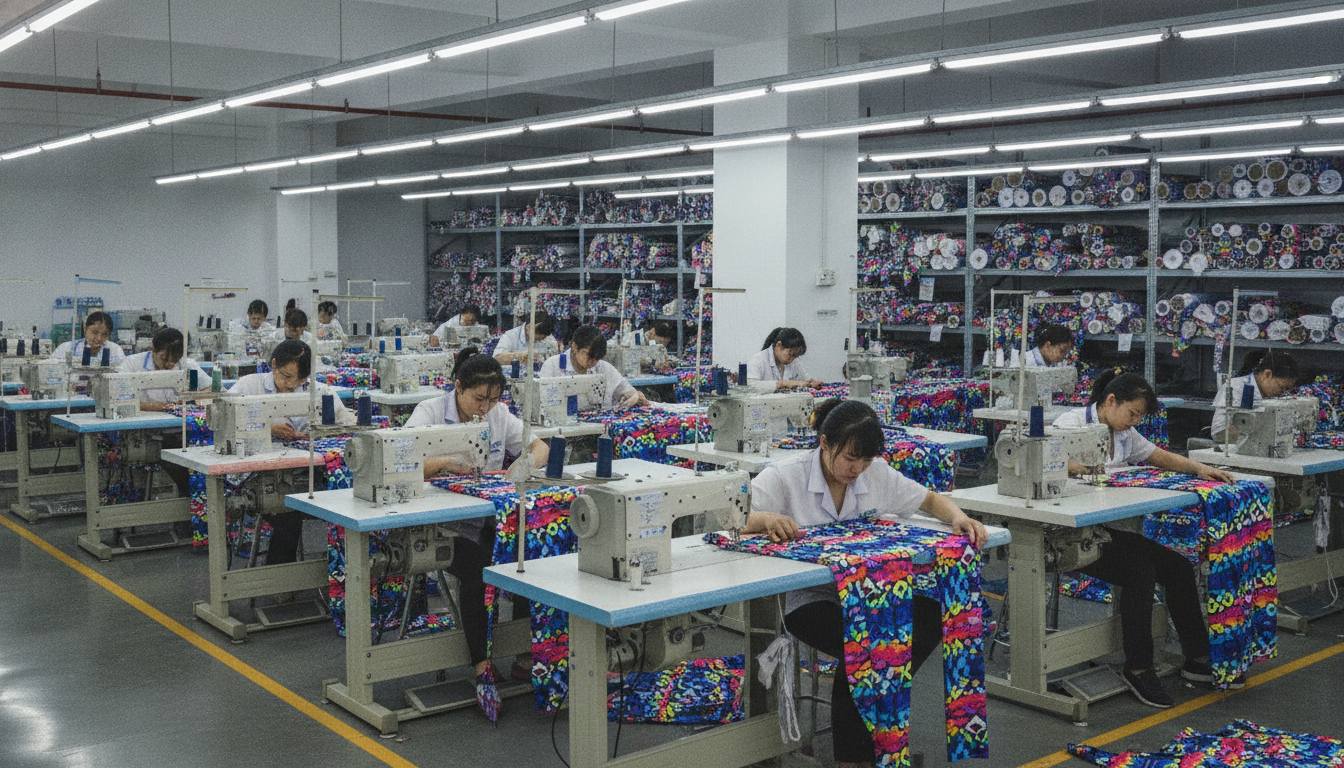
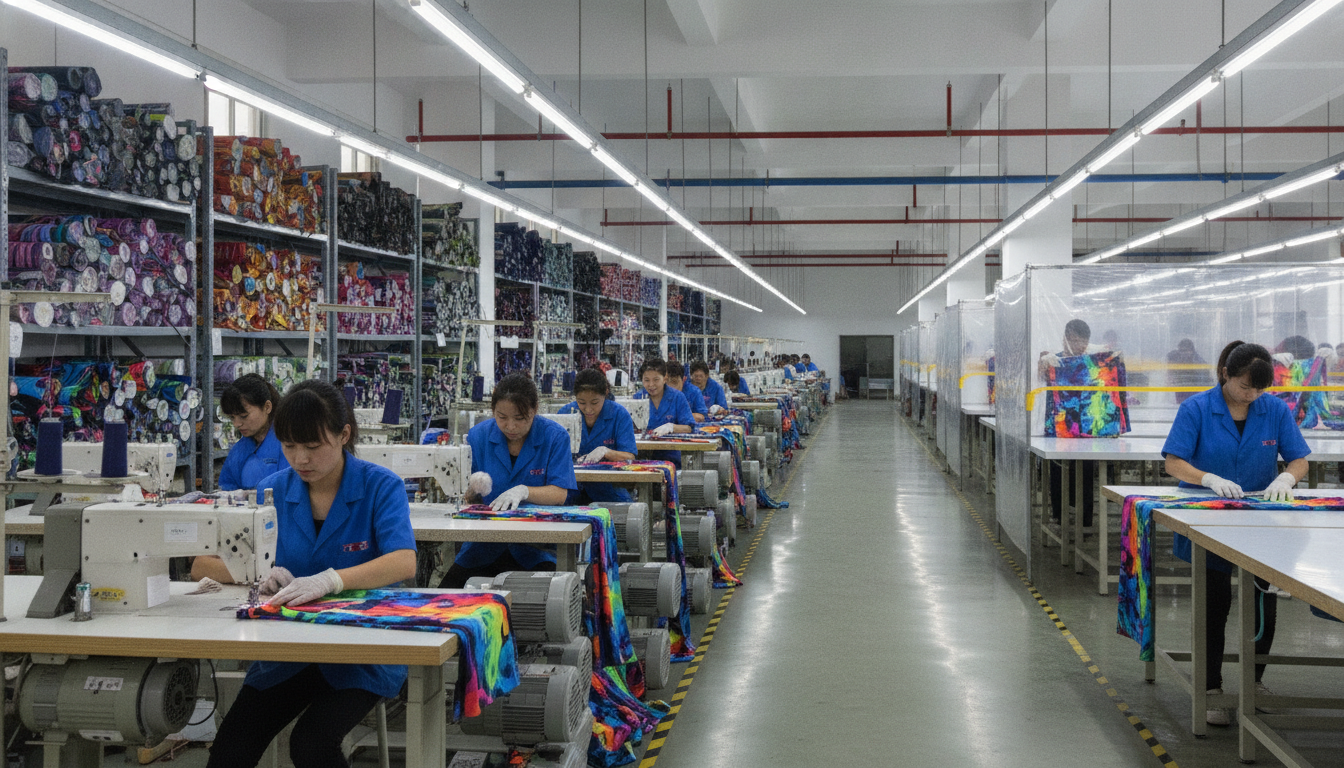
Working with a custom yoga apparel manufacturer that runs vertically integrated operations can consolidate these steps. In our 18,000m² Yiwu facility, we handle pattern development, fabric sourcing, sublimation printing, cut-and-sew, and trim application under one roof, which allows us to offer a 30-piece bulk MOQ per SKU without requiring separate minimums for each production step.
Quoted unit prices for custom sublimation yoga leggings 100 piece minimum orders often exclude the add-ons that inflate your total spend. A transparent landed-cost model accounts for every line item from fabric to your warehouse door.
Basic polybag packaging and a simple printed hang tag add $0.35 to $0.50 per piece. Custom printed care labels (polyester satin, single-color print) cost $0.15 to $0.25 each. Woven brand labels with custom artwork require a 500-piece minimum from most label suppliers, adding another $0.40 to $0.60 per piece if you order only 100 leggings.
Buyers looking to test the market without committing to 500-unit label runs can use heat-transfer printed labels for the first batch. These cost $0.10 to $0.15 per piece with no minimum, though wash durability is lower than woven satin.
A 100-piece legging shipment typically fits into one carton (approximately 0.3 cubic meters, 18 to 22 kilograms). Sea freight from Ningbo to Los Angeles costs $250 to $300 per carton as of mid-2026, with an 18 to 22 day transit time. Air freight reduces transit to 5 to 7 days but costs $4.50 to $6.00 per kilogram, raising your freight bill to $80 to $130 for the same shipment.
US customs duty for women’s knit leggings falls under HTS code 6114.30.30, which carries a 16.5 percent ad valorem rate. On a $1,200 FOB order (100 pieces at $12 each), duty adds $198. Customs brokerage and terminal handling fees add another $80 to $120.
Sublimation printing transfers dye into polyester fibers under heat and pressure, creating vibrant, wash-fast prints. Color consistency across production runs depends on calibrated equipment, documented process parameters, and fabric-lot traceability.
Buyers report that reorders often show noticeable color shifts compared to the original sample. This drift stems from three variables: fabric-lot variation, heat-press calibration, and digital file management. Polyester yarns from different dye lots absorb sublimation dye at slightly different rates. A 5 to 8 percent shift in dye uptake can produce a visible color change, especially in saturated hues like royal blue or magenta.
Factories that lack a color-management system may reprocess your artwork file each time, introducing small adjustments that compound over multiple orders. A professional low-MOQ yoga manufacturer archives your original ICC-profiled file, links it to the specific fabric lot and heat-press settings, and runs a test press before every production batch to verify color match.
Consistent sublimation requires tight control of three parameters: temperature (385 to 400°F), pressure (40 to 60 psi), and dwell time (45 to 75 seconds). A 10°F temperature swing or 5-second time variation can shift color saturation by 10 to 15 percent. Factories that document these settings for each design and verify them with a calibrated thermocouple before each run minimize drift.
In our Yiwu facility, every sublimation design receives a process card that records fabric blend, GSM, heat-press model, temperature, pressure, dwell time, and the ICC profile used. We archive a physical swatch from each production lot alongside the digital file, so reorders can be matched to the exact original parameters.
Sublimation prints are applied to fabric panels before cutting and sewing. Misalignment between the print and the pattern pieces results in design elements (stripes, logos, or graphics) that fail to match at seams. A 5-millimeter shift can make a centered logo appear off-center or cause a side stripe to widen unevenly.
Factories that use digital pattern plotting software align print artwork to cut lines with sub-millimeter precision. Manual alignment by eye introduces 3 to 8 millimeter variance, which becomes visible on finished garments. Ask to see sample photos showing seam-to-print alignment before placing a bulk order.
DTC founders validating a new legging design face a classic catch-22: you need customer feedback to refine the product, but most factories require 100 to 300 pieces before they’ll produce. Sampling strategies that minimize upfront inventory risk let you test fit, fabric hand, and print appeal before committing to a full run.
A 1-piece sample allows you to evaluate fabric weight, compression, opacity, print vibrancy, and construction quality without ordering 100 units. Sampling timelines range from 7 to 14 days, depending on whether the factory stocks your chosen fabric or needs to order it from a mill.
Walundi’s 1-piece sample MOQ lets founders test three to five design variations for under $200 total. You can validate squat-proof opacity, waistband stay, and print wash-fastness with real wear-testing before placing a 30-piece bulk order.
A 30-piece run provides enough inventory to test sales velocity across two to three marketing channels (your website, a pop-up, and Instagram ads) without tying up $3,000 to $5,000 in a 100-piece commitment. You can offer 10 pieces as seeded product to micro-influencers, sell 15 through your DTC site, and reserve 5 for fit adjustments.
Factories offering 30-piece minimums typically charge 15 to 25 percent higher per-unit prices than 100-piece runs, but the flexibility to pivot based on customer feedback often justifies the premium. A yoga clothing manufacturer for startups that supports low-volume testing reduces the risk of launching a full collection that misses your market.
Sublimated leggings in polyester-spandex blends behave differently than cotton-blend styles. Compression, recovery, and waistband roll-down vary with fabric GSM, spandex percentage, and stitch type. A sample that fits well on a size-6 fit model may reveal gaping or compression issues on size-2 or size-12 customers.
Order samples in your full size range (typically XS, S, M, L, XL) and test them on real wearers across that spectrum. Document feedback on waistband placement, inseam length, compression level, and squat-proof opacity. Adjust your grading before the bulk order to avoid returns driven by fit complaints.
In practice: A California yoga studio founder ordered 1-piece samples in three colorways, tested them in weekend classes, and refined the waistband height based on instructor feedback before placing a 30-piece bulk order that sold out in 18 days.
Not every cut-and-sew factory has the technical capability to produce stretch activewear with consistent fit and durable sublimation prints. Evaluating a manufacturer’s equipment, process controls, and track record prevents the common scenario where samples look excellent but bulk orders arrive with inconsistent stitching or print quality.
Activewear construction requires specialized machines: flatlock or coverstitch machines for seams that stretch without breaking, and multi-needle machines for waistbands that maintain even tension. General garment factories using standard lockstitch machines produce seams that pop under stretch or create uncomfortable ridges.
Ask the factory to specify their machine inventory. A professional activewear manufacturer will list Juki MF-7523 or similar coverstitch machines, Pegasus flatlock machines for decorative side seams, and Kansai Special multi-needle machines for waistbands. Factories that cannot name their equipment models or provide machine photos often subcontract activewear orders to third-party workshops, adding lead time and reducing quality control.
OEKO-TEX Standard 100 certification verifies that fabrics are tested for harmful substances including formaldehyde, heavy metals, and azo dyes. The Global Recycled Standard (GRS) certifies that recycled polyester content meets the required 20 percent threshold and that the supply chain maintains chain-of-custody documentation.
Walundi holds GRS, OEKO-TEX, and BSCI certifications, which we renew annually. We provide certificate copies and test reports with every bulk order, so your customers can verify sustainability claims. Factories that offer certifications but cannot produce current certificate numbers or test reports may be citing expired credentials or borrowing another facility’s paperwork.
The most frequent buyer complaint is that bulk orders differ from approved samples in fabric hand, fit, or print quality. This gap appears when factories use premium materials for samples to win the order, then substitute lower-cost alternatives in production.
Specify in your purchase order that bulk production must match the approved sample in fabric supplier, GSM, spandex percentage, and sublimation process parameters. Request a pre-production sample from the actual bulk fabric lot before the factory cuts the full run. A 7 to 10 day delay for pre-production approval prevents a 100-piece order that fails your quality standard.
Factories that give vague answers about lead time or production slots often lack the capacity to meet your deadline. A transparent manufacturer will state: sample lead time (7 to 10 days), bulk production time (18 to 25 days for 100 pieces), and current production backlog (e.g., “our next available slot is in 3 weeks”).
In our 18,000m² facility with 200+ workers and 2.4 million pieces per year capacity, we schedule production slots two to four weeks in advance. We provide a detailed timeline at order confirmation: sampling (7 to 10 days), bulk production (18 to 22 days), QC and packing (2 days), and freight booking (same day). This visibility lets you plan inventory arrival and launch dates with confidence.
Most factories set a 100-piece minimum per design or colorway for custom sublimation yoga leggings, though this can escalate to 300 pieces when multiple colorways or custom trims are added. Walundi offers a 30-piece bulk MOQ per SKU and 1-piece sample MOQ, allowing DTC founders to validate designs without committing to large inventory runs before confirming market demand.
Yes, a 100-piece order is feasible for custom sublimation yoga leggings, but expect to pay $120 to $150 in one-time setup fees for file preparation, color profiling, and heat-press calibration. Total landed cost including packaging, freight, and duty typically runs $15 to $18 per piece for US buyers, depending on fabric choice and trim specifications.
FOB unit prices for custom sublimation yoga leggings range from $10 to $14 per piece for 100-unit orders, with landed costs (including packaging, freight, and duty) reaching $15 to $18 per piece for US delivery. Add-ons like custom waistbands, printed labels, and retail-ready packaging can increase the total by $0.50 to $1.20 per piece.
Sublimation transfers dye into polyester fibers under heat, creating prints that are part of the fabric with no surface layer, excellent wash durability, and full stretch without cracking. Screen printing applies ink on top of the fabric, which can crack under stretch and typically requires 200 to 500 piece minimums per color due to screen-making costs, making it less suitable for low-MOQ activewear runs.
Search for vertically integrated factories that handle fabric sourcing, printing, cut-and-sew, and QC in-house, as these facilities can offer lower minimums without coordinating multiple subcontractors. Verify that the manufacturer uses coverstitch and flatlock machines for stretch seams, documents sublimation process parameters, and holds current OEKO-TEX or GRS certifications to ensure quality and compliance.
Ready to validate your legging designs without locking up cash in 100-piece minimums?
Request 1-Piece Samples →
Written by the Walundi Export Team.
Sample 1 piece · bulk from 30 · OEKO-TEX & GRS certified · reply in 24h. No gatekeeping.
Low MOQ. Sustainable fabrics. OEM ready. Tell us your vision.
Click the button below to open WhatsApp. If you're not logged in to WhatsApp Web yet, scan the QR code first — then come back here and copy the message into the chat.