
📋 Table of Contents
Launching a yoga or activewear brand with a ribbed seamless sports bra line means balancing product-market fit validation against minimum-order constraints. Many founders discover that traditional cut-and-sew manufacturers require thousands of units per style, locking up cash before they confirm demand. A custom yoga apparel manufacturer offering a ribbed seamless sports bra manufacturer low MOQ structure lets you test colorways, sizes, and support levels without overcommitting inventory or capital.
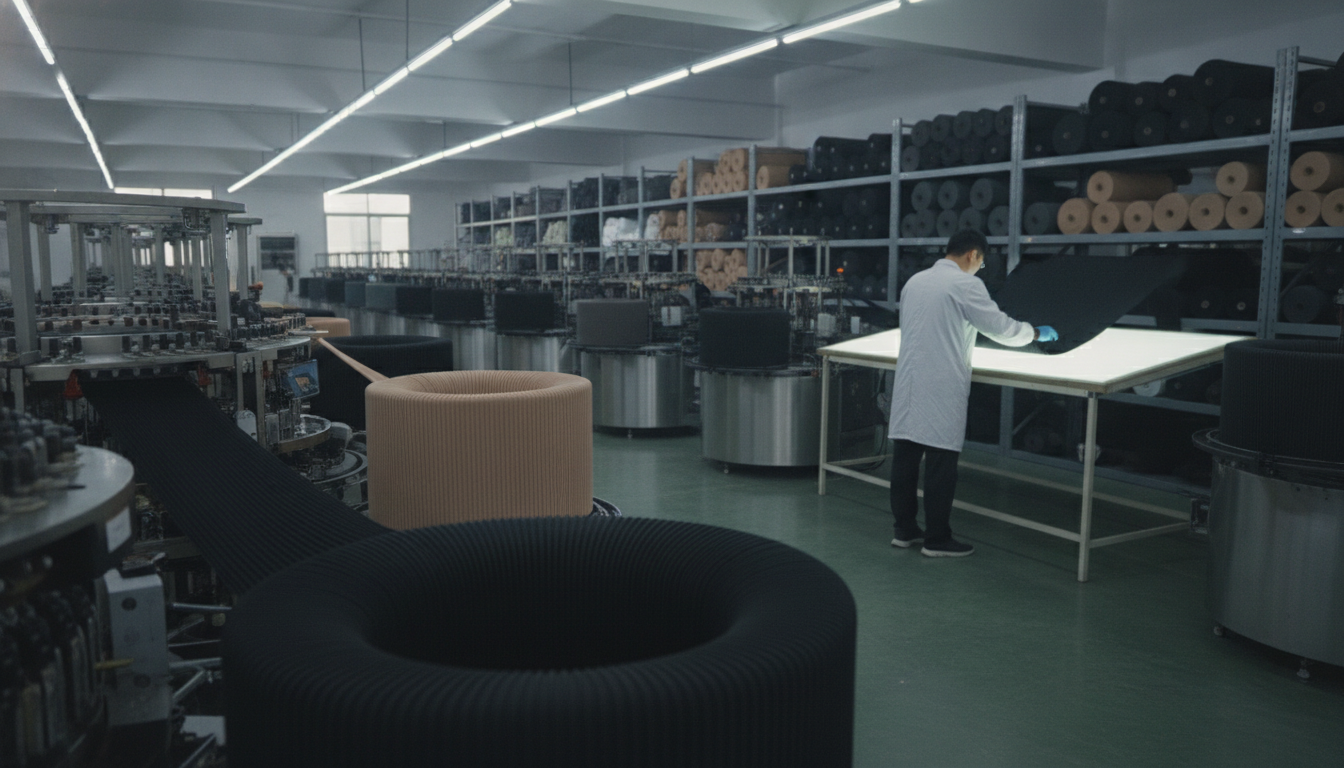
Ribbed seamless sports bras combine circular-knit technology with textured rib patterns, delivering compression and stretch without side seams or back closures. The construction method differs fundamentally from cut-and-sew bras in both economics and fit behavior.
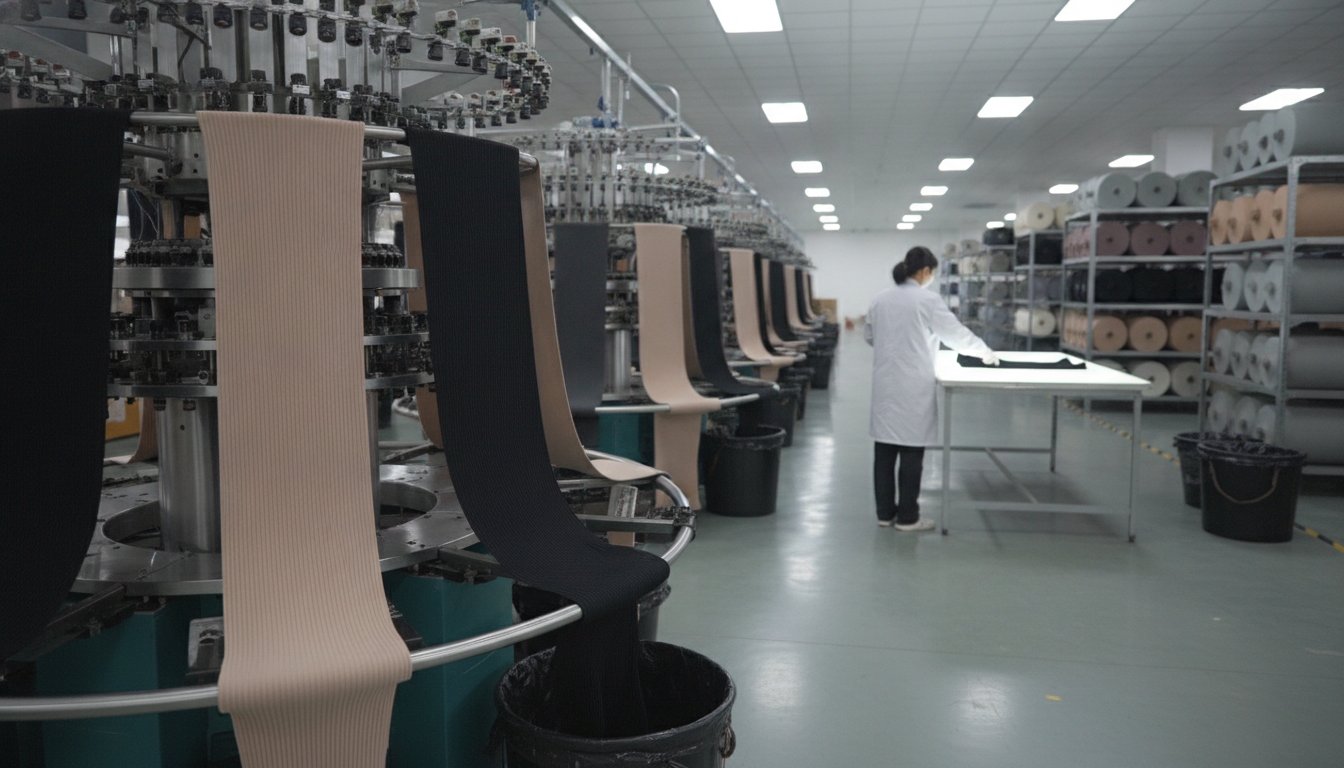
Seamless circular knitting machines produce a complete bra tube in one pass, eliminating fabric waste and reducing labor steps. Cut-and-sew construction requires pattern cutting, edge finishing, and multi-step assembly. For low-MOQ buyers, seamless knitting typically offers faster sampling because the machine setup translates directly into the first prototype, whereas cut-and-sew requires grading, marker making, and sewing-line setup even for a single sample.
Buyers often worry about inconsistent quality when sourcing from low-MOQ suppliers. Seamless knitting machines deliver repeatable tension and stitch density across runs, reducing the fit-variance risk that plagues small-batch cut-and-sew orders. However, rib-pattern programming demands precise needle selection and yarn tension calibration. A factory with in-house pattern-studio expertise can adjust rib width, compression zones, and neckline depth without outsourcing technical development.
Ribbed textures alternate knit and purl wales, creating vertical stretch channels that compress the bust while allowing chest expansion during deep breathing. This makes ribbed seamless bras popular for yoga, Pilates, and barre classes where breath work is central. The rib spacing also influences support level: tighter ribs (2×2 or 1×1) offer medium-to-high support, while wider ribs (4×2) provide lighter compression for low-impact activities.
Fabric composition directly affects squat-proof performance and moisture management. Nylon-spandex blends (typically 80/20 or 75/25) deliver four-way stretch and shape retention, while polyester-spandex blends reduce cost but may show sweat more visibly. Founders validating product-market fit should sample both compositions in their target price tier before committing to bulk fabric procurement.
Ribbed seamless sports bras span three support categories, each requiring different rib density and underband construction:
A ribbed seamless sports bra manufacturer low MOQ partner should clarify which support tiers their machinery can produce. Many circular-knit facilities excel at low-to-medium support but lack the molding equipment for high-impact styles, requiring founders to source those SKUs separately or accept a hybrid construction.
Minimum-order quantities determine cash outlay, inventory risk, and speed to market. Understanding the three-tier MOQ structure helps founders model launch budgets accurately.
Single-piece sampling lets you validate fit across multiple size grades and colorways without committing to bulk fabric rolls. In our 12+ years manufacturing yoga apparel in Yiwu, we’ve seen founders test 5-7 size-color combinations (XS black, S nude, M charcoal, L black, XL nude) for under $200 total sample cost, then eliminate poor sellers before placing the first production order. This approach prevents the common mistake of ordering 500 units of a single SKU only to discover the band runs tight or the color photographs differently than the swatch.
Sample turnaround time matters as much as MOQ. A 7-10 day sampling window allows you to receive prototypes, conduct wear tests with target customers, and iterate on rib spacing or strap width within a 3-4 week validation cycle. Factories quoting 4-6 week sample lead times often batch samples with bulk orders, delaying your feedback loop.
A 30-piece-per-SKU minimum enables a realistic size run without overstock risk. For example, a founder launching three colorways (black, nude, charcoal) across five sizes (XS, S, M, L, XL) would order:
This 90-unit first order typically costs $450-$900 FOB (depending on fabric tier and trim complexity), fitting within a $5,000-$7,500 total launch budget when you include sampling, shipping, and customs duties. Founders concerned about cash flow can launch with two colorways (60 units) and add the third after validating sell-through rates.
Once you identify best-selling size-color combinations, reorder minimums should allow you to replenish fast movers without ordering slow sellers. A low MOQ yoga manufacturer maintains the 30-piece-per-SKU floor on reorders, so you can order 60 units of black M/L and skip charcoal XS entirely. This prevents the inventory bloat that kills early-stage brands when they’re forced to reorder full size runs to meet a 500-piece blanket minimum.
In practice: A Toronto yoga studio owner validated three ribbed seamless bra styles with 1-piece samples in five sizes, then placed a 90-unit first order (30 per style) and sold through in 8 weeks, reordering only the black and nude colorways at 60 units each without touching charcoal.
Seamless rib construction behaves differently across cup sizes and body types than cut-and-sew bras. Fit development requires targeted adjustments to underband compression, strap placement, and rib density.
A-C cup customers prioritize comfort and freedom of movement, tolerating lighter compression. D-DD+ cup customers need stronger underband support and wider straps to prevent shoulder digging and bounce. Many seamless-knit machines cannot vary rib density within a single tube, so factories address larger cup sizes by:
Founders should specify target cup range during sampling. A bra optimized for B-C cups will gap on A cups and provide insufficient support for DD cups, forcing you to develop separate size grades or accept a narrower target market.
Ribbed seamless bras typically use alpha sizing (XS, S, M, L, XL) rather than numeric band-cup sizing (32B, 34C). This simplifies inventory but increases fit-variance risk. The underband must stretch to accommodate a 4-6 inch range (e.g., size M fits 32-36 inch underbust) while maintaining compression.
Spandex content governs recovery and longevity. A 20% spandex blend retains compression through 30-40 wash cycles, while 15% spandex may relax after 15-20 washes. Buyers concerned about customer retention should request wash-cycle testing during sampling, comparing underband stretch after 10, 20, and 30 home laundry cycles.
Strap width and neckline depth influence perceived support and aesthetic. Yoga-focused customers prefer racerback or Y-back straps that stay in place during downward dog and inversions. Athleisure customers favor scoop or V necklines that layer under casual wear. A ribbed seamless sports bra manufacturer low MOQ factory with an in-house pattern studio can adjust these elements during the sampling phase without retooling the entire knitting program.
Strap placement also affects underarm coverage. High-set straps (closer to the neck) reduce side spillage for D+ cups but may feel restrictive during shoulder-intensive movements. Low-set straps (closer to the armpit) increase range of motion but require stronger underband compression to prevent bounce.
Retail-ready activewear requires chemical-safety and sustainability documentation. Three certifications cover the majority of US, UK, EU, and Australian compliance requirements.
OEKO-TEX Standard 100 screens textiles against more than 1,000 harmful substances, including formaldehyde, heavy metals, pesticides, and phthalates. The certification applies to finished garments, not just raw fabric, so your manufacturer must test the complete bra including elastic, labels, and trims. Product Class II (skin-contact textiles) is the relevant category for sports bras.
Buyers planning to sell on Amazon, Target, or specialty yoga retailers should confirm the factory holds a current OEKO-TEX certificate and can provide test reports for each fabric lot. Certificates expire annually and must be renewed with fresh testing, so a 2024 certificate is invalid for 2026 production.
The Global Recycled Standard requires a minimum of 20% recycled material content before a product can carry the GRS label. For activewear, this typically means recycled polyester or recycled nylon derived from post-consumer plastic bottles or pre-consumer textile waste. GRS also mandates wastewater treatment, energy tracking, and social compliance at every processing stage.
A sustainable yoga clothing manufacturer with GRS certification can provide transaction certificates (TCs) that trace recycled content from fiber supplier through final garment. These TCs are required if you plan to make on-product recycled-content claims or market to sustainability-focused retailers like REI or Lululemon.
BSCI audits cover labor practices, working hours, health and safety, and fair wages. The audit is valid for two years and includes unannounced follow-up inspections. US and EU buyers increasingly require BSCI or equivalent (WRAP, SA8000) as a condition of purchase-order approval, particularly for brands with public sustainability commitments.
Factories that pass BSCI audits maintain documented overtime limits, fire-safety equipment, and grievance mechanisms. During factory vetting, ask for the most recent BSCI audit report and check the corrective-action-plan (CAP) section for unresolved violations.
Different retail channels impose additional requirements beyond general certifications:
Your manufacturer should provide these documents as part of the production package, not as an afterthought. Factories accustomed to B2B buyers will have templated care labels, fiber-content labels, and compliance declarations ready to customize with your brand details.
Selecting a ribbed seamless sports bra manufacturer low MOQ partner requires evaluating production capabilities, quality-control systems, and commercial terms beyond the headline MOQ number.
Verify the factory operates the specific equipment and processes your product requires:
A yoga clothing manufacturer for startups should walk you through their QC process during the vetting call, not just send a capabilities PDF.
Common warning signs that indicate a supplier may not deliver on low-MOQ promises:
Buyers report that finding a factory accepting low MOQ without compromising quality is one of the most common obstacles when launching an activewear brand. Mitigate risk by requesting samples from 2-3 shortlisted factories, comparing fabric hand-feel, stitching consistency, and communication responsiveness before committing to a bulk order.
Negotiate these commercial terms before placing your first order:
Document all terms in a written purchase order or manufacturing agreement. Verbal promises about MOQ flexibility or sampling speed are unenforceable and frequently lead to disputes during production.
Evaluate communication quality during the vetting phase. Factories that take 3-5 days to answer basic questions about MOQ, lead time, or certifications will likely be slow to resolve production issues or provide shipment updates. Responsive suppliers typically reply within 12-24 hours and assign a dedicated account manager for orders above 100 units.
Time-zone alignment matters less than communication clarity. A factory in Yiwu (UTC+8) can serve US founders effectively if they maintain English-fluent staff and use structured order-confirmation templates that eliminate ambiguity around sizes, colorways, and delivery terms.
Walundi accepts a 1-piece sample MOQ and 30-piece bulk MOQ per SKU for ribbed seamless sports bras. This allows DTC founders to test multiple sizes and colorways without committing to hundreds of units upfront. Many traditional manufacturers require 500-1,000 piece minimums, which locks up cash before market validation.
Yes. A ribbed seamless sports bra manufacturer low MOQ structure is achievable with circular-knit factories that operate vertically integrated production. Walundi produces ribbed seamless bras at 30 pieces per SKU, enabling founders to launch 3-5 sizes across 2-3 colorways (90-150 total units) and validate sell-through before scaling inventory.
OEM (Original Equipment Manufacturer) production means the factory manufactures your design using your patterns, fabrics, and specifications. ODM (Original Design Manufacturer) means the factory offers pre-developed designs you can customize with your branding and minor adjustments. ODM reduces development cost and time but limits differentiation; OEM delivers unique products but requires pattern investment and longer sampling cycles.
Verify the factory holds current GRS, OEKO-TEX, and BSCI certifications with certificate numbers and expiration dates. Request 2-3 customer references in your target market and check for a physical factory address (not just a trading-company office). Order 1-3 pre-production samples to evaluate fabric quality, stitching consistency, and communication responsiveness before placing a bulk order.
OEKO-TEX Standard 100 screens textiles against harmful chemicals and is required by many US and EU retailers. GRS (Global Recycled Standard) certifies recycled-content claims and traces material from fiber to finished garment. BSCI audits labor practices and working conditions, increasingly required by brands with public sustainability commitments. Confirm certificates are current (OEKO-TEX renews annually, BSCI every two years) and request test reports for each fabric lot.
Ready to validate your ribbed seamless sports bra line without locking up cash in high-MOQ orders?
Request 1-piece samples today →
Written by the Walundi Export Team.
Sample 1 piece · bulk from 30 · OEKO-TEX & GRS certified · reply in 24h. No gatekeeping.
Low MOQ. Sustainable fabrics. OEM ready. Tell us your vision.
Click the button below to open WhatsApp. If you're not logged in to WhatsApp Web yet, scan the QR code first — then come back here and copy the message into the chat.