📋 Table of Contents
For many DTC founders, the first sourcing roadblock is a $3,000 minimum order quantity that locks up working capital. An alo yoga alternative manufacturer with startup-friendly terms-sample MOQ from 1 piece, bulk from 30 pieces-can make the difference between launching on time and delaying by six months.
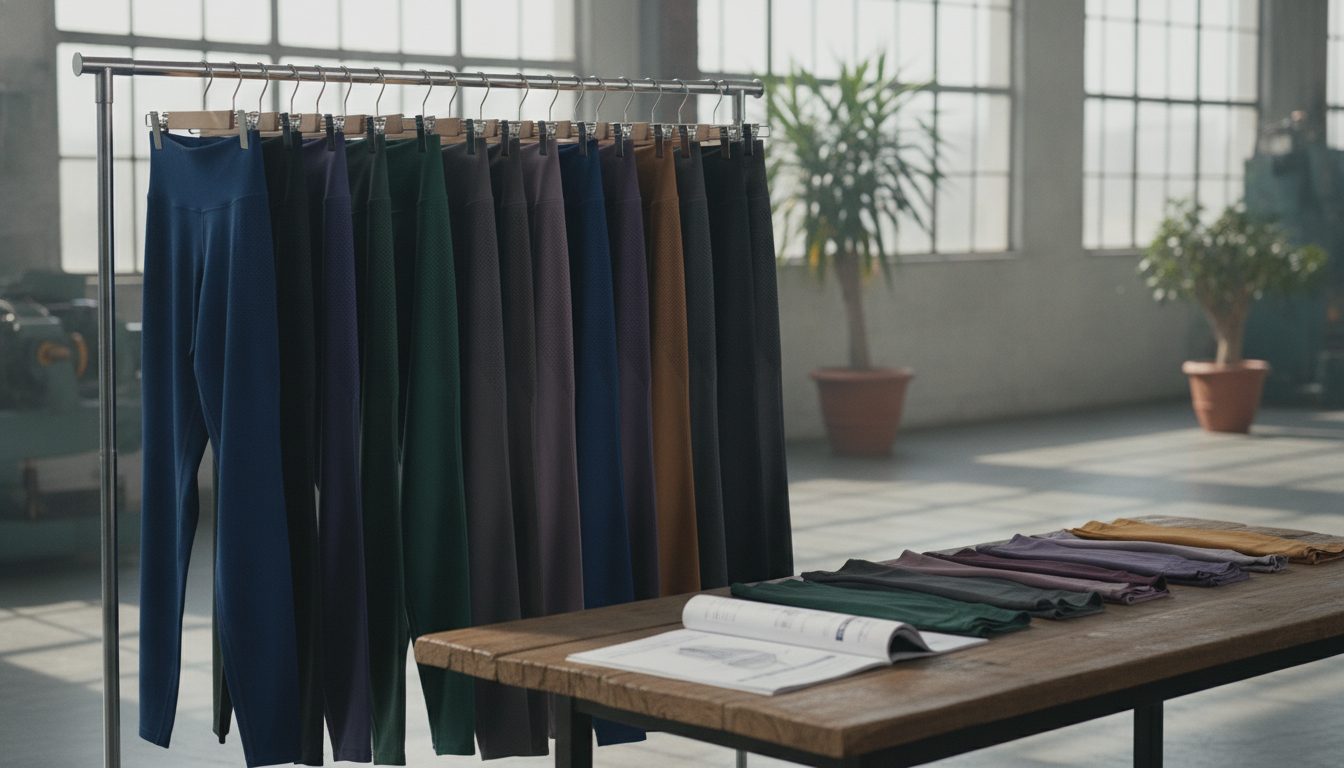
Alo Yoga operates one of the tightest supply chains in premium activewear. But for a brand doing $100K in annual revenue, that model is not replicable-the factory minimums run into thousands of units per style. An alo yoga alternative manufacturer fills the gap for DTC startups, boutique studios, and emerging labels that need small-batch production without compromising on fabric quality.
A large-tier factory amortizes pattern making and fabric procurement over 5,000-plus units. A startup-friendly custom yoga apparel manufacturer spreads those costs across 30 to 300 pieces, but still leverages the same Yiwu textile supply chain. Our 18,000m² Yiwu facility runs in-house cut-and-sew lines, a pattern studio, and QC-capabilities that hold ex-factory pricing 40-60% below equivalent US or European cut-make-trim shops.
With sample MOQs of 1 piece and bulk starting at 30 pieces per SKU, a founder can validate three legging styles for under $150 in sampling fees rather than committing to a container order. This model is why brands that outgrow their first Alibaba supplier often shift to a vertically integrated partner in Zhejiang for complete control over timelines and material sourcing.
Not every factory that sews leggings understands 4-way stretch recovery, gusset construction, or the importance of OEKO-TEX certification for the US market. Here are the capabilities that separate a commodity cut-and-sew shop from a true yoga apparel specialist.
In 12+ years manufacturing yoga apparel in Yiwu, we’ve seen more than 70% of first-time brand founders submit a tech pack that needs redrafting for production. An in-house pattern room turns a concept into a graded size set (XS-XXL) in 3-5 business days.
Access to pre-certified GRS recycled nylon, organic cotton, and Tencel-blend jerseys matters when you cannot order an entire dye lot. A specialist factory maintains a library of sustainable fabrics in small available rolls so that orders of 30 pieces still carry valid certification paperwork.
The four main sourcing regions for yoga apparel offer different trade-offs between cost, lead time, and minimums. Here is how they stack up for a brand producing fewer than 500 units per style.
For brands shipping to the US West Coast, Ningbo port provides FCL and LCL consolidation with 14-18 day ocean transit, keeping landed cost close to the factory price.
Bulk MOQs are the single largest barrier for an alo yoga alternative manufacturer shopper. Below are the paths from first conversation to production-ready sample, structured to preserve cash.
Requesting a single garment of each style costs $20, $60 per sample depending on fabric complexity. Turnaround is 7-10 business days from tech pack approval. This step validates fit, fabric hand-feel, and construction without risking a production deposit.
Sample MOQ: 1 piece. Bulk MOQ: 30 pieces per SKU. Sampling time: 7-10 days.
A 30-unit run of a single legging style, with custom hang tags and woven labels, runs roughly $7, $12 per unit FOB Yiwu. Total outlay $210, $360 plus freight lets you test sell-through on Shopify before scaling to 300 units. This approach lowers inventory risk and preserves working capital for marketing.
For deeper detail on startup budgets, see our low MOQ yoga manufacturer page.
Certifications are not just logo-stickers. They affect customs clearance, retailer compliance, and consumer trust. Here is what the three most requested certifications actually cover for yoga apparel sold in the US.
A sustainable yoga clothing manufacturer that holds all three certifications removes months of back-and-forth compliance paperwork when you pitch a buyer at a trade show.
Partnering with the wrong factory costs more time than money-missed launch dates, fabric substitutions, and QC quarrels that consume your evenings. Use the checklist below before you wire a deposit.
Ask to see the cutting tables, sewing lines, and finishing stations on a video call. An honest factory will oblige within 48 hours. A shell company will show you a showroom and dodge the production floor.
Send a single change request to your contact-say, switch the waistband from 3cm to 4cm elastic-and measure response time. A factory that replies in fewer than 4 hours with a clear cost and timeline adjustment is built for iterative development.
Before committing to bulk, have the factory sew exactly one garment to your approved spec. Measure it against your original sample, wear-test it, and wash it three times. This single sample catches 90% of pattern errors.
Obtain a documented inspection checklist: inline inspection after 20% of production is complete, final AQL 2.5 inspection, and a detailed defect classification list. This formalizes the standard before cutting starts.
For new brand founders ready to move from concept to sample, the yoga clothing manufacturer for startups guide walks through the entire sequence.
It is a factory or sourcing partner that can produce yoga apparel with similar fabric quality and construction to Alo Yoga, but with lower minimum order quantities, startup-focused terms, and faster sampling. Such manufacturers often operate in Yiwu, China, and offer sample MOQs as low as 1 piece.
Bulk MOQs vary by region: a vertically integrated Yiwu factory can start at 30 pieces per SKU, while Guangdong typically demands 100-200 pieces, and Vietnam 300-500. Sample MOQs are often 1 piece with a fee of $20, $60 per style.
Yes, manufacturers that hold GRS certification and keep small rolls of recycled nylon or organic cotton can supply sustainable fabrics for orders as low as 30 pieces. The key is to pick a factory that already stocks certified materials.
Standard sampling time from tech pack approval to finished garment is 7-10 business days at a factory with an in-house pattern room. Complicated styles with multiple trims may take 12-14 days.
Request pre-production samples, specify 4-way stretch fabric with minimum 80% recovery, ask for OEKO-TEX certification, and demand an AQL 2.5 final inspection report. A manufacturer that can provide these is likely capable of premium-level quality.
Ready to validate your designs without committing to a container order?
Request 1-Piece Samples →
Sample 1 piece · bulk from 30 · OEKO-TEX & GRS certified · reply in 24h. No gatekeeping.
Low MOQ. Sustainable fabrics. OEM ready. Tell us your vision.
Click the button below to open WhatsApp. If you're not logged in to WhatsApp Web yet, scan the QR code first — then come back here and copy the message into the chat.