📋 Table of Contents
Locking up $15,000 in inventory before proving demand is the fastest way to kill a new yoga brand. That’s why startup founders and studio owners are turning to private label yoga clothing programs that let you test designs with 1-piece samples and start bulk production at just 30 units per SKU. You don’t need a fashion degree or a six-figure budget. You need a manufacturer structured for low-risk validation.
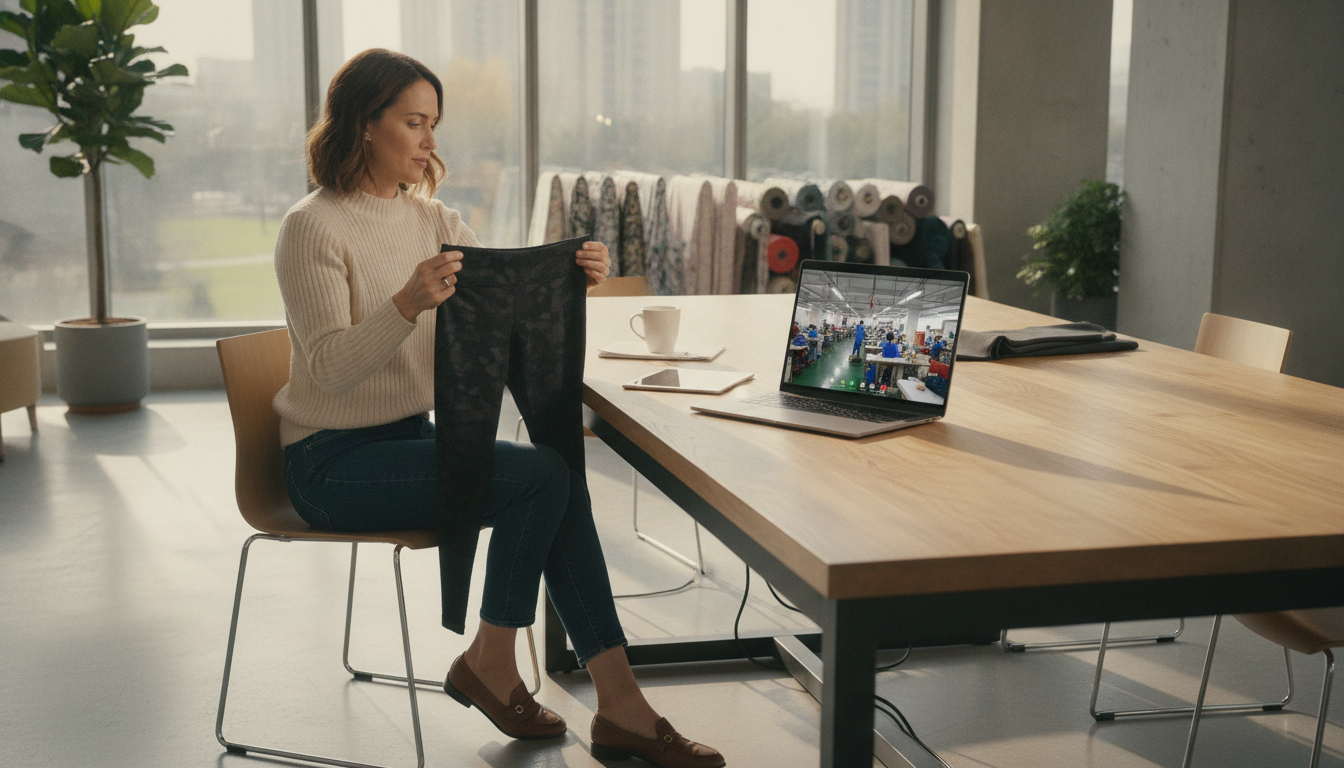
Private label yoga clothing means an existing design or tech pack from a manufacturer’s catalog that you brand as your own. You select fabrics, colorways, labels, and packaging, but the pattern and construction are already production-proven. This differs from white label, where you buy generic stock garments and apply your logo, and from full OEM/ODM development, which starts from scratch.
The sweet spot for a DTC founder: a manufacturer’s catalog with proven fit blocks and a sample MOQ of 1. You test market fit without funding a full production run. Then you scale into bulk orders of 30 units per colorway per style.
Pre-built patterns slash sampling cost and timeline. You only pay for fabric, labor, and your branding, not pattern development. In our 12+ years manufacturing yoga apparel in Yiwu, we’ve seen founders go from sample to first sale in under 5 weeks using a catalog legging block. This speed matters when you’re validating a product against rising customer acquisition costs.
A private label launch can be bootstrapped for $2,000-$4,000. That covers 3 sample styles, 30-unit bulk run per SKU, custom labels, and shipping. Compare that to a full custom development that often runs $8,000-$15,000 before a single unit sells.
Look for a manufacturer that separates sample MOQ from bulk MOQ. A sample MOQ of 1 piece lets you touch fabric, check seams, and shoot product imagery before committing inventory dollars. Bulk MOQ around 30 pcs/SKU is realistic for a first run. Many factories claiming “low MOQ” actually mean 200 pcs. Get their terms in writing.
Sample MOQ: 1 piece. Bulk MOQ: 30 pieces per SKU. Sampling time: 7-10 days.
Certifications verify sustainability claims and chemical safety, which influence both DTC buyer trust and retail partner requirements in the US.
A manufacturer with a dedicated in-house pattern studio, cut-and-sew lines, and on-site QC team reduces communication lag and defect risk. Our 18,000m² Yiwu facility runs integrated pattern-to-pack operations, which eliminates the handoff errors common between third-party design and sewing shops. Ask for a video tour showing the actual QC station, not just a showroom.
Leggings that go sheer during a forward fold destroy a brand’s credibility. Reputable manufacturers perform a standardized opacity test: fabric is stretched to 80% elongation over a controlled light source, and a reading below 5% light transmission qualifies as squat-proof. Demand a test video or written report. Without an actual reading, “squat-proof” is only a claim.
Yoga consumers expect fabrics that hold shape after repeated wear. The industry benchmark: after 30 wash cycles, leggings should retain at least 85% of original compression and show no bagging at the knee. Ask for wash-duration test results or run your own before placing a bulk order.
Poly bagging costs pennies and protects during transit. For a DTC-first brand, add branded tissue paper and a sticker for less than $0.15 per unit. This small addition lifts perceived value and repeat purchase rate.
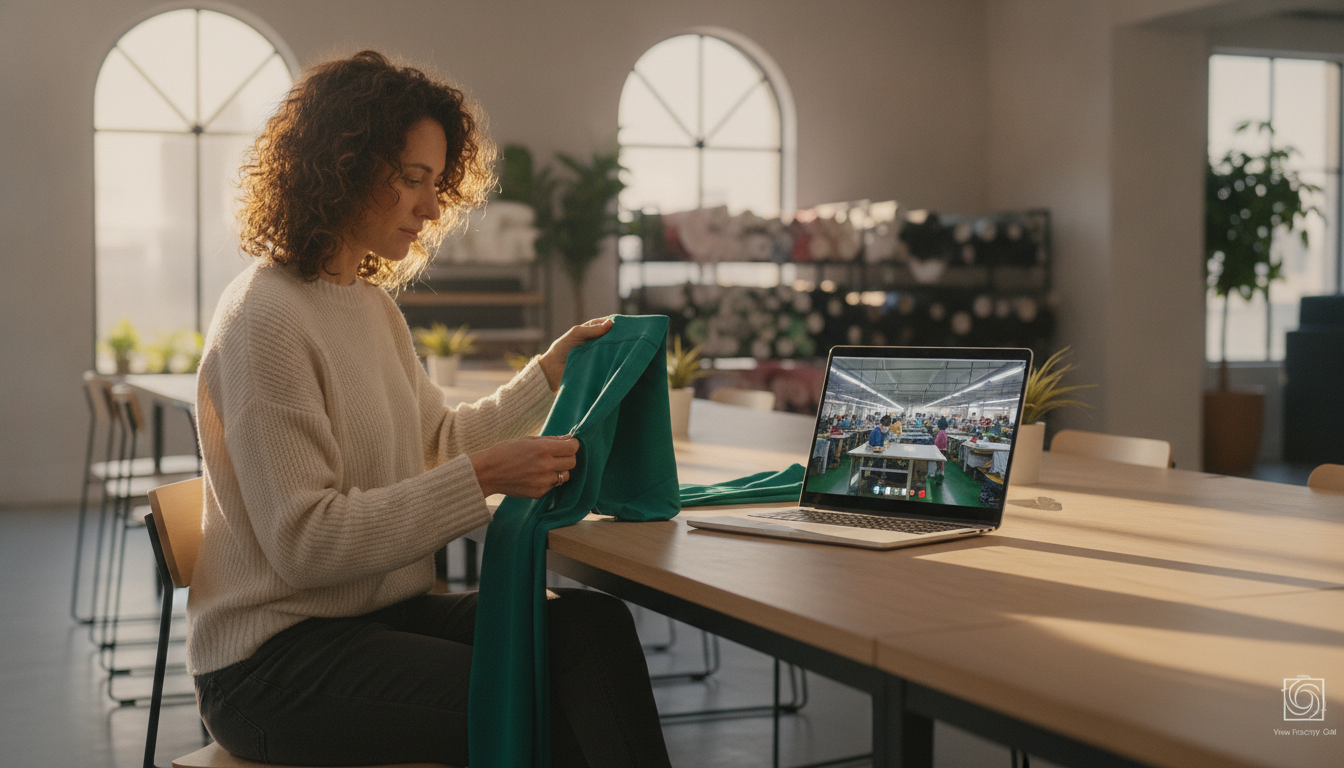
After selecting a blank catalog style, you provide size specs, colorway, and branding file. The manufacturer creates a sample in 7-10 days. You receive it in the US within 3-5 shipping days. This sample lets you check fit, fabric hand, label placement, and order photography before committing to bulk.
With approval, production begins. A 30-unit run typically takes 3-4 weeks. During this phase, a reliable manufacturer performs inline QC at cutting, sewing, and finishing. Ask for a mid-production check photo or video to catch issues early.
Ningbo port to Los Angeles/Long Beach takes 12-15 days by sea, plus 2-3 days customs clearance. Air freight ships in 5-7 days but increases per-unit cost by roughly $3.50-$5.00. Factor this into your landed cost model.
The Federal Trade Commission requires a permanent care label with fiber content (in descending weight percentage), country of origin, and washing instructions. A missing or inaccurate label can trigger a customs hold or consumer complaint. Work with a manufacturer who understands and prints FTC-compliant labels.
The Consumer Product Safety Improvement Act mandates third-party testing for lead content and phthalates in children’s apparel, but for adult yoga wear the requirement is voluntary. Still, many US retailers require passing test reports. A CPSIA-compliant test from a CPSC-accepted lab costs around $150-$300 per style.
Import duty for knit activewear under HTS 6112.12 is typically 14.9% for leggings, 16% for tops. A freight forwarder can file entry and handle tariff classification. Use the correct HTS code to avoid penalties of up to 20% of merchandise value.
At 30 pcs/SKU, per-unit cost is roughly 35-45% higher than at 300 pcs due to fabric minimums and setup charges. Many founders start at 30, validate the market at a DTC price of $58-$78, then scale to larger orders once they have sell-through data.
Aim for a 3x-4x markup on landed cost. If your landed cost is $9.00, a $65 retail price gives a $56 gross margin before marketing and fulfillment. This cushion funds Facebook/Instagram ad testing, influencer seeding, and the inevitable returns.
Private label yoga clothing means selecting pre-developed, proven designs from a manufacturer’s catalog and branding them as your own. You customize fabrics, colors, labels, and packaging, but the pattern and construction are already tested, keeping sampling fast and cost low. It differs from white label (adding a logo to generic stock) and full custom development, which requires pattern creation from scratch.
Look for a vertically integrated manufacturer that offers separate sample and bulk MOQs, in-house pattern and QC teams, and certifications like GRS or OEKO-TEX. Request a 1-piece sample to evaluate fabric, construction, and communication. Platforms like Maker’s Row or direct factory outreach to Yiwu-based specialists are common starting points.
MOQs vary widely. Many factories require 200+ pieces per style. A private label specialist like Walundi offers sample MOQ of 1 piece and bulk production starting at 30 pieces per SKU, enabling low-risk market testing. Always confirm if the MOQ includes fabric and trim minimums in writing before payment.
For brand building, private label generally works better because you control fabric quality, colorways, and finishing details, not just the logo. White label is faster and cheaper upfront, but you compete on price and have no differentiation. Private label gives you unique product, higher perceived value, and stronger customer loyalty.
A minimum viable launch can be done for $2,000-$4,000. This includes 3 sample styles, a bulk run of 30 units per SKU with custom labels, and sea freight to a US port. Expect per-unit landed cost between $7.50 and $12.50 for quality yoga leggings, depending on fabric and volume.
Test one legging style today with zero inventory risk.
Request Your 1-Piece Sample →
The canonical guide covers landed cost and compliance; these reference tables add the granular branding costs, a full initial-investment estimate, and product-by-product minimums you need to build a launch budget.
| Label Type | Cost | MOQ | Best For |
|---|---|---|---|
| Woven labels | $0.10–0.30/pc | 100 pcs | Premium brands |
| Printed labels | $0.05–0.15/pc | 100 pcs | Entry-level brands |
| Heat transfer | $0.15–0.40/pc | 100 pcs | No-tag comfort |
| Embroidery | $0.50–2.00/pc | 100 pcs | Logos on garments |
| Hangtags | $0.20–0.60/pc | 100 pcs | Brand storytelling |
Packaging add-ons: polybags $0.10–0.30/pc (custom printing available), boxes $0.50–2.00/pc (premium unboxing), tissue paper $0.05–0.15/pc, stickers $0.05–0.20/pc.
| Expense | Low End | High End |
|---|---|---|
| Samples (3–5 styles) | $200–400 | $500–800 |
| Labels & packaging | $300–500 | $800–1,500 |
| Logo design | $200–500 | $1,000–3,000 |
| Product photography | $500–1,000 | $2,000–5,000 |
| Website setup | $500–1,000 | $2,000–5,000 |
| Initial inventory (200 pcs) | $2,000–4,000 | $5,000–8,000 |
| Marketing launch | $500–1,000 | $2,000–5,000 |
| Total | $4,200–8,400 | $13,300–28,300 |
| Product | Typical MOQ | Price Range |
|---|---|---|
| Leggings | 50–100 pcs | $12–18/piece |
| Sports bras | 50–100 pcs | $10–16/piece |
| Tops | 50–100 pcs | $12–20/piece |
| Shorts | 50–100 pcs | $10–18/piece |
| Hoodies | 100–200 pcs | $18–32/piece |
Sample 1 piece · bulk from 30 · OEKO-TEX & GRS certified · reply in 24h. No gatekeeping.
Low MOQ. Sustainable fabrics. OEM ready. Tell us your vision.
Click the button below to open WhatsApp. If you're not logged in to WhatsApp Web yet, scan the QR code first — then come back here and copy the message into the chat.