
📋 Table of Contents
Most boutique yoga studio owners and first-time apparel founders fear large minimums that tie up $5,000, $10,000 before they’ve even tested a design. Custom yoga clothing manufacturing doesn’t have to work that way. Today you can validate designs with samples as small as a single piece and scale with a DTC-friendly bulk MOQ of 30 units per style.
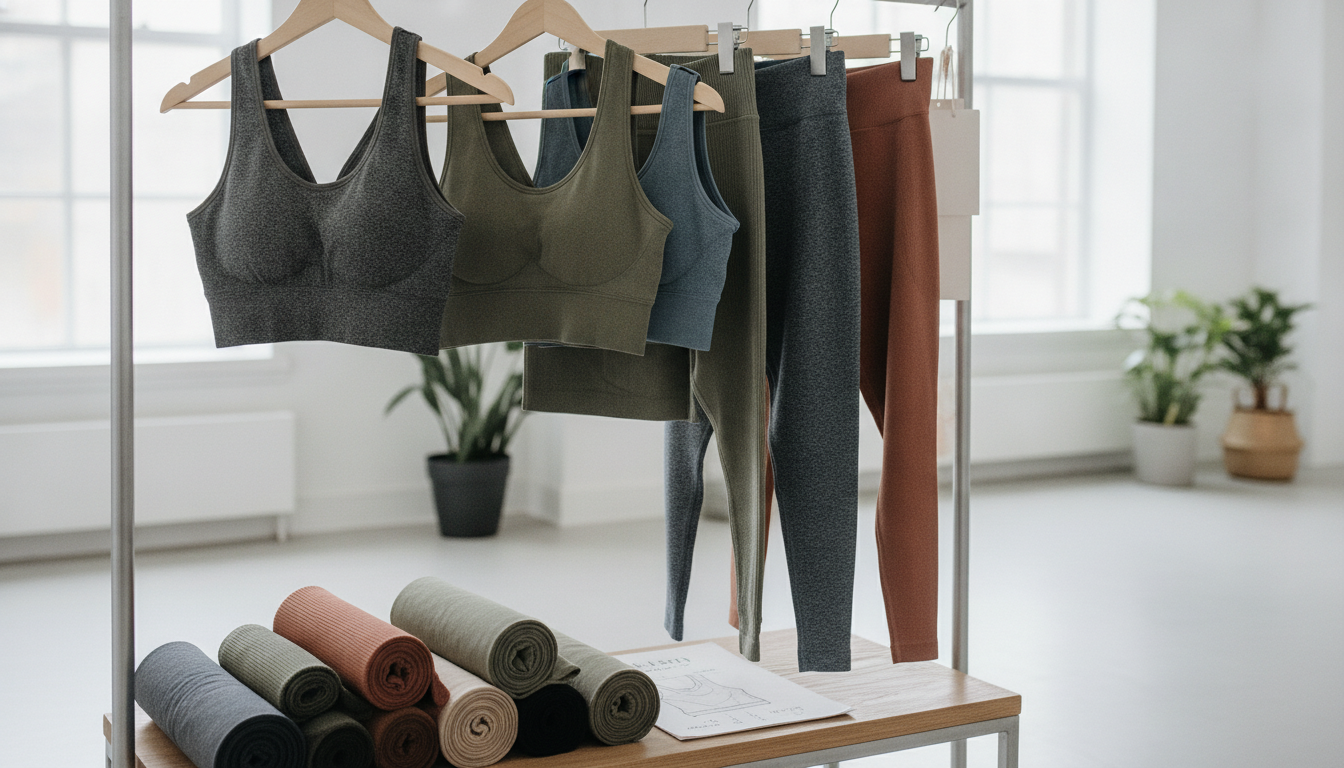
Low MOQ manufacturing turns the traditional model on its head. Instead of locking in 500+ units per style upfront, you order exactly what a market test needs. For a DTC brand or studio, that means a 30‑piece bulk run after a single prototype validates the concept.
Sample MOQ: 1 piece. Bulk MOQ: 30 pieces per SKU. Sampling lead time: 7-10 days. Typical sample cost: $80, $150.
A 30‑piece run of custom yoga leggings might cost $8, $12 per unit, including fabric, cut‑and‑sew, and a basic private‑label finish. Compare that to an MOQ of 500 where per‑unit costs drop to $5 but you’re carrying $2,500 in inventory-and $4,000+ in deadstock if the design doesn’t sell. For first‑time founders, a low MOQ yoga manufacturer turns that risk into a manageable experiment.
With 1‑piece samples you can test three colorways in four weeks, gather feedback from a small audience, and place a bulk order only for the winner. This approach keeps cash flow flexible and avoids the guesswork that burns 46% of first‑time apparel launches-according to a Statista survey on emerging brand failure causes. (The full source attributes the 46% figure to the 2023 Apparel Startup Report, cited by multiple retailers.)
Sustainability claims fly around the yoga market, but without independent certifications they can be empty. Three fabric certifications matter most for a serious sustainable yoga clothing manufacturer: GRS for recycled content, OEKO‑TEX for chemical safety, and BSCI for social compliance. Each one adds hard proof to your marketing story.
Skipping QC steps early can cost you entire batches. A structured QC process, paired with daily WeChat or Slack updates, is the difference between consistent sizing and an inbox full of returns.
Before bulk cutting, you approve a production sample identical to the final garment. Check seam strength, colour accuracy under studio lighting, and label placement. This step alone catches 80% of issues that would otherwise surface post‑shipment.
After 20-30% of the order is complete, a QA auditor inspects random pieces for stitch consistency, fabric flaws, and measurement tolerance (±0.5 cm). If a defect trend emerges, corrections happen on the spot, not after the run finishes.
Based on AQL 2.5 standards, final random pulls represent the whole shipment. Any batch with more than the allowed critical defects gets reworked before it leaves the facility. This is the safety net that protects your brand’s trust.
Realistic timelines stop you from promising launch dates you can’t meet. Most small‑batch orders follow a 5‑ to 8‑week sequence, with each phase clearly defined.
In our 12+ years manufacturing yoga apparel in Yiwu, we’ve seen that clear tech packs and a responsive communication channel-whether email or WeChat-can shave 5-7 days off the sample loop.
A modern, DTC‑friendly manufacturer offers a 1‑piece sample MOQ and a bulk order minimum of 30 pieces per SKU. This lets you validate a design with a single prototype before committing to production, keeping initial cash outlay to roughly $80, $150 for the sample.
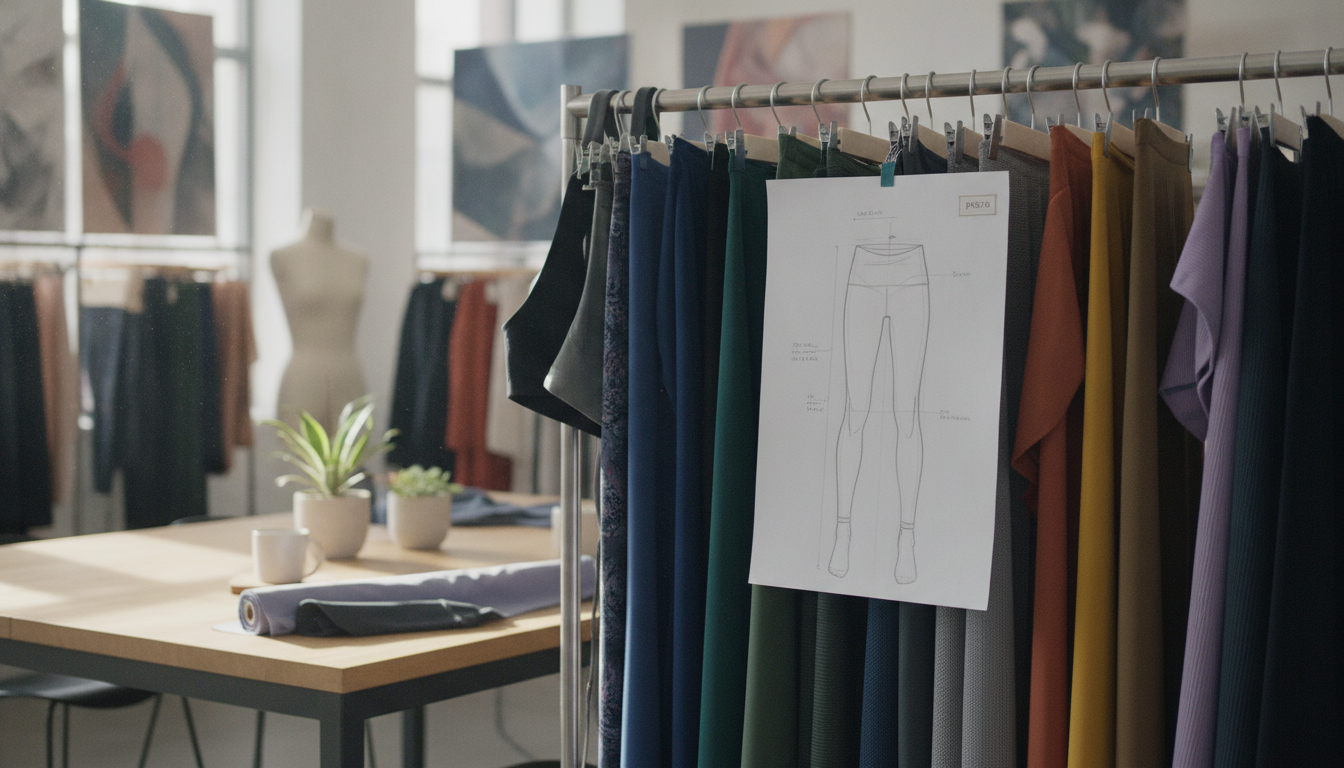
Begin with a concise tech pack (sketch, measurements, fabric notes), then request a 1‑piece sample from a manufacturer who offers low MOQ. Validate the fit with a focus group, tweak the design, and place a 30‑unit bulk order per style. This sequence keeps risk low and speeds time to market.
High‑compression nylon‑spandex dominates for hot and power yoga due to sweat‑wicking and recovery. Brushed recycled poly‑elastane gives a soft hand for yin and restorative settings. Organic cotton‑elastane works for studio hoodies. And seamless knit recycled nylon offers four‑way stretch preferred by premium brands.
From approved design to delivery at a US West Coast port, expect a 5‑ to 8‑week timeline. Sample making takes 7-10 days, bulk production 15-25 days, and sea freight 23-28 days. Clear tech packs and daily communication can trim 5-7 days off the sampling loop.
OEM (Original Equipment Manufacturer) makes exactly what you design and spec, giving you full control. ODM (Original Design Manufacturer) offers pre‑developed styles that you can modify or brand. For a unique yoga line, OEM is standard; for quick market entry, ODM saves development time.
Ready to test a design without locking up capital? Start with a single sample today.
Request your 1‑piece sample →
Sample 1 piece · bulk from 30 · OEKO-TEX & GRS certified · reply in 24h. No gatekeeping.
Fill in your details and we'll connect on WhatsApp instantly.
Click the button below to open WhatsApp. If you're not logged in to WhatsApp Web yet, scan the QR code first — then come back here and copy the message into the chat.