
📋 Table of Contents
You’ve designed your first yoga leggings, sourced recycled nylon, and set up your Shopify store. Now you need a yoga clothing manufacturer that won’t demand 500 units per style before you’ve validated demand. For DTC founders and boutique studios, the wrong partner means dead stock, delayed launches, and cash tied up in inventory. Choosing the right yoga clothing manufacturer starts with understanding how production models, MOQs, and certifications directly impact your unit economics and testing timeline.
Before comparing prices, clarify the partnership model. A yoga clothing manufacturer typically offers three production approaches, each with distinct control, cost, and speed implications. Choose based on whether you need full-custom design or speed-to-market with existing styles.
OEM gives you pattern ownership and fabric exclusivity. A custom yoga apparel manufacturer will require a detailed tech pack-graded specs, BOM, stitch types, and test reports for performance fabrics. Sampling time averages 7-14 days for the first proto. When you control the supply chain, you avoid the risk of a stock service running out of a trendy rib fabric just as your launch campaign goes live.
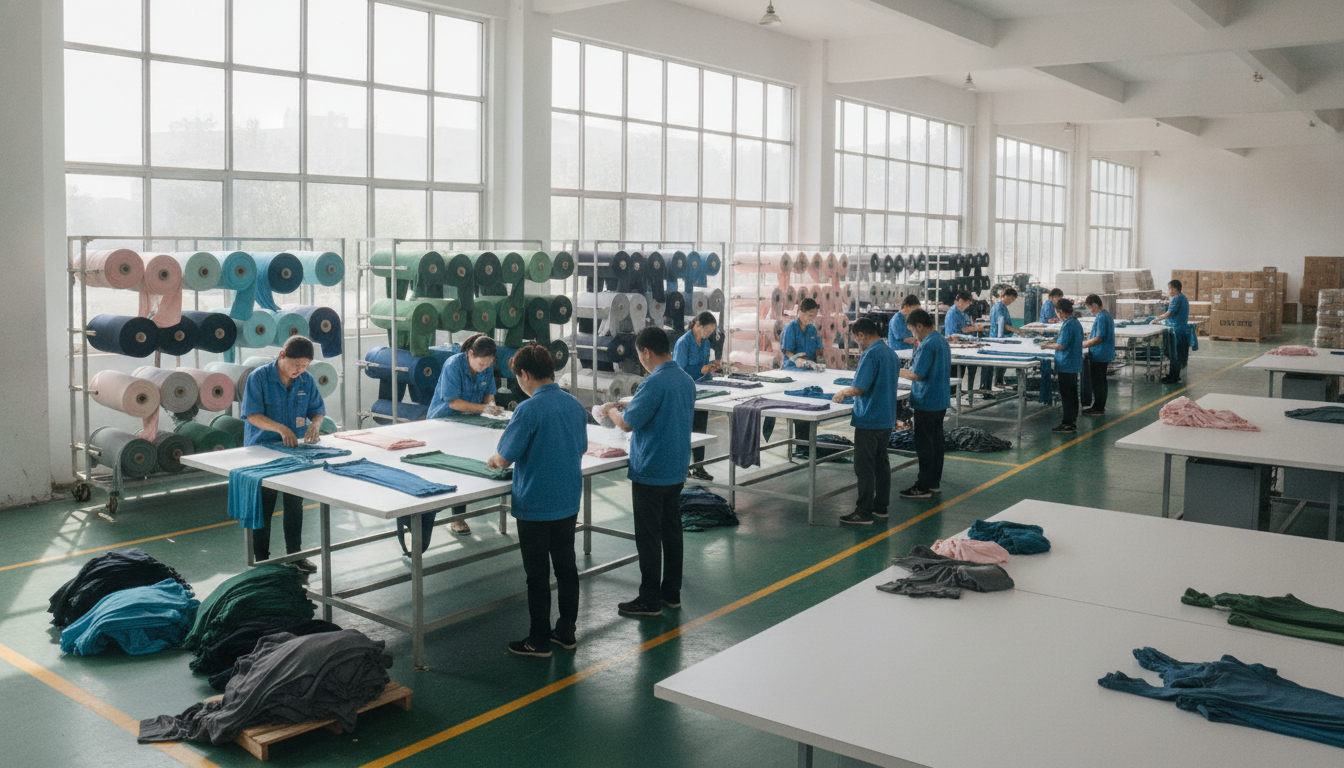
ODM shortens lead time because patterns and fabric sourcing are already live. In our 12+ years manufacturing yoga apparel in Yiwu, we’ve seen brands launch a 3-style collection in 5 weeks by selecting from an ODM library of high-waist legging blocks, longline bras, and seamless tops. The trade-off: someone else can use the same base pattern, so brand differentiation comes from color customizations and branding elements.
Private label yoga clothing lets a studio order 20 branded zip-ups and 30 cropped tanks without any design phase. Quality on stock service activewear can vary dramatically; always request a fabric content and weight sheet before committing. If the piece has no OEKO-TEX or GRS backing, you’re selling an unverified promise to eco-conscious students.
MOQ is the most frequent dealbreaker for emerging yoga brands. Legacy sportswear factories in Guangdong often set bulk MOQs at 300-500 pieces per design, which forces a $5,000, $8,000 per-style cash commitment. For a founder testing three legging fits, that’s a $24,000 inventory gamble. Specialized yoga clothing manufacturers now offer a structural workaround.
Look for a sample MOQ of 1-3 pieces and a bulk MOQ of 30-50 pieces per SKU. This keeps the landed cost of a first production batch for a single legging SKU around $1,200, $1,800. The difference from a 500-piece order is not just lower cash outlay; it’s the ability to sell through a small batch, gather fit feedback, and adjust grading before reordering. Low MOQ yoga apparel production allows you to test colorways like espresso, moss, or electric blue without committing inventory to a slow-moving shade.
Table shows 4-way stretch recycled nylon legging with brushed finish. Actual costs vary with fabric, print, and trims.
A 30-unit test batch lets you run a pre-order campaign, capture email sign-ups, and validate sell-through before committing to a 300-unit reorder. Boutique studios that sell branded yoga pants through in-studio pop-ups use exactly this cadence: 30 units for a 2-week event, 100-unit restock if the first batch clears 75% sell-through. This keeps inventory churn high and markdowns low.
Over 60% of activewear shoppers in North America and Europe say they check for sustainability claims before buying, according to a 2024 McKinsey consumer survey. But many founders learn only after sampling that a fabric marketed as “recycled nylon” has no third-party certification behind it. Paperwork must back up every green claim on your hang tag.
The Global Recycled Standard (GRS) requires at least 20% recycled material content and verifies the chain of custody from fiber to finished garment. For yoga leggings, GRS certification means you can label the product as “made with recycled nylon” and trace the recycled input back to a specific lot. Without GRS, “recycled” is a marketing risk in markets like the EU, where new green-claims legislation is tightening.
OEKO-TEX Standard 100 screening covers more than 1,000 harmful substances, including formaldehyde and heavy metals-critical for garments worn tight against skin for 60+ minutes of hot yoga. Certificates are valid for 12 months and must cover every fabric and trim component in a garment. Request both the certificate number and scope document; a certificate that excludes elastane or dyes still leaves risk in your supply chain.
A manufacturer that says “we use eco-friendly fabric” but cannot produce a GRS or OEKO-TEX certificate leaves you exposed. Customs authorities, marketplace compliance teams, and wholesale buyers increasingly ask for uploaded certificates, not just a description. We recommend asking for a certificate PDF and cross-checking the certificate number on the issuing body’s public database before placing a bulk order. Sustainable yoga clothing manufacturing with documented certifications also allows you to compete in the growing resale and rental activewear channels, where material provenance is a listing requirement.
Many DTC founders calculate product cost using the factory’s FOB (Free on Board) price alone. Landed cost-FOB + freight, duties, insurance, and port-to-warehouse logistics-can add 25-40% above FOB depending on volume and shipping mode. A $9 FOB legging can land at $12.50 after air freight and duties, erasing margin if you priced for $9.
Sample MOQ: 1 piece. Bulk MOQ: 30 pieces per SKU. Sampling time: 7-10 days.
Assumes 4-way stretch nylon legging, HTS 6112.12, 20% duty rate. Actual rates vary with fiber content and trade program eligibility.
For a yoga legging selling at $68 retail, a $14.28 landed cost gives a 79% gross margin before marketing. If selling wholesale at 2x landed ($28.56), wholesale margin to the brand is 50%. Most DTC activewear brands target 65-75% gross margins to fund customer acquisition costs that often run $12, $18 per order. Choosing a yoga clothing manufacturer with a 30-piece MOQ instead of 300 pieces lets you maintain these margins while testing product-market fit with minimal risk.
The US Customs and Border Protection (CBP) classifies yoga clothing under Chapter 61 or 62 of the Harmonized Tariff Schedule (HTS), depending on knit or woven construction. Misclassification-calling a yoga tank top under a generic “women’s top” code when it has 20% elastane-can trigger audits and back duties. Correct HTS codes directly affect your landed cost.
Always confirm with a licensed customs broker, as HTS codes shift with trade agreements. The difference between a 16% and 28% duty on a $10 FOB garment is $1.20 per unit-significant on a 500-unit order.
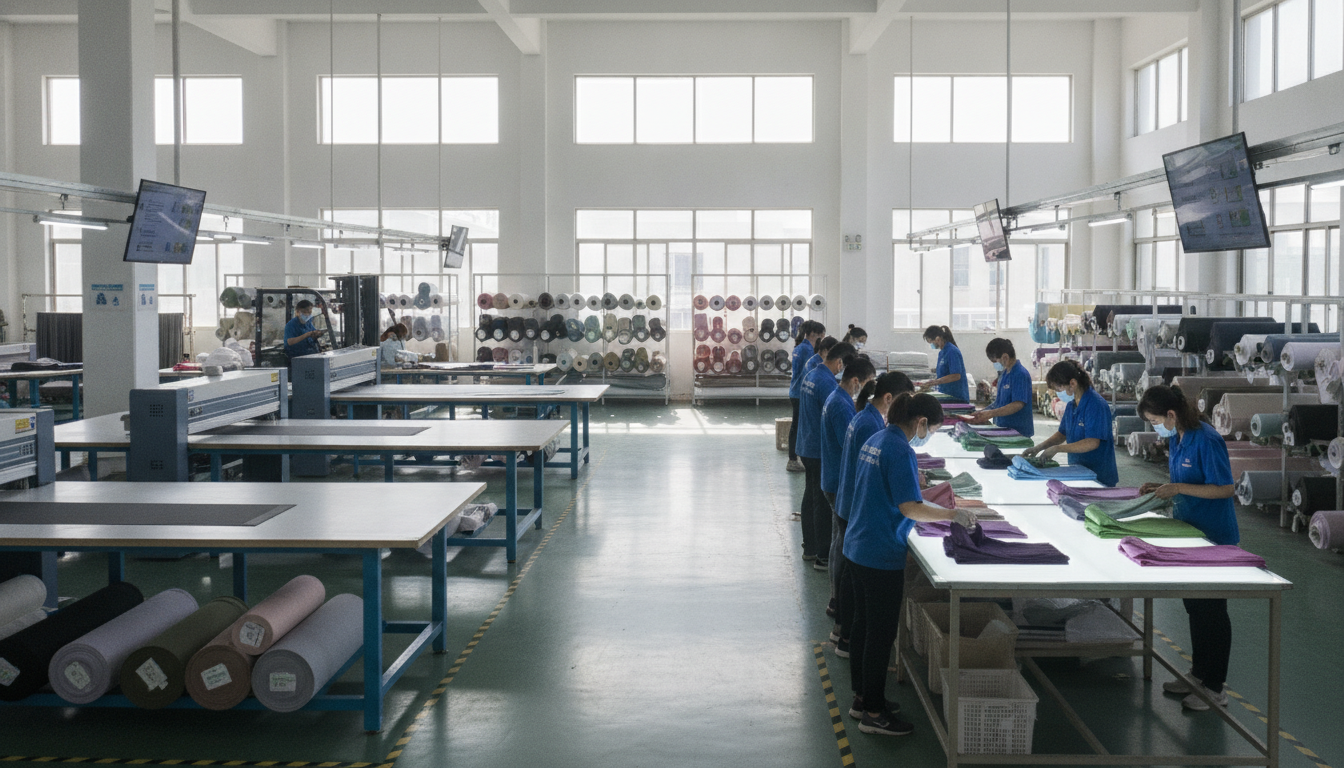
Factories shipping weekly to the US prepare commercial invoices with the correct HTS codes and can include a notarized declaration of origin. Our 18,000m² Yiwu facility runs in-house QC and provides shipment documentation aligned with US CBP requirements for activewear, reducing the risk of a customs exam that can delay delivery by 10-14 days.
Rushing into a bulk order without a sampling phase is the most expensive mistake we see young brands make. A 1-piece sample costs $80, $180 (including courier), while a 300-unit batch of an untested fit can leave you with $4,000 in dead stock. The smart sequence is sample first, iterate, then order small.
Order a single sample in your selected fabric, size medium. Check fit, seam strength, gusset placement, and waistband roll. Take photos in natural and studio light; if the fabric pills after one wear test, you know before ordering 200 units.
After pattern adjustments, request a production-ready sample-essentially a “golden sample” that will be the benchmark for the run. Send this to a third-party inspection lab if you need quantitative data on stretch recovery, pilling after 5 washes, or seam slippage. ASTM D4964 for tension and elongation is a standard stretch test for elastic activewear fabrics.
Use the small-batch MOQ to launch a targeted pre-order or studio pop-up. This order confirms factory consistency at scale without locking up cash. If sell-through exceeds 60% in the first two weeks, place a reorder with a 100-200 unit increase, which lowers the FOB price by 15-20% and improves margins.
Total from first tech pack to 30-unit delivery: roughly 7-8 weeks by sea, 5 weeks by air.
MOQ varies widely. Large generic factories often require 300-500 pieces per style. Specialized yoga apparel manufacturers now offer sample MOQs as low as 1 piece and bulk MOQs of 30-50 pieces per SKU. This lets startups validate designs without tying up $5,000, $8,000 per style. Always confirm whether the MOQ applies per style or per color.
Search for manufacturers that list private label activewear explicitly. Review their catalog for pre-developed styles you can brand with your logo. Request fabric certificates, production lead times, and minimums. Private label typically requires 10-50 pieces total, not per SKU. Check if the manufacturer can provide hangtags and care labels with your branding.
OEM (Original Equipment Manufacturing) produces your design from your tech pack-you own the pattern and material choices. ODM (Original Design Manufacturing) offers pre-developed styles you modify with colors and labels. OEM gives full control but longer lead time; ODM is faster to market but less unique. MOQ for ODM is often slightly higher.
FOB cost for a standard recycled nylon-spandex legging ranges from $7, $15, depending on quantity and trims. A 30-unit order lands at roughly $19 per piece after air freight and duties; a 100-unit sea-freight order drops to around $14. Fabric, construction complexity, and custom prints are the biggest cost drivers. Always factor landed cost, not just FOB, into pricing.
Verify third-party certifications like GRS for recycled content and OEKO-TEX Standard 100 for chemical safety. Request certificate numbers and check them against the issuing body’s database. A sustainable manufacturer will also hold a BSCI audit for social compliance. Avoid factories that use vague terms like “eco-friendly” without documentation. Ask about fabric traceability from fiber to finished good.
When you’re ready to move forward with a yoga clothing manufacturer that offers 1-piece samples, 30-piece bulk MOQs, and GRS-certified fabrics, request your first sample to test fit and fabric in-hand before committing to a production run.
Start with 1-piece samples, validate demand, then scale.
Request Your Sample →
Sample 1 piece · bulk from 30 · OEKO-TEX & GRS certified · reply in 24h. No gatekeeping.
Fill in your details and we'll connect on WhatsApp instantly.
Click the button below to open WhatsApp. If you're not logged in to WhatsApp Web yet, scan the QR code first — then come back here and copy the message into the chat.