
📋 Table of Contents
Choosing an anti-pilling nylon spandex blend activewear supplier means navigating claims that sound identical on paper but deliver wildly different results after the first wash cycle. Buyers report samples that pill within days, fabric specs that promise squat-proof coverage yet fail in real-world wear, and suppliers who cite anti-pilling properties without sharing test data. This guide covers the testing steps, blend comparisons, and supplier vetting criteria that separate verified performance from marketing language.
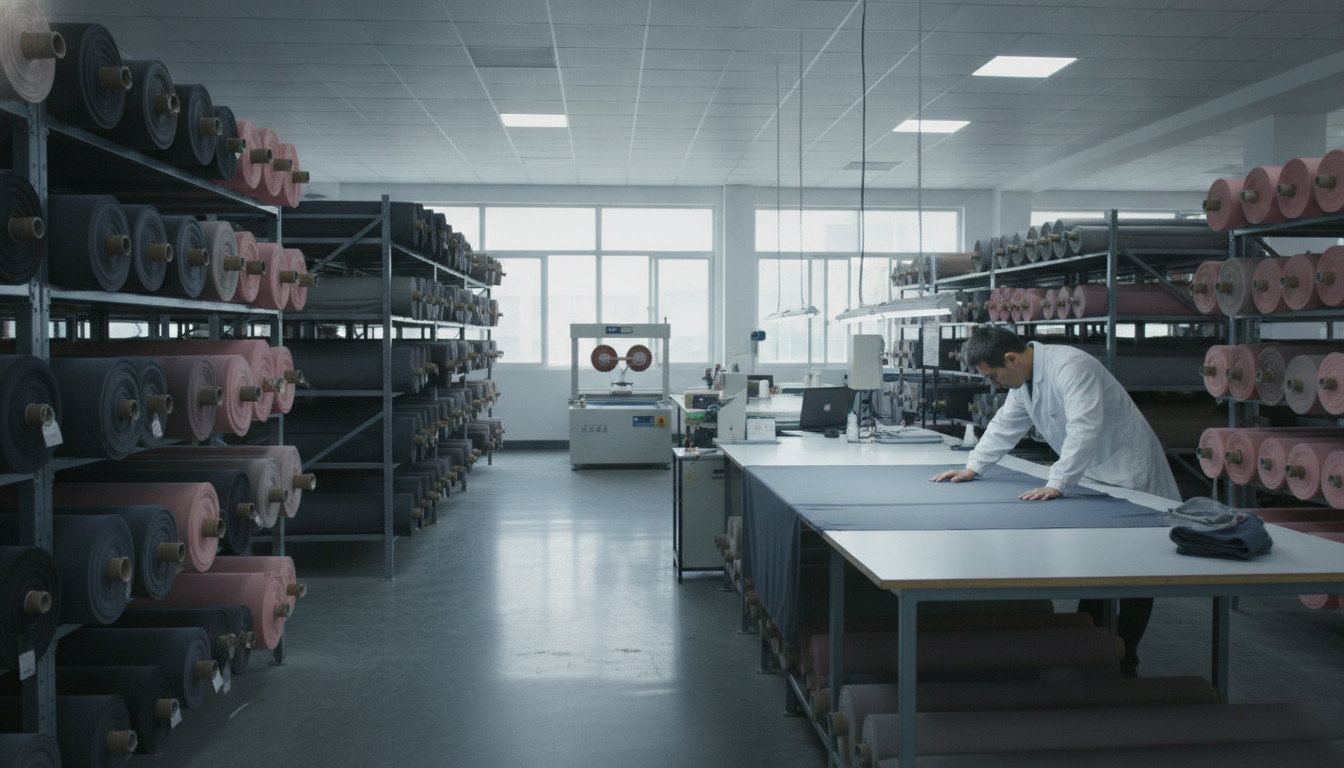
Pilling directly affects customer retention and return rates. When fabric surfaces develop small fiber balls after a few wears, buyers perceive the garment as low quality, even if stretch recovery and moisture-wicking remain intact. For DTC brands operating on tight margins, a spike in returns erodes profitability faster than most other quality issues.
Activewear shoppers expect leggings and sports bras to maintain a smooth hand feel through dozens of wash cycles. Pilling signals premature wear, prompting negative reviews and reducing the likelihood of repeat orders. Brands that source from an custom yoga apparel manufacturer with documented anti-pilling test results can confidently communicate fabric durability in product descriptions and marketing materials.
Return processing, restocking, and potential disposal costs add up quickly. A single returned legging can cost a small brand between 15 and 25 USD in logistics and labor, not counting the lost sale. Anti-pilling fabrics reduce the frequency of quality-related returns, preserving cash flow and customer lifetime value.
Many emerging brands compete on design and fit, but fabric performance is harder to replicate. Offering nylon spandex blends with verified anti-pilling properties gives boutique studios and DTC founders a tangible quality story that justifies premium pricing and builds brand loyalty.
Suppliers often state that a fabric is anti-pilling without providing test reports or specifying the method used. This section outlines the steps buyers can take to verify claims before placing a bulk order.
Martindale testing measures how many rubs a fabric withstands before pilling or surface breakdown occurs. High-quality nylon spandex blends for activewear typically achieve 50,000 to 100,000 rubs. Ask your supplier for a recent Martindale report from an accredited lab, not an internal test summary.
Order a 1-piece sample and wash it five to ten times using your target customer’s typical laundry routine (cold water, tumble dry low or hang dry). Check for surface fuzz, fiber balls, and any change in hand feel. This real-world test often reveals issues that lab reports miss, such as pilling concentrated in high-friction zones like the inner thigh or underarm.
OEKO-TEX Standard 100 certification screens textiles against harmful substances but does not directly test for pilling. However, certified suppliers tend to maintain higher quality-control standards across all fabric properties, including surface durability. Ask whether the nylon spandex blend holds OEKO-TEX or equivalent certification as a general quality signal.
Buyers worry that fabrics marketed as anti-pilling may sacrifice opacity or stretch recovery. Perform a squat test under bright light to confirm the fabric remains opaque at full stretch. A fabric can resist pilling yet still fail the squat-proof test if GSM is too low or the knit construction is too open.
Nylon spandex blends should return to within 5 percent of original dimensions after repeated stretching. Request recovery test data (ASTM D2594 or equivalent) to ensure the fabric maintains shape through multiple wear-and-wash cycles, not just surface smoothness.
In practice: A California-based yoga brand requested 1-piece samples of three nylon spandex blends, washed each ten times, and selected the 82/18 blend that maintained smooth hand feel and zero visible pilling, then placed a 30-piece-per-SKU first order across four colorways.
Brands often compare nylon spandex blends to polyester spandex blends on cost, hand feel, and durability. Each material offers distinct trade-offs that affect product positioning and margin.
Polyester spandex fabrics typically cost 10 to 20 percent less per meter than nylon spandex of equivalent GSM and knit quality. For brands launching with limited budgets, this difference can determine whether a first production run is financially viable. However, nylon spandex’s superior hand feel and anti-pilling performance often justify the premium for brands targeting the mid-to-premium activewear segment.
Nylon spandex blends deliver a softer, more luxurious hand feel compared to polyester spandex. Shoppers describe nylon fabrics as buttery or second-skin, while polyester can feel slightly synthetic or slick. This tactile difference influences online reviews and word-of-mouth recommendations, which are critical for DTC brands relying on organic growth.
Both nylon and polyester spandex blends wick moisture effectively, but nylon tends to dry slightly faster and resists odor buildup better over multiple wears. For hot yoga or high-intensity interval training apparel, nylon’s odor resistance can reduce customer complaints and extend the perceived lifespan of each garment.
Recycled polyester (rPET) is widely available and often carries Global Recycled Standard (GRS) certification, making it easier for brands to market sustainability credentials. Recycled nylon (often derived from fishing nets or industrial waste) is less common and typically commands a higher price. Brands prioritizing eco-friendly messaging may find polyester spandex blends more accessible for initial product lines, then transition to recycled nylon as volume and margins grow.
Finding an anti-pilling nylon spandex blend activewear supplier who supports small-batch production, provides transparent test data, and ships on predictable timelines requires evaluating several operational and commercial factors.
Traditional manufacturers often require 500 to 1,000 pieces per SKU, which ties up significant working capital before product-market fit is proven. Suppliers offering 30-piece-per-SKU bulk minimums and 1-piece sample orders allow founders to validate designs, test fabric performance, and gather customer feedback without inventory risk. Our 18,000m² Yiwu facility supports these low-MOQ terms through vertically integrated cut-and-sew lines and flexible production scheduling.
Request copies of OEKO-TEX Standard 100, GRS, or BSCI certificates before placing an order. Verify that the certificate covers the specific fabric blend and production facility you plan to use. Some suppliers hold certifications for one product line but not others, leading to compliance gaps when you scale or add new SKUs.
Ask for a detailed timeline covering sampling, bulk production, and shipping. A typical flow might include 7 to 10 days for sampling, 25 to 35 days for bulk production after sample approval, and 20 to 30 days for ocean freight to North America or Europe. Suppliers who provide week-by-week milestones help you plan product launches and manage customer expectations more accurately.
Inquire whether the supplier conducts in-house QC or relies on third-party inspection. In-house QC teams can catch issues like inconsistent GSM, dye lot variation, or stitching defects earlier in the production cycle, reducing the likelihood of rejected shipments. Walundi’s in-house QC team inspects fabric rolls upon arrival, monitors cut-and-sew quality at multiple checkpoints, and performs final garment audits before packing.
Time-zone differences and language barriers can delay decision-making. Evaluate how quickly a supplier responds to initial inquiries, whether they assign a dedicated account manager, and if they provide photo or video updates during production. Consistent communication reduces misunderstandings and keeps projects on schedule.
In practice: A UK boutique yoga studio requested samples of three nylon spandex blends from a <a href=”https://walundi.com/low-moq-yoga-manufacturer/”>low MOQ yoga manufacturer</a>, tested each for squat-proof coverage and pilling resistance, then ordered 30 pieces per SKU in two colorways to launch a co-branded legging line without excess inventory.
Compare quotes on an apples-to-apples basis by requesting itemized breakdowns that include fabric cost, cut-and-sew labor, trims, packaging, and any setup fees. Some suppliers quote attractive per-piece prices but add charges for pattern grading, sample revisions, or custom labels. Clarify whether shipping, duties, and import taxes are included or billed separately.
Confirm that the supplier can handle your growth trajectory. A manufacturer who excels at 30-piece runs may struggle when you need 500 or 1,000 pieces per SKU. Ask about maximum monthly capacity, lead-time changes at higher volumes, and whether pricing improves with scale. Walundi’s 2.4 million pieces per year capacity supports brands from initial sampling through regional expansion without requiring a supplier switch.
Brands targeting eco-conscious consumers need suppliers who can trace fiber origin, document recycled content percentages, and provide third-party audit reports. Request GRS certificates for recycled nylon or polyester, and ask whether the supplier tracks water and energy use per production batch. Transparent sustainability data strengthens marketing claims and meets retailer requirements for brands pursuing wholesale partnerships.
Sample MOQ: 1 piece. Bulk MOQ: 30 pieces per SKU. Sampling time: 7-10 days. Certifications: GRS, OEKO-TEX, BSCI.
Sourcing from a supplier near a major port reduces inland freight costs and transit time. Yiwu sits within 200 kilometers of Ningbo port, one of China’s busiest container hubs, enabling efficient ocean freight to North America, Europe, and Australia. Shorter domestic legs lower the risk of delays and simplify customs documentation.
Nylon spandex blends in ratios of 80/20 to 87/13 offer superior anti-pilling performance compared to polyester spandex. Nylon fibers resist abrasion better, maintain a smoother surface through repeated wash cycles, and deliver a softer hand feel. For brands prioritizing durability and premium positioning, nylon spandex is the preferred choice.
Martindale abrasion testing and ASTM D3512 random tumble pilling are the two most common lab methods. Martindale measures rubs to surface breakdown, while ASTM D3512 assigns a visual grade from 1 to 5. Buyers should also run home wash-and-wear trials, washing samples five to ten times and checking high-friction zones like the inner thigh for pilling.
Nylon spandex delivers better hand feel, anti-pilling performance, and odor resistance, making it ideal for mid-to-premium leggings. Polyester spandex costs 10 to 20 percent less per meter and offers wider availability of recycled content, appealing to budget-conscious brands or those prioritizing sustainability messaging. The choice depends on target market positioning and margin goals.
Yoga leggings typically use 240 to 280 GSM nylon spandex fabrics. This range provides squat-proof opacity, four-way stretch, and breathability without feeling heavy or restrictive. Lower GSM fabrics may lack coverage, while higher GSM can reduce mobility and increase drying time.
Evaluate minimum order quantities, certifications, lead times, and quality control processes. Look for suppliers offering 1-piece sample MOQs and 30-piece-per-SKU bulk minimums to validate product-market fit without inventory risk. Request OEKO-TEX or GRS certificates, itemized pricing breakdowns, and week-by-week production timelines. In-house QC and vertically integrated facilities reduce delays and quality inconsistencies.
Ready to source anti-pilling nylon spandex activewear with verified test data and flexible MOQs?
Request 1-Piece Samples →
Written by the Walundi Export Team.
Sample 1 piece · bulk from 30 · OEKO-TEX & GRS certified · reply in 24h. No gatekeeping.
Low MOQ. Sustainable fabrics. OEM ready. Tell us your vision.
Click the button below to open WhatsApp. If you're not logged in to WhatsApp Web yet, scan the QR code first — then come back here and copy the message into the chat.