
📋 Table of Contents
Finding a moisture wicking compression leggings manufacturer low MOQ that delivers on fabric performance without locking up your entire launch budget is one of the hardest sourcing challenges for DTC yoga brands. Many suppliers advertise “MOQ 100,” but once you add custom colors, woven labels, or request four-way stretch with squat-proof coverage, the real minimum balloons to 500+ units and ties up cash before you’ve validated product-market fit.
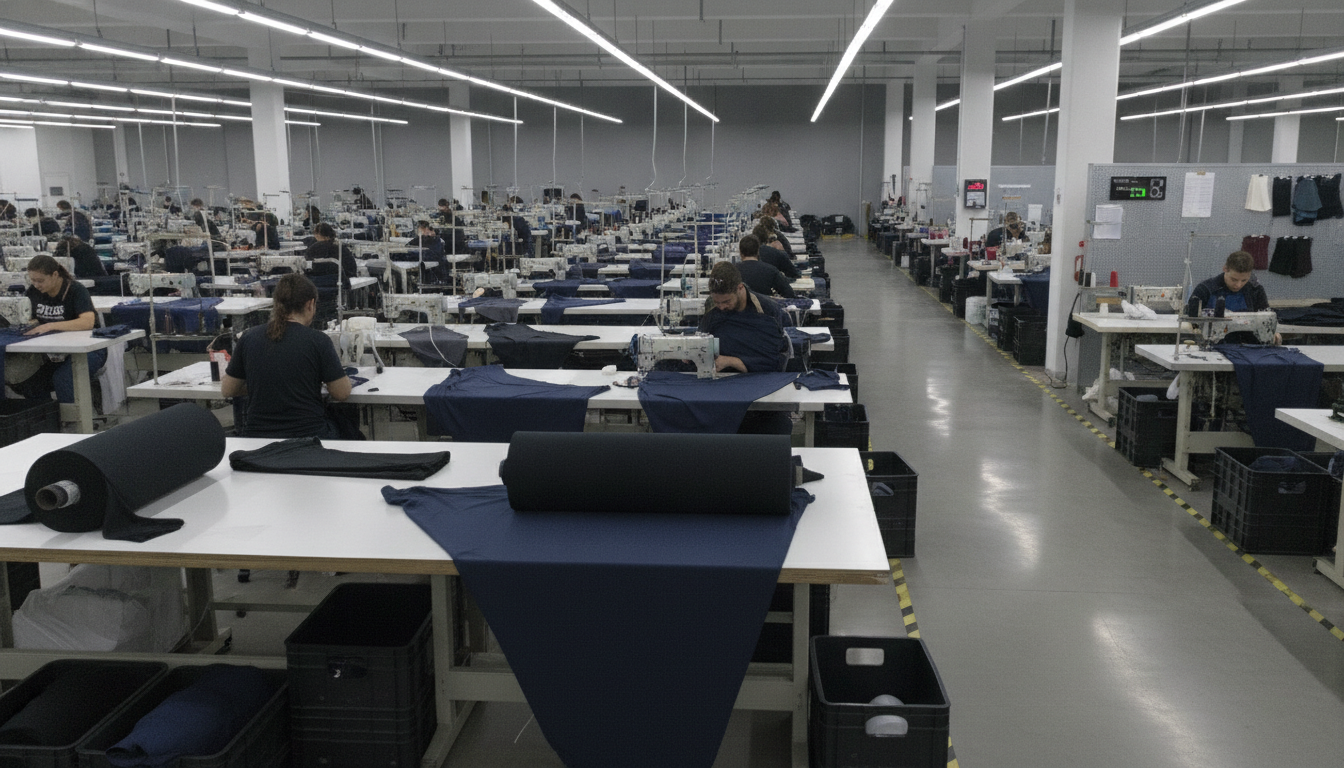
The advertised MOQ is often the per-color or per-size-run minimum, not the total order floor. A supplier listing “MOQ 100” may require 100 units in each colorway, so a three-color launch suddenly becomes 300 pieces. When you request custom woven labels, hangtags, or full OEM development with your own tech pack, additional setup fees and higher minimums frequently appear.
Clarify whether the factory quotes per SKU (style-color-size combination) or per style. A custom yoga apparel manufacturer with genuine low-MOQ terms will specify 30 pieces per SKU, meaning you can order 30 units of black size M, 30 of navy size L, and 30 of charcoal size S for a 90-piece total across three SKUs. Resellers and trading companies often bundle all sizes and colors into a single 500-unit minimum to justify their margin.
Custom pantone matching, reflective prints, and jacquard waistbands each carry separate setup charges and minimum yardage requirements. If your first product needs moisture-wicking fabric, compression construction, and a custom logo print, ask for the combined MOQ in writing before paying any deposit. Factories that control their own knitting and dyeing lines can absorb smaller custom runs; resellers cannot.
Walundi’s MOQ structure: Sample MOQ 1 piece. Bulk MOQ 30 pieces per SKU. No hidden add-on minimums for standard moisture-wicking fabrics, screen prints, or woven labels.
A moisture wicking compression leggings manufacturer low MOQ must source or knit fabrics that combine four-way stretch, compression recovery, moisture transport, and squat-proof opacity. Each performance attribute depends on specific fiber content, knit construction, and finishing processes.
Compression leggings use 75-80% nylon or polyester paired with 20-25% spandex. The spandex content determines compression level: 20% delivers light support suitable for yoga and studio wear, while 25% provides firm compression for high-intensity training. Nylon offers a softer hand feel and better abrasion resistance than polyester, but polyester dries faster and costs 15-20% less per kilogram.
Recovery rate measures how quickly the fabric returns to its original shape after stretching. Premium spandex from Invista (Lycra brand) or Hyosung recovers within 3-5 seconds and maintains compression through 50+ wash cycles. Generic spandex loses 30-40% of its recovery after 20 washes, leading to sagging knees and waistbands.
Moisture management happens through fiber shape or chemical finish. Polyester and nylon fibers with cross-shaped or channeled profiles wick sweat inherently by capillary action, moving moisture from skin to fabric surface where it evaporates. This wicking is permanent and survives all washing. Chemical wicking finishes applied during dyeing improve transport speed by 20-30% but degrade after 15-25 washes, depending on detergent pH and water temperature.
Ask your factory whether the moisture-wicking claim relies on fiber geometry or topical finish. If it’s a finish, request wash-durability test data (AATCC 195 or ISO 17617 standards) showing wicking performance after 20 home launderings.
Fabric weight of 240-280 GSM ensures squat-proof coverage in solid dark colors (black, navy, charcoal). Lighter weights (200-220 GSM) work for tops and shorts but risk transparency when stretched over glutes and thighs during squats or forward folds. Heathered and light colors require 280-300 GSM to remain opaque under tension.
Request a squat test during sampling: wear the leggings, perform a deep squat under bright light, and have someone photograph the fabric at maximum stretch. If you see skin tone or underwear color through the fabric, the GSM is too low or the knit density is insufficient.
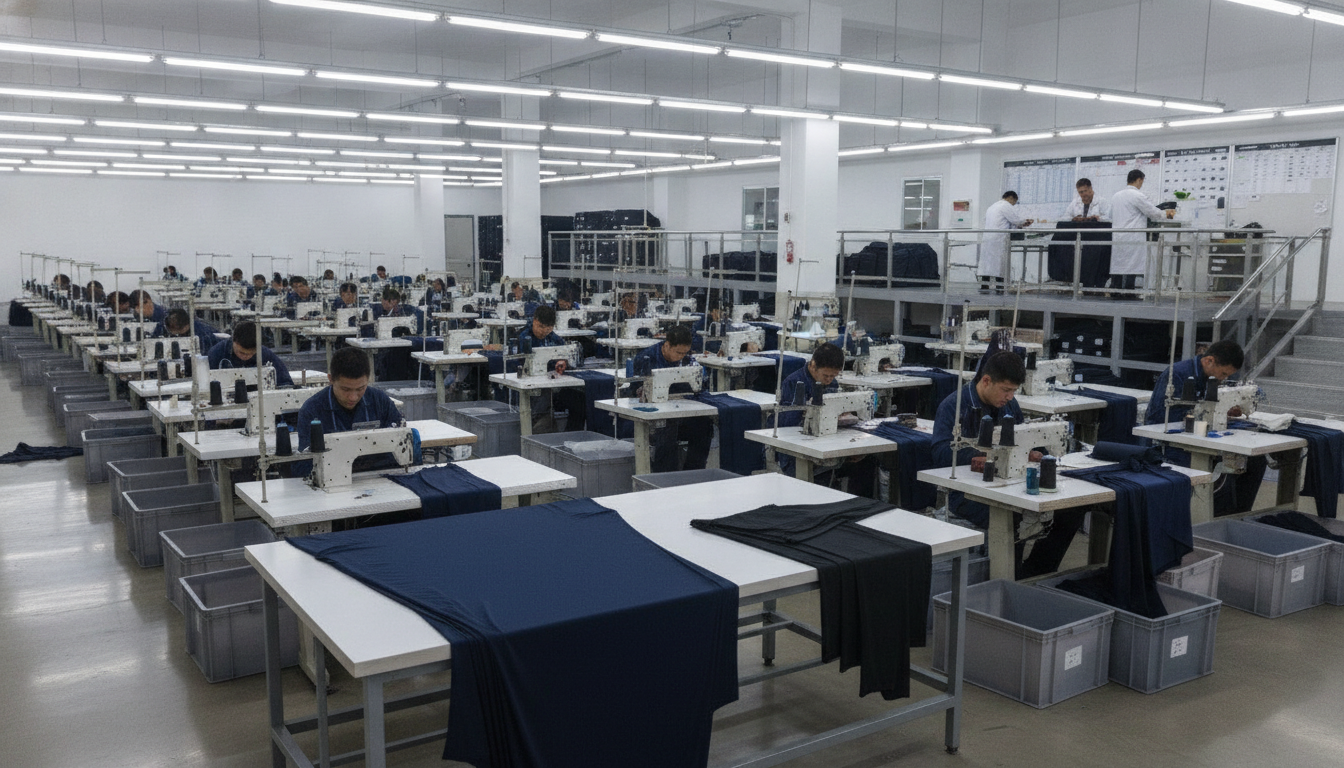
Many suppliers listing themselves as manufacturers are actually trading companies or resellers who outsource production to third-party cut-and-sew shops. This adds a markup layer, reduces your control over quality and lead time, and makes it harder to enforce specifications when defects appear.
Working with a vertically integrated low MOQ yoga manufacturer that owns its cutting, sewing, and QC operations eliminates the reseller margin and gives you direct access to the team responsible for your product quality.
Sampling costs and lead times often catch first-time buyers off guard. A moisture wicking compression leggings manufacturer low MOQ should offer 1-piece sample orders so you can validate fit, fabric, and construction before committing to bulk minimums. Sampling is not free; expect to pay $30-60 per sample unit plus $25-40 for international shipping via DHL or FedEx.
This is your first physical prototype, sewn to your tech pack or based on a reference garment you provide. The factory uses the specified fabric, trims, and construction method. Pre-production samples take 7-10 days to produce after you approve the fabric swatch and submit the tech pack. Review fit on a live model in your target size range, check all seam finishes, measure compression pressure with a handheld tensiometer if you have one, and perform the squat-proof opacity test.
Approve or request revisions in writing within 3-5 days. Each revision round adds another 7-10 days to the timeline, so provide detailed feedback with photos and measurements in the first round.
Once the pre-production sample is approved, request fit samples in your full size range (typically XS through XL, five sizes). This step costs $150-300 for five samples and takes 10-14 days. Fit samples confirm that the factory’s grading rules match your size chart and that compression level remains consistent across sizes.
Measure each sample flat and compare to your spec sheet: waist width, hip width, inseam length, rise, leg opening. Compression leggings are cut 10-15% smaller than body measurements to achieve the compression effect, so expect the garment to measure smaller than the wearer’s actual dimensions.
If you plan to sell wholesale or take pre-orders before bulk production, order 10-20 salesman samples. These are production-quality units used for photography, trade shows, and retailer meetings. Salesman samples cost the same per-unit price as bulk orders but do not require the full bulk MOQ. Walundi’s 30-piece bulk MOQ allows many brands to skip the salesman-sample step and treat the first bulk order as both inventory and marketing samples.
In practice: A Seattle yoga studio owner ordered 1-piece samples in three colorways, approved fit in 5 days, then placed a 90-unit first order (3 SKUs × 30 pieces) to test member response before committing to a full seasonal collection
Unit cost is only one component of your total landed cost. For a 90-unit first order from a moisture wicking compression leggings manufacturer low MOQ, budget for sampling, freight, duties, and payment fees. Transparent cost modeling prevents cash-flow surprises and helps you set realistic retail pricing.
FOB (free on board) pricing for compression leggings with moisture-wicking fabric, four-way stretch, and basic screen-print logo typically ranges from $8-12 per unit for orders of 90-300 pieces. Price breaks appear at 300, 500, and 1,000 units, reducing per-unit cost by $0.50-1.00 at each tier. A private label yoga clothing order with woven labels, custom hangtags, and poly-bag packaging adds $0.30-0.60 per unit.
Air freight for 90 units (approximately 15-18 kg total) costs $200-350 and takes 5-7 days door-to-door. Sea freight for the same shipment costs $150-250 but requires 25-35 days transit time from Ningbo port to a US West Coast port, plus 5-10 days for customs clearance and inland trucking. First-time importers often choose air freight to validate the product quickly, then switch to sea freight for reorders.
US import duty on women’s knit leggings (HTS code 6104.63) is 16% of FOB value. California buyers also pay state sales tax (7.25-10.25% depending on county) on the landed value (FOB + freight + duty). For a $900 FOB order with $250 air freight, expect approximately $144 in federal duty and $90-120 in California sales tax, totaling $234-264 in taxes and duties.
The per-unit landed cost drops by 25-30% when you move from 90 to 300 units because sampling costs and freight are amortized over more pieces. For product validation, the higher per-unit cost of a small first order is acceptable; once you confirm sell-through, reorder at 300+ units to improve margin.
Standard terms are 30% deposit to start production and 70% balance before shipment. For a $900 FOB order, you pay $270 upfront and $630 when the goods are ready to ship. If you are working with a yoga clothing manufacturer for startups, ask whether they offer net-30 or net-60 terms after the first order ships successfully. Most factories require full prepayment for first-time buyers but may extend credit terms after you establish a track record of on-time payment.
True low-MOQ factories offer 30-50 pieces per SKU (style-color-size combination), meaning you can order 30 units of one colorway and size without committing to hundreds of pieces. Resellers often advertise “MOQ 100” but require 100 units per color or per size run, inflating the real minimum to 300-500 pieces once you account for multiple colors and a basic size range.
FOB unit cost for compression leggings with moisture-wicking fabric and four-way stretch ranges from $8-12 per piece for orders of 90-300 units. Add $0.30-0.60 per unit for custom woven labels, hangtags, and poly-bag packaging. Sampling costs $40-60 per sample, and air freight for a 90-unit order adds approximately $200-350. Total landed cost for a first 90-unit order is $18.49-20.60 per unit including all fees.
Verify factory ownership by requesting facility photos, certifications in the factory’s legal name (OEKO-TEX, BSCI, GRS), and a video call with the production manager. Ask for the per-SKU MOQ in writing and confirm whether custom colors, labels, or logo prints raise the minimum. Factories with in-house pattern studios and sampling rooms can produce 1-piece samples in 7-10 days; resellers need 15-25 days because they outsource to third-party shops.
Compression leggings use 75-80% nylon or polyester with 20-25% spandex. Nylon offers a softer hand feel and better abrasion resistance, while polyester dries faster and costs 15-20% less. Spandex content of 20% delivers light compression for yoga; 25% provides firm compression for high-intensity training. Premium spandex brands (Lycra, Hyosung) recover within 3-5 seconds and maintain compression through 50+ washes, while generic spandex loses 30-40% recovery after 20 washes.
Yes, vertically integrated factories with in-house cut-and-sew operations offer private-label programs starting at 30 pieces per SKU. You can add woven labels, custom hangtags, and screen-print logos without raising the MOQ. Resellers and trading companies typically require 500+ units for private-label customization because they lack production control and must meet their contracted factory’s minimums. Request samples, confirm lead times, and verify certifications before placing a deposit.
Sourcing a moisture wicking compression leggings manufacturer low MOQ requires verifying factory ownership, modeling landed costs transparently, and validating fabric performance through sampling before bulk commitment. Walundi’s 30-piece-per-SKU bulk MOQ and 1-piece sample terms let you test product-market fit without inventory risk, and our GRS, OEKO-TEX, and BSCI certifications back up sustainability and safety claims with third-party documentation.
Ready to validate your compression legging concept with 1-piece samples and 30-unit first orders?
Request Samples and MOQ Quote →
Written by the Walundi Export Team.
Sample 1 piece · bulk from 30 · OEKO-TEX & GRS certified · reply in 24h. No gatekeeping.
Low MOQ. Sustainable fabrics. OEM ready. Tell us your vision.
Click the button below to open WhatsApp. If you're not logged in to WhatsApp Web yet, scan the QR code first — then come back here and copy the message into the chat.