
📋 Table of Contents
Fabric that pills after three washes kills repeat orders and drains your marketing budget on customer returns. When you source an anti-pilling recycled polyester activewear supplier, you need verifiable anti-pilling test data, credible recycled-content certification, and transparent minimum order quantities that let you validate demand without locking up cash.
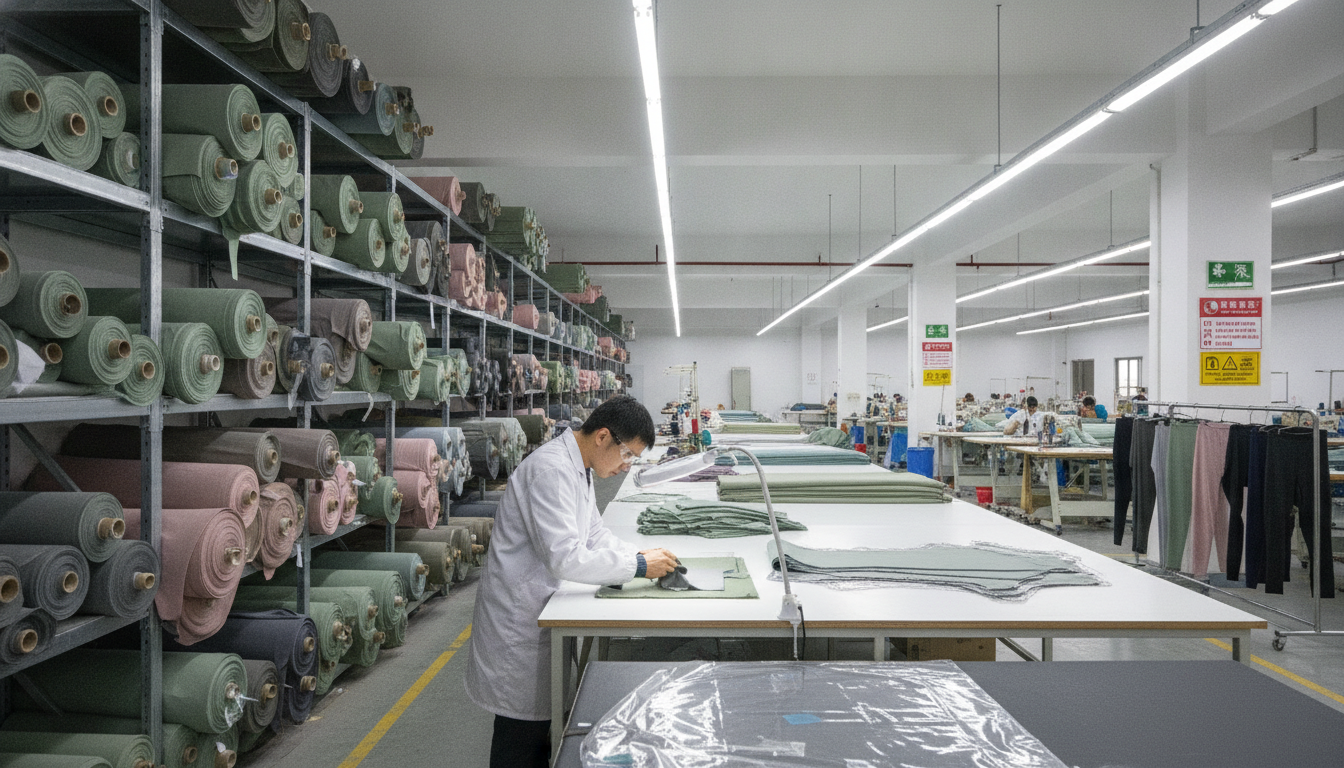
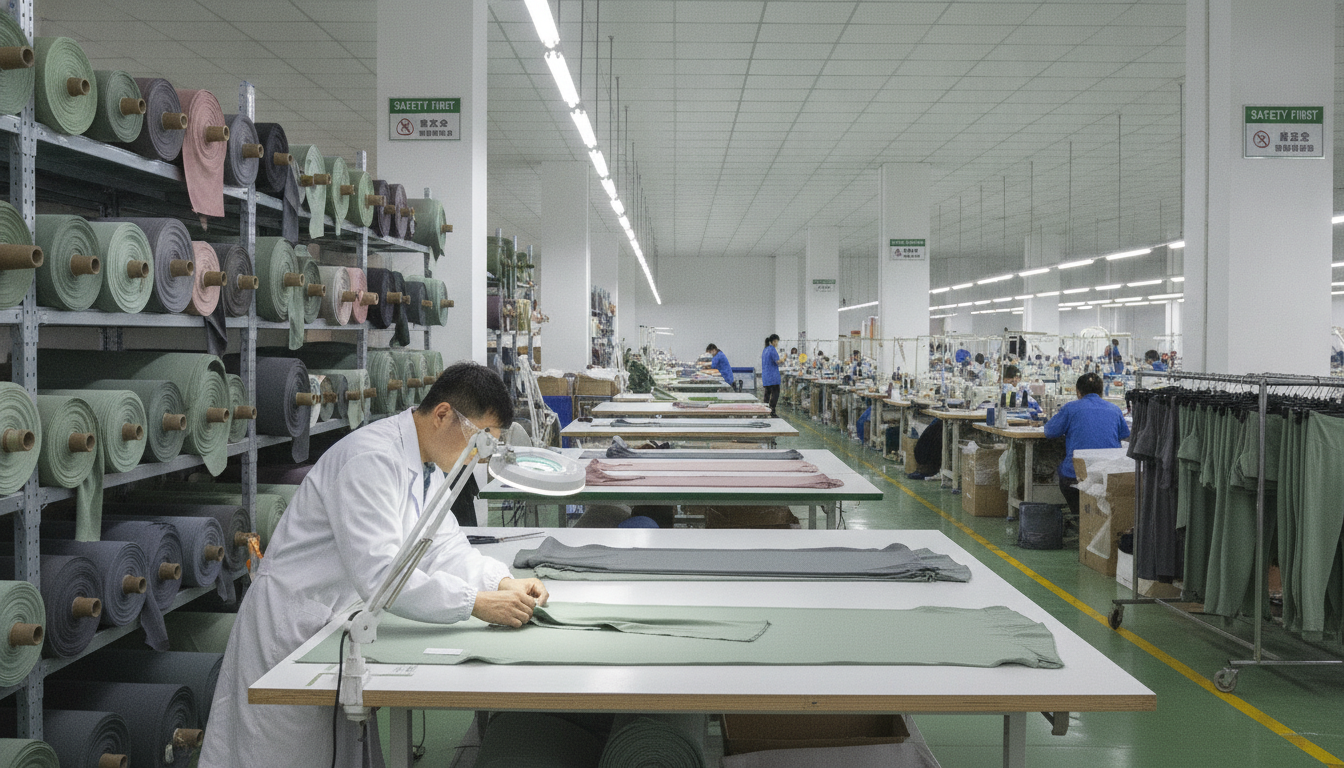
Anti-pilling recycled polyester is polyester yarn made from post-consumer plastic bottles or post-industrial textile waste, engineered with a tighter fiber twist, filament uniformity, or chemical finish to resist surface fuzzing and balling. The fabric delivers the moisture-wicking and stretch properties activewear brands need while meeting sustainability claims buyers expect in 2026.
Recycled polyester starts as clear PET bottles collected from municipal waste streams or as pre-consumer cutting scraps from apparel factories. Bottles are cleaned, shredded into flakes, melted, and extruded into new polyester chips. Those chips are spun into filament yarn with the same molecular structure as virgin polyester. The Global Recycled Standard (GRS) requires at least 20% recycled content for certification, though many activewear suppliers offer 50-100% recycled polyester blends.
Pilling resistance comes from three engineering approaches. First, tighter yarn twist reduces loose fiber ends that tangle into pills. Second, filament uniformity during extrusion minimizes weak points where fibers break and fuzz. Third, enzymatic or resin finishes bond surface fibers to the fabric substrate. A credible anti-pilling recycled polyester activewear supplier will specify which method they use and provide lab test reports showing pilling grade after 5,000 rubs or 18 hours of tumble testing.
Anti-pilling finishes can slightly reduce fabric stretch or add stiffness if over-applied. Founders launching yoga leggings or sports bras should request hand-feel samples alongside pilling test data to confirm the fabric retains adequate four-way stretch and recovery. A sample MOQ of 1 piece lets you test squat-proof opacity, waistband roll, and seam pucker before committing to 30-unit bulk orders.
Pilling occurs when short fibers migrate to the fabric surface, tangle under friction, and form visible balls. Recycled polyester is more prone to pilling than virgin polyester if the recycling process introduces uneven fiber length or if the yarn twist is too loose. Understanding the root causes helps you evaluate supplier claims and spot red flags during fabric selection.
Recycled polyester derived from mixed-source bottles can contain fibers of varying lengths. Shorter fibers have more free ends that work their way to the surface during wear and washing. High-quality recycled yarn uses bottle-grade PET sorted by resin type and processed with consistent extrusion parameters to maintain filament uniformity. Ask your supplier for the average filament length and the coefficient of variation; a CV below 3% indicates tight process control.
Knit fabrics for activewear typically use 150-200 twists per meter for recycled polyester yarn. Lower twist counts reduce production cost but leave more loose fiber ends. Single-jersey constructions pill faster than interlock or double-knit structures because the fabric surface has less mechanical interlocking. If your brand targets high-wear categories like yoga leggings or cycling shorts, specify interlock or brushed-back constructions and request twist-per-meter data from the mill.
Friction during laundering accelerates pilling. Recommend cold-water washing, liquid detergent (powder particles abrade fibers), and low-heat or air drying on your care labels. Many buyers discover pilling issues only after the first customer wash cycle, so include wash-durability testing in your pre-production sample approval. A 10-wash cycle test using AATCC 135 (Dimensional Changes in Automatic Home Laundering) will reveal both pilling and shrinkage before you commit to bulk.
Lab testing separates marketing claims from measurable durability. When evaluating an anti-pilling recycled polyester activewear supplier, request test reports using recognized ASTM or ISO methods and compare results across multiple fabric options. Testing costs range from 80 to 150 USD per sample at third-party labs, but the expense is minor compared to the cost of a failed product launch.
ASTM D3512 places fabric samples in a tumble box with cork or rubber impellers for 30 minutes to 18 hours, simulating repeated wear and washing. Samples are graded on a 1-to-5 scale (5 = no pilling, 1 = severe pilling) by comparing to photographic standards. Activewear fabrics should achieve grade 4 or higher after 5 hours of tumbling. Request the test duration and grade in your supplier’s spec sheet; vague claims like
Sample 1 piece · bulk from 30 · OEKO-TEX & GRS certified · reply in 24h. No gatekeeping.
Low MOQ. Sustainable fabrics. OEM ready. Tell us your vision.
Click the button below to open WhatsApp. If you're not logged in to WhatsApp Web yet, scan the QR code first — then come back here and copy the message into the chat.