
📋 Table of Contents
Many DTC founders discover that advertised low MOQ seamless leggings 50 pieces minimum can quickly balloon to 150 or 300 units once colorways, size runs, and style variations are added. This guide decodes true minimum order structures, pricing, lead times, and compliance requirements for activewear startups launching their first legging collection without locking up cash in inventory.
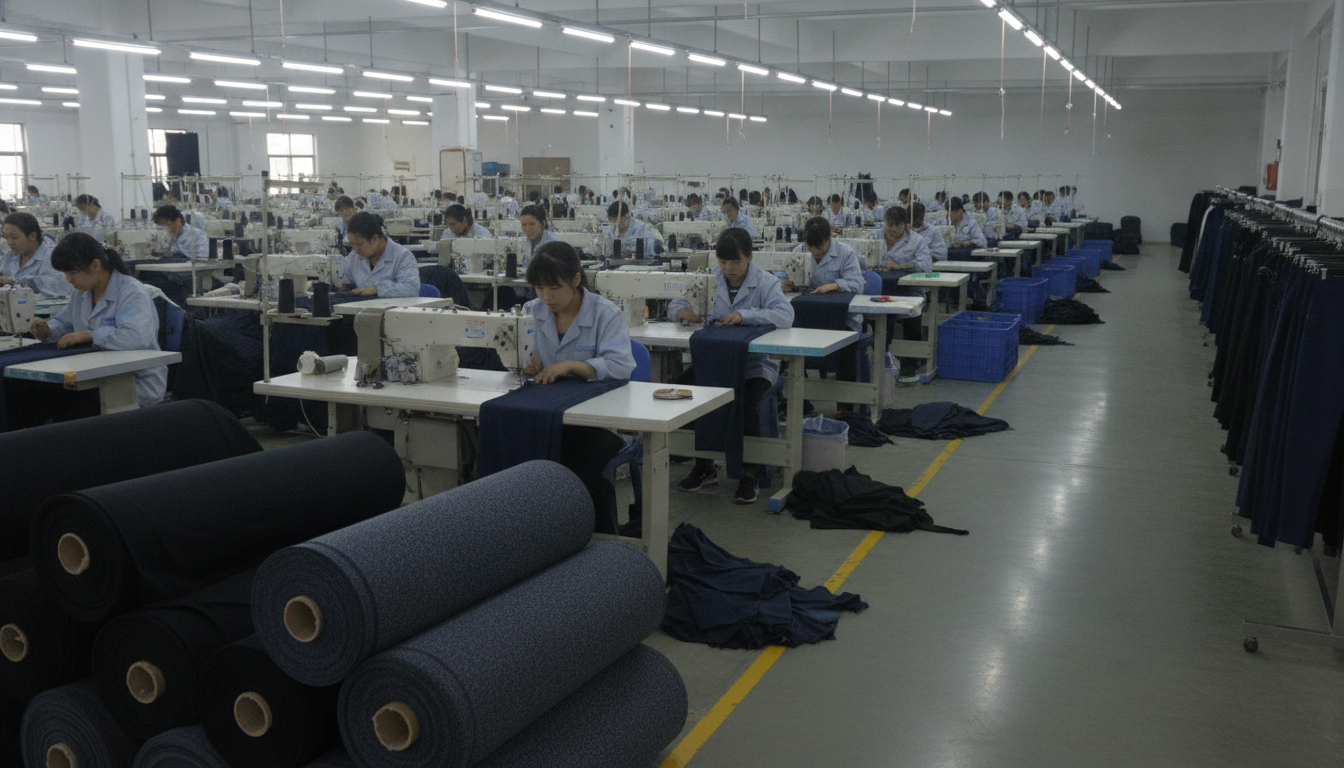
When a factory advertises low MOQ seamless leggings 50 pieces minimum, the critical question is whether that 50 applies per style, per colorway, per size run, or to the total order. Founders often assume 50 pieces means 50 total leggings across all SKUs. In reality, many suppliers define MOQ per colorway within a single style, meaning a black, navy, and grey version of the same high-waisted legging design requires 50 pieces each, totaling 150 units before size assortments are considered.
A per-style MOQ means you can order 50 pieces of one legging design and split those 50 across multiple colors. A per-colorway MOQ locks you into 50 pieces of black, 50 of navy, 50 of grey. Most low-MOQ suppliers enforce per-colorway minimums because dyeing and knitting setup costs are tied to color, not just pattern. This structure protects the factory from uneconomical small dye lots but can trap startups into ordering far more inventory than their initial market validation requires.
Some suppliers are vague about whether the 50-piece minimum includes a full size run (XS, S, M, L, XL) or allows you to concentrate inventory in core sizes. Founders launching direct-to-consumer often want to allocate 60% of their first order to sizes S and M, 20% to L, and 10% each to XS and XL, based on early customer data. Factories that enforce equal distribution across all five sizes force you to carry excess inventory in outlier sizes, increasing your landed cost per sale and cash tied up in slow-moving stock.
A total-order minimum is the most flexible structure for startups. It allows you to order 50 pieces total and distribute them across styles, colors, and sizes as your market testing dictates. Walundi’s custom yoga apparel manufacturer model uses a 30-piece-per-SKU bulk minimum, where each SKU is defined as one style in one color in one size. This means a founder can order 30 black high-waisted leggings in size M, 30 in size S, and 30 navy leggings in size M, totaling 90 pieces across three SKUs, without being forced into unwanted colorways or sizes.
Seamless leggings are knitted in one continuous tube on circular knitting machines, eliminating side seams and reducing labor costs per unit. Cut-and-sew leggings are assembled from flat-knit or woven fabric panels, stitched together with flatlock or overlock seams. The choice between seamless and cut-and-sew affects your unit cost, customization options, and production lead time at low order quantities.
Seamless construction is ideal for founders who want a premium handfeel, minimal chafing, and a modern aesthetic with knit-in waistbands and colorblocking. Seamless leggings command higher retail prices, often $68-$98 USD, because customers associate the construction with technical performance and comfort. The downside is that seamless knitting machines require yarn-dyed colors, so custom Pantone matching or heathered blends may trigger minimum dye-lot requirements that push your effective MOQ higher than the advertised 50 pieces.
Cut-and-sew leggings allow you to source fabric from a supplier’s existing stock, which eliminates dye-lot minimums and shortens lead times. Founders testing multiple prints or contrast-panel designs benefit from cut-and-sew because each colorway does not require a separate knitting setup. The tradeoff is that flatlock seams add visible stitching lines, and poorly executed gussets can fail squat-proof tests. Walundi’s in-house pattern studio and QC team mitigate this risk by testing every cut-and-sew prototype for opacity at full stretch before bulk production begins.
Understanding how a factory defines SKU determines your true inventory commitment. Founders who misread MOQ terms often discover mid-production that their 50-piece order is actually a 200-piece obligation once the supplier clarifies that MOQ applies per color per size.
A SKU (stock keeping unit) in apparel manufacturing typically means one style, one color, one size. If a factory states 30-piece-per-SKU MOQ, you can order 30 black high-waisted leggings in size M and 30 navy in size S, totaling 60 pieces across two SKUs. This structure gives founders maximum control over inventory allocation and allows you to test one colorway in multiple sizes or one size in multiple colors without being forced into full matrix ordering.
Per-color MOQ means the factory requires a minimum quantity of each colorway, regardless of how many sizes you order within that color. A 50-piece-per-color minimum for a black legging means you must order 50 black leggings total, which you can split across sizes S, M, L. This is more flexible than per-SKU but less flexible than a total-order minimum. Founders testing color preference with early customers prefer per-color minimums because they can allocate more inventory to the winning color without carrying dead stock in losing colorways.
Total-order minimums are rare in activewear manufacturing because they expose the factory to inefficient production runs. A 50-piece total order might mean 10 pieces each of five different SKUs, which creates five separate cut tickets, five QC batches, and five packing runs. Factories that offer true total-order minimums typically charge higher per-unit prices to cover the administrative and setup overhead. Walundi’s 30-piece-per-SKU model strikes a balance, allowing founders to launch with 90-120 total pieces across three to four core SKUs without paying the premium that true total-order flexibility would require.
Some suppliers advertise low MOQ seamless leggings 50 pieces minimum but then reveal that custom fabric requires a 300-meter minimum or that branded elastic waistbands require a 1,000-piece trim order. Founders end up choosing from a limited palette of in-stock fabrics and generic trims, which reduces differentiation and makes the product feel like a white-label offering. Before committing to a supplier, ask for a written breakdown of fabric MOQ, trim MOQ, and any dye-lot or printing minimums that apply to your specific design.
Founders launching direct-to-consumer yoga apparel typically target a 3x to 4x markup from landed cost to retail price. A legging that costs $12 USD landed must retail at $36-$48 to cover payment processing, returns, marketing, and overhead. At low order quantities, per-unit costs rise because setup, pattern grading, and sample development are amortized over fewer pieces.
Landed cost includes FOB (free on board) unit price, international shipping, customs duties, and domestic freight to your warehouse or 3PL. For apparel imported into the United States from China, expect to add 15-20% to FOB for shipping and 16.5% for tariffs under HTS code 6104.63 (women’s synthetic knit trousers). A $12 FOB legging becomes $14.20 landed after $1.80 shipping and $2.00 duty. Founders who skip this calculation often discover their margin assumptions are off by 20-30% when the first shipment clears customs.
Many low-MOQ suppliers charge $50-$150 USD per sample, with 3-5 samples required to finalize fit, fabric, and construction details. A founder testing three legging styles with two rounds of revisions each can spend $600-$900 on samples before placing a bulk order. Walundi’s 1-piece sample MOQ at production pricing eliminates this barrier, allowing founders to order a single production-grade sample for $14-$18 USD and validate the product with real customers before committing to 30-piece bulk minimums.
In practice: A Los Angeles DTC founder ordered 1-piece samples of three legging styles, tested them in a local yoga studio, and placed a 90-piece bulk order for the winning design within 14 days.
DTC activewear brands aiming for profitability typically target 65-70% gross margin after landed cost, payment processing, and fulfillment. A $15 landed legging sold at $52 generates $37 gross profit, or 71% margin. After 3% payment processing, $8 Facebook ad cost, and $4 pick-pack-ship, the contribution margin is $22, or 42%. Founders who pay $17+ landed cost at 50-piece minimums often cannot hit these targets without raising retail prices above $60, which puts them outside the competitive range for emerging brands.
Factories prioritize larger orders because they generate higher revenue per production run and occupy cutting tables and sewing lines for longer periods, which simplifies scheduling. A 50-piece order might sit in the queue for weeks while 500-piece and 1,000-piece orders move through the facility first. Founders report that promised 30-day lead times stretch to 50-60 days when low-MOQ orders are repeatedly bumped by larger customers.
Sampling for low MOQ seamless leggings 50 pieces minimum typically takes 7-10 days for the first prototype, then 5-7 days for each revision round. Founders who request fit adjustments, fabric swaps, or trim changes should budget 3-4 weeks for the full sampling cycle. Walundi’s in-house pattern studio and sample room allow same-facility communication between the founder, pattern maker, and sample sewer, which eliminates the 2-3 day lag that occurs when sampling is outsourced to a separate contractor.
Once a sample is approved, bulk production for cut-and-sew leggings takes 20-25 days (fabric cutting, sewing, finishing, QC, packing). Seamless leggings add 5-10 days for knitting and post-knit dyeing if custom colors are required. Factories that run both large and small orders on the same production lines often batch small orders together to improve efficiency, which can add 10-15 days to the quoted lead time. Asking for a written production schedule with cut date, sewing start date, and QC completion date gives you visibility into whether your order is being batched or run standalone.
p>Sea freight from Ningbo port to Los Angeles takes 18-22 days, to New York 28-32 days, to Hamburg 32-36 days. Air freight shortens transit to 5-7 days but costs 4-6x more per kilogram, which destroys margin on low-value-density products like leggings. Customs clearance in the US typically adds 2-4 days if documentation is correct; errors in HTS classification or missing certificates of origin can delay clearance by 1-2 weeks. Walundi’s shipping coordination team provides commercial invoices, packing lists, and certificates of origin formatted for the destination country, which reduces customs holds and surprise duty assessments.
Founders can improve lead-time reliability by placing orders during the factory’s slow season (typically January-March for activewear), paying a deposit upfront to secure a production slot, and consolidating multiple small orders into a single larger PO. A founder ordering 30 pieces each of three legging styles and two sports bra styles in one PO (totaling 150 pieces) receives better scheduling priority than five separate 30-piece orders placed over several months.
Importing activewear into regulated markets requires third-party lab testing for chemical safety, fiber content accuracy, and flammability. Founders who skip compliance testing risk customs seizures, marketplace suspensions, and consumer-protection lawsuits. The cost of lab testing is fixed per style, so it represents a larger percentage of total cost on low-MOQ orders.
OEKO-TEX Standard 100 certification confirms that a textile has been tested for over 1,000 harmful substances, including formaldehyde, heavy metals, phthalates, and aromatic amines. Testing costs $300-$600 USD per style and takes 10-14 days. Walundi maintains OEKO-TEX certification for its core fabric library, which allows founders to inherit the certification for products made from certified fabrics without paying for redundant testing. This reduces compliance cost and speeds time to market for low-MOQ launches.
The US Consumer Product Safety Improvement Act (CPSIA) requires that children’s apparel be tested for lead content and phthalates. Adult activewear is exempt from CPSIA but must meet flammability standards under 16 CFR 1610 (general wearing apparel). Most yoga leggings made from synthetic knits pass flammability testing without modification, but founders using brushed-back fleece or high-pile fabrics should confirm compliance before importing. Testing costs $150-$250 USD per style and takes 5-7 days at accredited labs.
The EU REACH regulation restricts over 200 substances in textiles, including certain azo dyes, chromium VI, and per- and polyfluoroalkyl substances (PFAS). Starting in 2025, several EU member states have proposed bans on intentionally added PFAS in textiles, which affects water-repellent and stain-resistant finishes. Founders selling into the EU or UK should request a REACH declaration of conformity from their supplier and avoid DWR (durable water repellent) finishes unless the supplier can provide PFAS-free documentation. Walundi’s sustainable yoga clothing manufacturer process includes REACH-compliant fabric sourcing and third-party PFAS testing for any performance finishes.
The US Federal Trade Commission requires that fiber content labels list fibers in descending order by weight and include the country of origin. Canada enforces similar rules under the Textile Labelling Act. Founders who mislabel a 92% polyester / 8% spandex legging as 95% polyester can face fines and forced product recalls. Lab testing for fiber content costs $80-$120 USD per style and takes 3-5 days. Walundi provides pre-production fiber-content testing and prints care labels with accurate fiber breakdowns and washing instructions in the language required by the destination market.
For a 50-piece order, $600 in lab testing and compliance documentation adds $12 per unit to landed cost. Founders launching with low MOQ yoga manufacturer terms should budget compliance costs into their initial pricing model and consider spreading testing expenses across multiple SKUs by using the same base fabric and construction across colorways. A founder testing one legging style in three colors can pay for one round of OEKO-TEX and flammability testing, then apply the results to all three colorways, reducing per-SKU compliance cost from $12 to $4.
The minimum order quantity for seamless leggings varies by supplier and typically applies per colorway or per SKU. Many factories advertise 50-piece minimums but require 50 pieces per color, which can push total orders to 150-300 units once multiple colorways are added. Walundi offers a 30-piece-per-SKU bulk minimum, where each SKU is one style, one color, one size, giving founders more control over inventory allocation and allowing product validation without excess stock.
Yes, but customization options at 50-piece minimums are often limited to in-stock fabrics and standard trims. Custom fabric dyeing, branded elastic waistbands, and specialty finishes typically require higher minimums (300 meters for fabric, 1,000 pieces for trims). Founders should clarify upfront whether the quoted MOQ includes full customization or restricts choices to existing materials. Walundi’s vertically integrated facility allows custom pattern grading and fit adjustments at low minimums without forcing founders into generic white-label designs.
MOQ definitions vary widely. Per-style MOQ allows you to split 50 pieces across multiple colors of one design. Per-color MOQ requires 50 pieces of each colorway. Total-order MOQ lets you distribute 50 pieces across any combination of styles, colors, and sizes. Most activewear suppliers enforce per-color minimums because dyeing and knitting setup costs are tied to individual colorways. Always request a written MOQ breakdown specifying whether minimums apply per SKU, per color, or per total order before committing to production.
FOB unit costs for low MOQ seamless leggings 50 pieces minimum typically range from $12 to $16 USD per piece, depending on fabric weight, construction complexity, and trim quality. Landed costs (including shipping, duties, and domestic freight) add 25-35% to FOB pricing, bringing the total to $15-$21 USD per piece. Founders should budget an additional $12 per unit for lab testing and compliance documentation on initial small-batch orders, which decreases to $2-$4 per unit as order quantities increase and testing costs are amortized over more pieces.
Seamless leggings are knitted in one continuous tube on circular knitting machines, eliminating side seams and creating a smooth, chafe-free fit. Cut-and-sew leggings are assembled from flat-knit or woven fabric panels stitched together with flatlock or overlock seams. Seamless construction offers superior comfort and a premium aesthetic but requires yarn-dyed colors and higher MOQs for custom Pantone matching. Cut-and-sew allows more design flexibility (prints, contrast panels, custom trims) and can use existing fabric stock, which shortens lead times and reduces dye-lot minimums for low-quantity orders.
Ready to validate your legging designs without locking up cash in inventory?
Request 1-piece samples today →
Written by the Walundi Export Team.
Sample 1 piece · bulk from 30 · OEKO-TEX & GRS certified · reply in 24h. No gatekeeping.
Low MOQ. Sustainable fabrics. OEM ready. Tell us your vision.
Click the button below to open WhatsApp. If you're not logged in to WhatsApp Web yet, scan the QR code first — then come back here and copy the message into the chat.