
📋 Table of Contents
Finding a white label activewear supplier Australia that transparently shares MOQ, sample costs, and production constraints remains one of the hardest challenges for DTC founders and boutique studio owners validating their first product drop. Many supplier directories list vague claims without showing real pricing or clarifying whether a factory supports small-batch startup runs or only bulk wholesale orders.
This guide walks through the concrete commercial differences between white label, private label, and custom manufacturing, compares Australia-based suppliers against overseas factories on landed cost and lead time, and provides a decision framework grounded in real production numbers and certification requirements.
Buyers frequently encounter the terms white label, private label, and custom manufacturing used interchangeably, making it difficult to determine whether a supplier offers stock blanks with minor logo customization or true product development. Understanding these distinctions is essential when evaluating a white label activewear supplier Australia for your brand.
White label refers to pre-manufactured garments in standard sizes and colorways that accept your brand’s hang tags, labels, and packaging. The supplier maintains inventory of core styles (leggings, sports bras, tanks) and you purchase finished goods with minimal lead time. This model works well for testing demand across multiple SKUs without committing to custom tooling or fabric development.
Typical white label terms include higher per-unit costs (because the supplier absorbs inventory risk) but lower entry barriers. MOQs often start at 50-100 pieces total across all styles, and sampling is immediate because garments already exist. The trade-off is limited differentiation: your competitor can source the same base product.
Private label manufacturing means the factory develops garments to your specifications (fabric, fit, trims, colorways) and produces exclusively for your brand. You own the design IP, and the supplier does not sell that style to other buyers. This approach requires pattern development, sample iterations, and fabric sourcing, which extends lead time but delivers unique products.
Private label MOQs are typically higher (200-500 pieces per style for most suppliers) because the factory must justify setup costs for custom patterns and fabric rolls. However, low MOQ yoga manufacturers like Walundi have structured production to support 30-piece bulk minimums per SKU, enabling DTC founders to launch with manageable inventory investment.
Custom manufacturing involves collaborative design where the factory’s pattern studio and technical team co-develop garments from concept sketches through pre-production samples. This tier suits brands with specific performance requirements (compression levels, seamless construction, proprietary fabric blends) or unique aesthetic visions that stock patterns cannot satisfy.
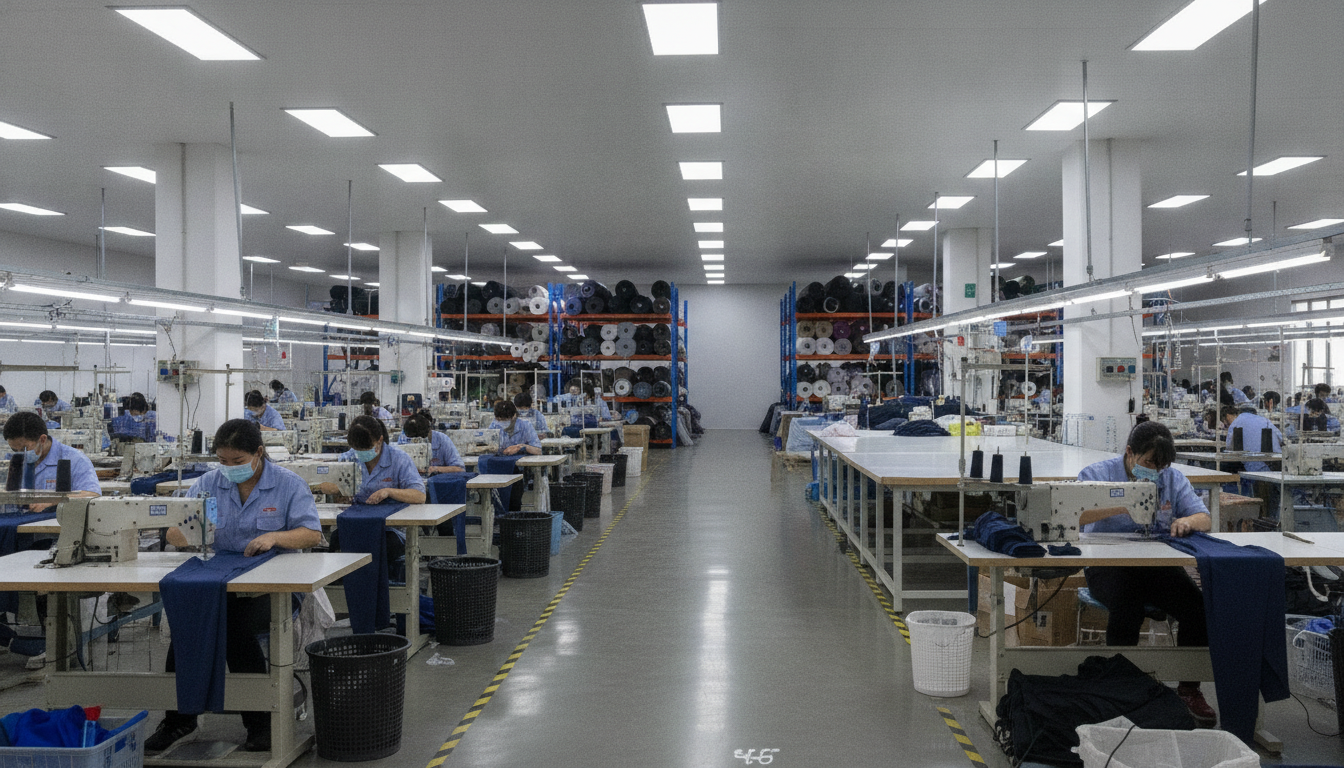
Custom projects typically require 3-5 sample rounds, 60-90 day lead times for first production, and MOQs of 500+ pieces per style to justify tooling and R&D investment. Walundi’s vertically integrated facility supports custom development with in-house pattern studios and fabric testing labs, maintaining the same 30-piece bulk MOQ by amortizing setup costs across a diversified production schedule.
Founders frequently struggle to compare Australia-based suppliers against overseas factories on total landed cost, lead time, and service capability in a single view. The decision hinges on order volume, speed requirements, and whether you need custom development or stock replenishment.
Domestic Australian cut-and-sew facilities offer 7-14 day turnaround for stock white label items and 21-30 days for private label runs. You avoid international freight, customs paperwork, and currency fluctuation risk. Communication happens in the same time zone, and quality issues can be resolved with in-person factory visits.
The cost trade-off is significant. Australian labor rates and fabric import duties typically result in per-unit costs 40-60% higher than comparable overseas production. For a basic high-waisted legging, expect AUD 22-28 FOB from an Australian supplier versus AUD 12-16 landed from an overseas factory. This gap narrows slightly for small runs (under 200 pieces) where overseas setup fees and freight minimums eat into the cost advantage.
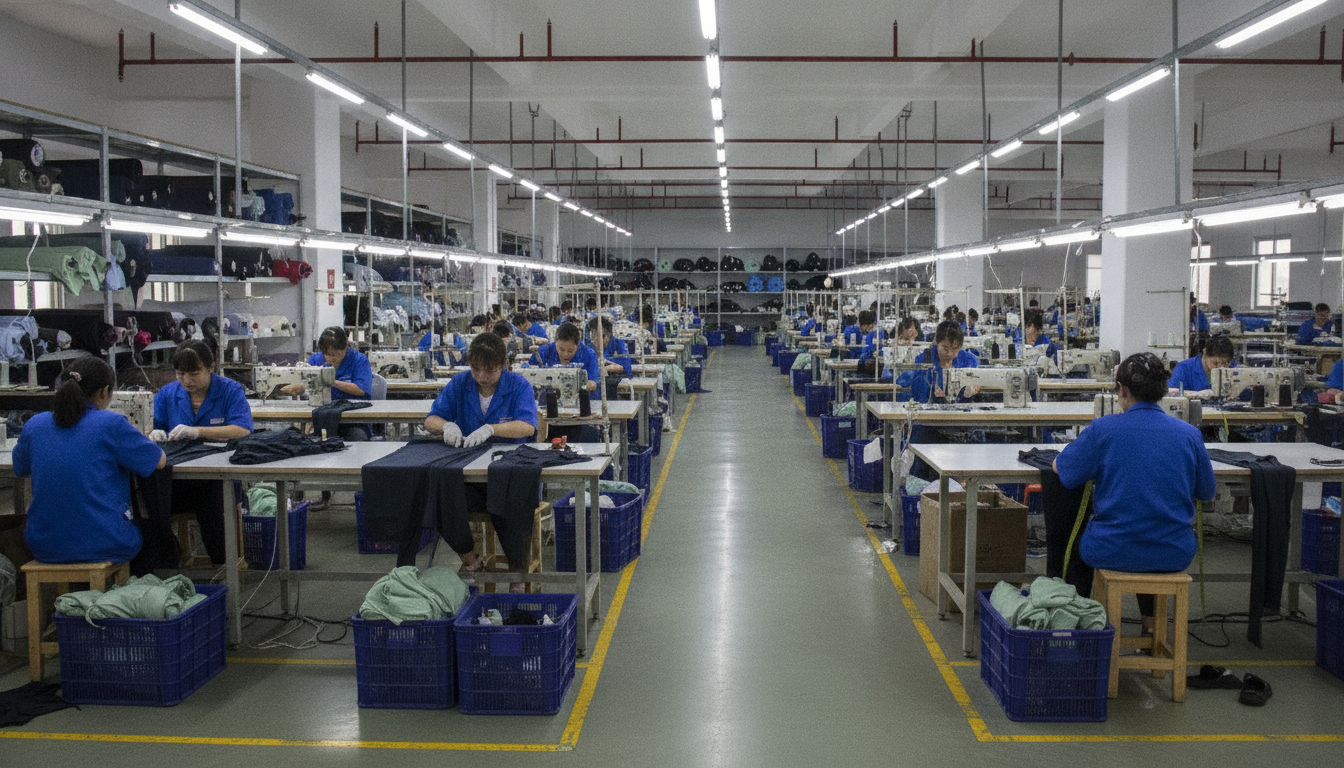
Vertically integrated factories in China, Vietnam, and Bangladesh dominate the global activewear supply chain due to specialized fabric mills, skilled technical teams, and economies of scale. A custom yoga apparel manufacturer in Yiwu can source performance fabrics (moisture-wicking polyester, recycled nylon, bamboo blends) at 30-40% lower cost than Australian importers, and pattern studios with 10+ years of activewear experience reduce sample iteration cycles.
Lead time from Ningbo port to Sydney runs 18-22 days for sea freight, plus 3-5 days for customs clearance and last-mile delivery. Air freight cuts transit to 5-7 days but increases shipping cost by 4-6x, making it viable only for sample shipments or urgent reorders. Total landed cost (FOB + freight + duties + compliance testing) for a 500-piece legging order typically comes in 35-50% below equivalent Australian production.
Many Australian DTC brands sample and validate product-market fit with overseas suppliers, then split production between domestic (for fast-turn restocks of proven bestsellers) and overseas (for seasonal collections and margin-sensitive SKUs). This model requires managing two supplier relationships but optimizes cash flow and speed.
In practice: A Melbourne yoga studio launched a branded legging line by ordering 1-piece samples from Walundi to test three colorways, then placed a 30-piece-per-SKU first order for the top two styles, validating demand before committing to larger domestic inventory.
Minimum order quantities and sample costs represent the two largest financial barriers for founders validating a white label activewear supplier Australia. Vague supplier claims about low MOQ without showing actual numbers force buyers to submit inquiry forms and wait days for quotes, slowing down the decision process.
Most overseas factories charge AUD 40-80 per sample garment plus a one-time pattern setup fee of AUD 150-300 per style. Sample lead time runs 7-14 days for stock-based white label items and 14-21 days for custom private label development. Freight for a 3-5 piece sample shipment via DHL or FedEx adds AUD 60-100 to Sydney.
Walundi’s 1-piece sample MOQ eliminates the need to order multiple sizes or colorways upfront. Founders can validate fit and fabric hand-feel with a single garment, then iterate based on feedback before committing to bulk production. Sample cost runs AUD 45-65 per piece depending on fabric complexity, with 7-10 day production and express freight included.
Traditional white label suppliers in Australia require 100-200 pieces per style across all sizes, while overseas private label factories typically start at 300-500 pieces per SKU. For a founder launching with three legging colorways in five sizes (XS-XL), this translates to 1,500-2,500 total units and AUD 18,000-40,000 in upfront inventory investment before validating market demand.
Startup-friendly MOQ structures break this barrier. Walundi’s 30-piece bulk minimum per SKU allows a founder to order 30 units of a single style in one colorway and size run (6 units each of XS, S, M, L, XL), test sell-through over 4-6 weeks, then reorder winners and cut losers. This model reduces initial cash outlay to AUD 450-600 per SKU and enables true product-market fit validation.
Sample MOQ: 1 piece. Bulk MOQ: 30 pieces per SKU. Sampling time: 7-10 days.
Once a SKU proves demand, reorder economics shift. Most factories offer 10-15% per-unit cost reduction at 200-piece reorder volumes and another 8-12% at 500-piece volumes due to fabric roll efficiency and reduced setup time per garment. Founders should model unit economics at three volume tiers (30, 200, 500 pieces) to understand margin progression as the brand scales.
Freight cost per unit also drops significantly with volume. A 30-piece shipment via sea freight runs approximately AUD 8-12 per unit, while a 500-piece shipment drops to AUD 2-3 per unit due to container utilization. Air freight remains cost-prohibitive for bulk orders (AUD 15-25 per unit) but serves as a viable option for sample validation and urgent top-up inventory.
Small brands consistently report frustration when supplier pages fail to clearly surface testing protocols, compliance documentation, and sustainability credentials. Australian retail buyers and DTC customers increasingly demand proof of quality and ethical production, making certifications a table-stakes requirement rather than a nice-to-have.
OEKO-TEX Standard 100 certification screens finished textiles against more than 1,000 harmful substances including formaldehyde, heavy metals, pesticides, and chlorinated phenols. The test applies to all components (fabric, thread, elastic, labels) and certifies that the garment is safe for direct skin contact. Major Australian retailers (Myer, David Jones, specialty boutiques) require OEKO-TEX or equivalent certification for all apparel SKUs.
Walundi maintains OEKO-TEX Standard 100 certification across all core fabric platforms (polyester-spandex blends, nylon-spandex, recycled polyester, bamboo-cotton). Each production batch undergoes third-party testing, and certificates accompany shipment documentation for customs clearance and retail compliance verification.
The Global Recycled Standard requires a minimum of 20% recycled content before a product can carry the GRS label, with full chain-of-custody documentation from fiber source through finished garment. GRS also mandates social and environmental production criteria, including wastewater treatment and worker safety protocols.
Founders making sustainability claims (recycled polyester, ocean plastic, post-consumer nylon) must provide GRS certification to avoid greenwashing accusations and comply with Australian Consumer Law truth-in-advertising requirements. Sustainable yoga clothing manufacturers with GRS certification can supply the transaction certificates and test reports needed for marketing copy and retail partner due diligence.
The Business Social Compliance Initiative (BSCI) audit framework covers 11 areas including fair wages, working hours, health and safety, and freedom of association. Australian brands selling through retail partners or seeking B Corp certification typically require BSCI or equivalent social compliance audits (WRAP, SA8000) from their manufacturing partners.
Walundi’s Yiwu facility maintains BSCI certification with annual third-party audits, providing buyers with audit reports and corrective action documentation. This transparency matters when Australian retail buyers request factory compliance paperwork as part of vendor onboarding.
Lead time uncertainty remains one of the top complaints from founders working with overseas suppliers. Many factory websites list generic production timelines without accounting for fabric procurement, sample approval cycles, or freight transit, leaving buyers unable to plan launch dates or restock windows accurately.
Sample development for private label activewear typically requires 7-10 days for first samples, followed by 2-3 revision rounds if fit or construction adjustments are needed. Each revision adds 5-7 days. Founders should budget 3-4 weeks total for sampling and approval before bulk production begins.
White label stock items bypass this phase entirely, as garments already exist in finished form. You receive samples within 3-5 days and can approve for bulk production immediately, collapsing the pre-production window to under one week.
Bulk production for a 200-500 piece order runs 25-35 days from fabric cutting through final QC inspection. This window includes cutting, sewing, finishing (hemming, elastic attachment, label insertion), washing (if required), pressing, and inline quality checks. Larger orders (1,000+ pieces) extend production to 40-50 days due to line scheduling and fabric roll lead times.
In-house QC inspection happens at three stages: fabric inspection upon receipt from the mill, inline checks during sewing, and final audit before packing. Third-party inspection services (SGS, Bureau Veritas, Intertek) add 2-3 days and AUD 300-500 per inspection but provide independent verification for high-stakes retail partnerships.
Sea freight from Ningbo port to Sydney runs 18-22 days port-to-port, with weekly sailings from major carriers (COSCO, Maersk, MSC). Customs clearance adds 3-5 days depending on whether the shipment requires physical inspection or document-only review. Last-mile delivery from Sydney port to your warehouse or fulfillment center adds 1-2 days.
Air freight cuts transit to 5-7 days but increases cost by 4-6x (approximately AUD 12-18 per kilogram versus AUD 2-3 per kilogram for sea freight). Air is viable for sample shipments (under 10 kilograms) or urgent restock orders where the margin impact is acceptable.
For private label production, total lead time from order placement to Sydney delivery runs 55-70 days: 10 days sampling, 30 days production, 22 days sea freight, 5 days customs and last-mile. White label stock orders compress this to 30-40 days by eliminating the sampling phase. Founders should plan product launches and seasonal drops with 75-90 day lead time buffers to account for potential delays in fabric procurement or port congestion.
Ready to validate your first activewear drop without locking up cash in inventory?
Request 1-piece samples and MOQ details →
White label refers to pre-manufactured stock garments in standard sizes and colorways that accept your brand’s hang tags and labels, with minimal lead time and lower entry barriers. Private label manufacturing means the factory develops garments to your specifications (fabric, fit, trims, colorways) and produces exclusively for your brand, requiring pattern development and sample iterations but delivering unique products. White label typically requires 50-100 pieces total MOQ with immediate sampling, while private label starts at 200-500 pieces per style with 14-21 day sample development.
White label activewear suppliers in Australia typically require 100-200 pieces per style across all sizes for stock items, while overseas private label factories start at 300-500 pieces per SKU. Startup-friendly manufacturers like Walundi offer 30-piece bulk MOQ per SKU, allowing founders to order a single style in one colorway and size run (6 units each of XS, S, M, L, XL) to validate market demand before scaling. Sample MOQ can be as low as 1 piece for initial fit and fabric validation.
Finding a reliable activewear manufacturer requires verifying certifications (OEKO-TEX Standard 100, GRS, BSCI), requesting sample garments to assess construction quality and fabric performance, and checking references from other brands in your size tier. Request transparent pricing breakdowns showing sample costs, bulk MOQ, per-unit pricing at multiple volume tiers, and total landed cost including freight and duties. Visit the factory if feasible or request video tours of production lines, pattern studios, and QC processes to confirm vertically integrated capabilities versus broker operations.
Yes, low MOQ manufacturing enables founders to launch activewear brands with manageable inventory investment by ordering 30-50 pieces per SKU to validate product-market fit before scaling. This approach reduces initial cash outlay to AUD 450-900 per SKU and allows testing multiple styles, colorways, or size runs without locking up capital in unproven inventory. Order 1-piece samples first to validate fit and fabric, then place small bulk orders for top performers, and scale to 200-500 piece reorders once demand is proven to unlock better per-unit economics.
Most Australian activewear suppliers focus on domestic production and shipping within Australia, though some offer international shipping to New Zealand and select Asia-Pacific markets. Overseas manufacturers in China, Vietnam, and Bangladesh ship globally via established freight networks, with sea freight from Ningbo to Sydney running 18-22 days and air freight taking 5-7 days. International shipping costs vary by volume: sea freight runs AUD 2-3 per unit for 500-piece orders versus AUD 8-12 per unit for 30-piece shipments due to container utilization efficiency.
Written by the Walundi Export Team.
Sample 1 piece · bulk from 30 · OEKO-TEX & GRS certified · reply in 24h. No gatekeeping.
Low MOQ. Sustainable fabrics. OEM ready. Tell us your vision.
Click the button below to open WhatsApp. If you're not logged in to WhatsApp Web yet, scan the QR code first — then come back here and copy the message into the chat.