📋 Table of Contents
The typical minimum order quantity for custom yoga apparel becomes a make-or-break decision when you’re trying to validate product-market fit without locking up tens of thousands in inventory. Factory quotes often start low, then triple once you add a custom logo or second colorway. Understanding real MOQ structures helps you budget accurately and avoid cash-flow traps that kill early-stage brands.
MOQ stands for minimum order quantity, the smallest number of units a custom yoga apparel manufacturer will produce in a single production run. This threshold exists because fabric mills, dye houses, and cut-and-sew lines operate most efficiently at specific batch sizes. When a factory quotes “200-piece MOQ,” you need to clarify whether that applies per style, per SKU, per colorway, or across your entire order.
A common complaint buyers raise: factories advertise low MOQs but enforce them at the SKU or colorway level. If you design one legging style in three colors and five sizes, a 100-piece per-colorway MOQ actually requires 300 total units. A per-SKU MOQ means 100 pieces for each color-size combination, which can balloon to 1,500 units. Always ask: “Is your MOQ per style, per color, or per individual SKU?”
Sample MOQ refers to the minimum for pre-production samples. Many factories charge separate fees and require 3-5 sample units per design. Bulk MOQ is the threshold for your first production order. At Walundi, the sample MOQ is 1 piece and the bulk MOQ is 30 pieces per SKU, letting founders validate fit and fabric before scaling.
The typical minimum order quantity for custom yoga apparel varies widely based on whether you choose private label, semi-custom, or full OEM. Each model carries different setup costs, tooling requirements, and lead times.
Private label yoga clothing typically requires 50-100 pieces per style because you select from a factory’s existing catalog. No pattern development or custom fabric dyeing occurs, so setup costs remain low. You add your woven label and hang tags to pre-designed leggings or sports bras. This model works well for boutique studios testing branded retail without design expertise.
Full OEM means the factory develops original patterns to your specifications, sources custom fabric blends, and may create unique construction details like hidden pockets or proprietary waistband designs. Setup costs include pattern grading across sizes, sample iterations, and dedicated dye lots. Most Chinese OEMs require 300-1,000 pieces per style to absorb these fixed costs. Startups face a cash-lock dilemma: commit large capital before validating demand, or pay prohibitive per-unit premiums.
Some factories offer trial orders at 50-100 units to let new brands test quality before scaling. Unit prices on trial runs often sit 40-60% above bulk pricing. A common buyer complaint: quality drops noticeably when scaling from 50 to 500 units, with the same factory delivering inconsistent stitch tension or fabric hand-feel. Always negotiate explicit quality-at-scale guarantees and third-party inspection clauses in your purchase agreement.
Factories quote attractive headline MOQs, then reveal multipliers buried in technical specs. These hidden terms can triple your actual order size and blow budgets.
A factory advertises “100-piece MOQ” but enforces it per colorway, not per style. If you launch one legging design in black, navy, and olive, you must order 300 total pieces. Buyers discover this only after submitting tech packs. Always ask: “If I order one style in three colors, what is my total minimum piece count?”
Stock colors (black, white, navy, charcoal) carry no dye-lot minimums. Custom Pantone matches often require 500-yard fabric minimums per color, forcing you to order far more units than your style MOQ suggests. One Reddit buyer reported a factory quoting 200-piece MOQ but demanding 300+ units once custom logo colors were added. Clarify dye-lot minimums upfront if you need brand-specific hues.
Some manufacturers enforce balanced size runs: if you order 100 pieces, they require a 10-20-40-20-10 distribution across XS-S-M-L-XL. You cannot order 100 mediums alone. This protects the factory from fabric waste but limits your ability to restock best-selling sizes without placing a full new order. Negotiate size-run flexibility or choose a factory that allows single-size reorders.
Unit cost per piece drops as order volume rises, but the curve is not linear. Understanding break points helps you balance cash outlay against margin targets.
Pattern development, grading, and pre-production samples cost the factory $300-$800 regardless of order size. On a 50-piece order, that adds $6-$16 per unit. On a 500-piece order, it adds $0.60-$1.60 per unit. Factories either build this into per-piece pricing or charge separate setup fees. Ask for itemized quotes showing setup costs separately so you can negotiate or absorb them as a one-time investment.
Knit fabric mills sell in minimum yardages, often 500-1,000 yards per color. If your 100-piece order consumes only 250 yards, the factory must either absorb the remaining 750 yards as dead stock or pass the cost to you. Stock fabrics (black, navy, charcoal) avoid this because the factory uses excess yardage across multiple clients. Custom dye lots lock you into higher minimums or surcharges.
Founders often believe low MOQ automatically means high unit costs. Strategic decisions around fabric, design complexity, and production partnerships can unlock low MOQ yoga manufacturing without margin erosion.
Stock fabrics in standard colors (black, white, navy, charcoal, olive) carry no dye-lot minimums. Factories keep these in inventory and share yardage across clients. Choosing stock fabrics can drop your MOQ from 500 to 100 pieces per style. You sacrifice unique color differentiation but gain speed and capital efficiency. Many successful DTC brands launch with stock fabrics, validate demand, then introduce custom colors once cash flow supports higher minimums.
Complex details like mesh inserts, hidden pockets, multi-panel construction, or contrast stitching increase labor time and quality-control steps. Each added complexity raises the factory’s break-even threshold. A basic two-panel legging with flatlock seams may carry a 200-piece MOQ, while a six-panel design with reflective trim requires 500 pieces. Prioritize core construction for your first run, then add premium details once you reorder.
Some factories absorb pattern development and grading costs in exchange for slightly higher per-unit pricing or a commitment to reorder. Instead of paying $500 upfront for patterns plus $12 per piece, you pay $14 per piece with no setup fee. This shifts capital from fixed to variable costs, improving cash flow for startups. Walundi absorbs tooling costs into the 30-piece bulk MOQ, eliminating separate setup invoices.
If a factory requires 300 pieces minimum but allows you to split across styles, order 100 pieces each of three designs rather than 300 of one. This diversifies your product line and reduces inventory risk. Confirm the factory permits mixed-style orders and that each style meets its individual color or SKU minimums.
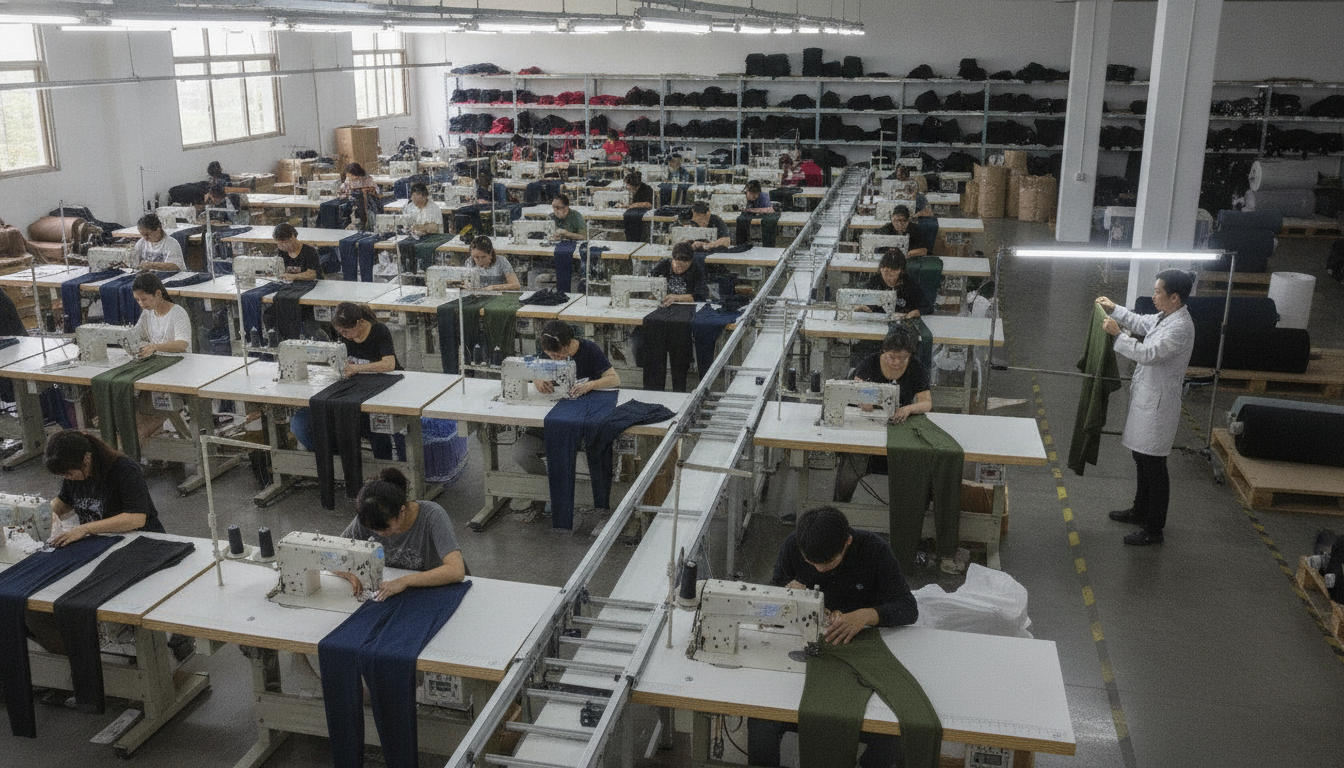
Yoga clothing manufacturers for startups structure their business models around low-MOQ flexibility. Walundi’s 30-piece bulk MOQ and 1-piece sample MOQ reflect vertically integrated operations: we control fabric sourcing, pattern development, cut-and-sew, and QC under one roof. This eliminates the coordination overhead and minimum-order friction that occurs when factories outsource each step to separate suppliers.
In practice: A Los Angeles DTC founder validated three legging styles with 1-piece samples, then placed a 30-unit-per-SKU first order across two colors and five sizes (300 total pieces), avoiding the 1,000-piece minimum quoted by her previous Chinese OEM
A recurring buyer complaint: quality drops when scaling from trial orders to bulk production. The same factory that delivered flawless 50-piece samples ships 500-piece orders with inconsistent stitch tension, pilling fabric, or misaligned seams.
Small trial runs often receive hands-on attention from senior sewers and dedicated QC inspectors. Bulk orders move to standard production lines with less experienced operators and batch-based QC sampling rather than piece-by-piece inspection. Fabric sourcing may shift from premium stock to cheaper alternatives to meet aggressive pricing. Factories juggling multiple clients may rush your order to free up line capacity.
Negotiate explicit quality-at-scale guarantees in your purchase agreement. Specify that bulk production must match approved pre-production samples in fabric weight, stitch density, and construction details. Include third-party inspection clauses: you or an independent QC firm inspects a random sample of finished goods before shipment. If defect rates exceed agreed thresholds (commonly 2.5% AQL), the factory re-produces rejected units at no cost.
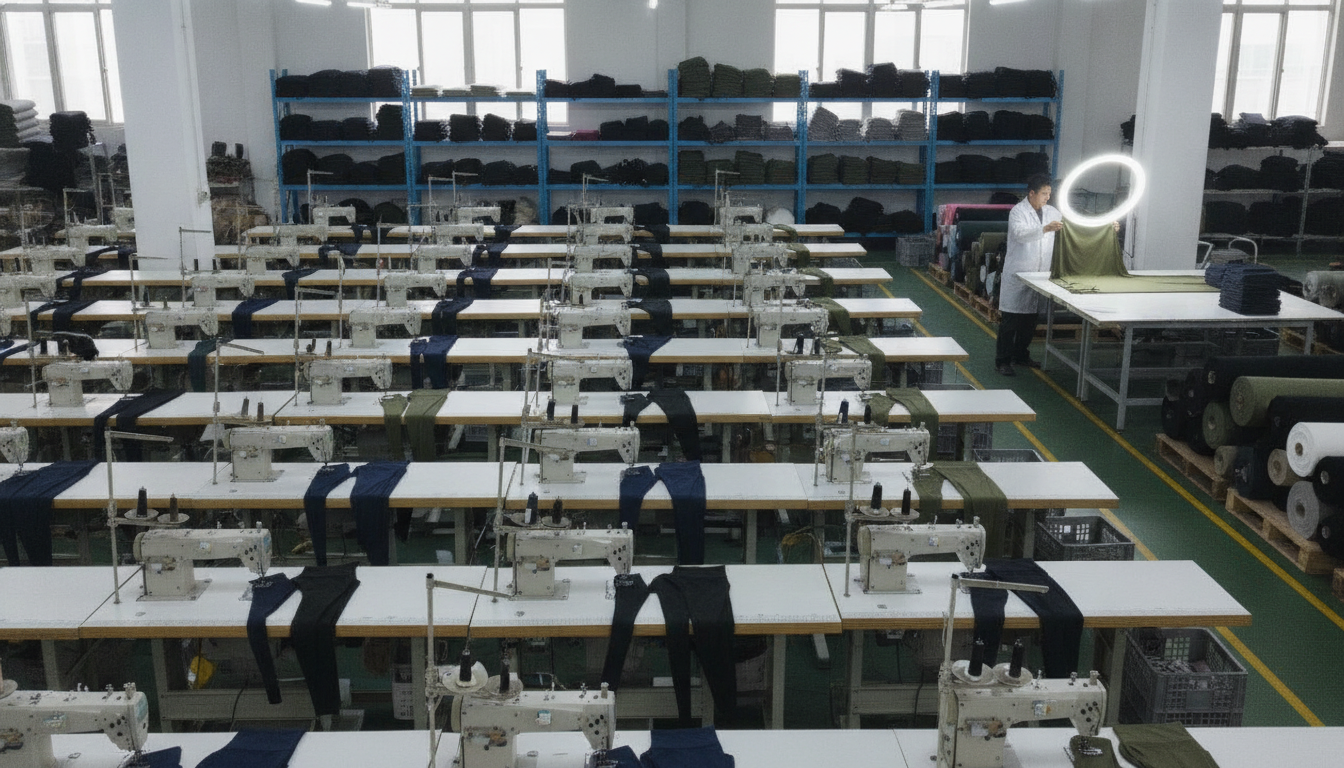
Vertically integrated manufacturers with in-house QC teams maintain tighter consistency. At Walundi’s 18,000m² Yiwu facility, every piece passes through our quality-control station before packing. We run squat-proof opacity tests on leggings, check flatlock seam strength, and verify OEKO-TEX compliance on certified fabrics. This process applies equally to 30-piece startup orders and 3,000-piece brand reorders.
Request a pre-production sample from your actual bulk fabric and production line, not just a counter sample sewn by hand. This “golden sample” represents what your bulk order will look like. Compare fabric hand-feel, opacity when stretched, and stitch consistency. If the golden sample differs from your approved counter sample, pause production and investigate before committing to the full run.
Custom yoga leggings typically require 200-500 pieces per SKU for full OEM production, including original patterns and custom fabric blends. Private label leggings using existing designs may start at 50-100 pieces per style. Walundi offers a 30-piece bulk MOQ per SKU for custom leggings, with 1-piece sample MOQ for fit validation. Always clarify whether the quoted MOQ applies per style, per colorway, or per individual size-color SKU to avoid hidden multipliers.
Yes, but you need a manufacturer structured for micro-batch production. Most traditional OEMs require 200+ pieces to absorb setup costs. Walundi’s 30-piece bulk MOQ and 1-piece sample MOQ let founders validate designs and demand before scaling. Expect unit costs 40-60% higher on sub-100-piece orders compared to bulk pricing, but this trade-off protects cash flow and reduces inventory risk during product-market fit testing.
Offer to absorb setup costs as a separate line item rather than spreading them across per-unit pricing. Choose stock fabrics in standard colors to eliminate dye-lot minimums. Simplify construction by removing complex details like mesh inserts or multi-panel designs. Commit to reorders in writing, giving the factory confidence they will recoup tooling investments. Partner with startup-focused manufacturers like Walundi that build low-MOQ flexibility into their business model rather than forcing traditional OEM structures onto small brands.
Private label uses the factory’s existing designs and stock fabrics, requiring 50-100 pieces per style because no pattern development or custom dyeing occurs. OEM (original equipment manufacturer) production creates unique patterns, custom fabric blends, and proprietary construction details, requiring 300-1,000+ pieces to absorb setup costs. Semi-custom models (choosing fabrics and colors within existing patterns) typically sit at 200-500 pieces per SKU, balancing customization with manageable minimums.
US-based cut-and-sew facilities exist but typically require 500-1,000 piece minimums due to higher labor costs and smaller production scale. Domestic manufacturers offer faster turnaround (2-4 weeks vs. 8-12 weeks overseas) and easier communication, but unit costs run 2-3x higher than Chinese or South Asian production. For true low-MOQ flexibility (30-100 pieces), most DTC founders source from vertically integrated Asian manufacturers like Walundi, then shift to nearshore or domestic production once volume justifies the cost premium.
Ready to validate your yoga apparel designs without locking up $15,000 in inventory?
Request 1-Piece Samples Today →
Written by the Walundi Export Team.
Sample 1 piece · bulk from 30 · OEKO-TEX & GRS certified · reply in 24h. No gatekeeping.
Low MOQ. Sustainable fabrics. OEM ready. Tell us your vision.
Click the button below to open WhatsApp. If you're not logged in to WhatsApp Web yet, scan the QR code first — then come back here and copy the message into the chat.