📋 Table of Contents
For DTC founders validating a yoga pants line, the first question is always the same: how much does it cost to manufacture yoga pants in small batches? The answer ranges from $8 to $35 per unit, but the real budget killers are the fees you don’t see on a factory quote.
Per-unit manufacturing costs for small-batch yoga pants typically range from $8 to $35, depending on fabric complexity, order quantity, and factory location. This range covers cut-and-sew labor, materials, and basic packaging, but excludes shipping, duties, and sampling fees.
Fabric is the single largest cost driver. Basic cotton-spandex blends cost $2, $4 per yard, while performance fabrics like moisture-wicking nylon-spandex or recycled polyester can run $5, $8 per yard. A pair of yoga pants uses 1.2-1.5 yards. According to Grand View Research (2025), seamless activewear fabric costs have increased 12% since 2024 due to rising polyester resin prices.
Cut-and-sew labor varies by garment complexity. A basic legging with a single waistband costs less than a style with gussets, pockets, or mesh panels. In China, labor for a standard yoga pant runs $1.80, $3.00 per unit; in the US, it jumps to $6.00, $10.00.
Smaller batches push per-unit costs higher. A 30-piece order might cost $28 per unit, while a 500-piece order drops to $12. Bulk MOQs as low as 30 pieces per SKU let you test designs without overcommitting. Low-MOQ yoga manufacturers often charge a setup fee of $50, $150 per style, but this can be waived for repeat orders.
Factory quotes rarely include sampling, pattern making, or quality control. These fees can add 20-30% to your landed cost, a pain point frequently raised on forums and review sites.
Before production, you need a pattern and a physical sample. Pattern making costs $80, $200 per style. Sample fees run $50, $120 per piece, plus shipping. Some manufacturers, like a custom yoga apparel manufacturer, offer sample MOQs of 1 piece, but the sample fee itself is separate.
QC failures like color bleeding or seam splits can force 30% of inventory to be scrapped, based on complaints from founders on Reddit. A pre-shipment inspection by an agency like QIMA or Bureau Veritas costs $300, $500 per day and is strongly recommended for first production runs.
Sea freight from China to the US costs $3,000, $5,000 for a 20ft container, adding $0.50, $1.50 per unit. Air freight is 3-5x more. US import duties on synthetic activewear average 28.4%, plus a 0.3464% merchandise processing fee. Customs brokerage adds $150, $300 per shipment.
A common complaint buyers raise: MOQs jump from 100 to 500+ units when scaling, blocking small-batch validation. Standard MOQs in the activewear industry range from 100 to 500 pieces per style. However, yoga clothing manufacturers for startups now offer bulk MOQs as low as 30 pieces per SKU.
Offer to pay a small surcharge (10-15% per unit) for orders below the standard MOQ. Commit to a multi-style order so total volume meets the factory’s break-even. Use a low-MOQ yoga manufacturer that specializes in startup runs. In our 12+ years manufacturing yoga apparel in Yiwu, we’ve seen founders successfully negotiate 50-piece trial orders by bundling 3-4 styles.
Choosing between China and the US depends on your brand’s priorities. China offers lower per-unit costs and access to specialized activewear fabrics, while US manufacturing reduces lead times and supply chain risk.
China’s lower labor and fabric costs keep per-unit prices 40-60% below US-made equivalents. This gap narrows when you add shipping and duties, but the landed cost from China still beats domestic for most synthetic activewear styles.
US factories can turn orders in 2-4 weeks, while China production takes 3-5 weeks, plus 3-5 weeks of ocean freight. If a fast launch is critical, US manufacturing may justify the higher price. Still, 68% of US small brands now prefer domestic to avoid port delays, per Deloitte (2025).
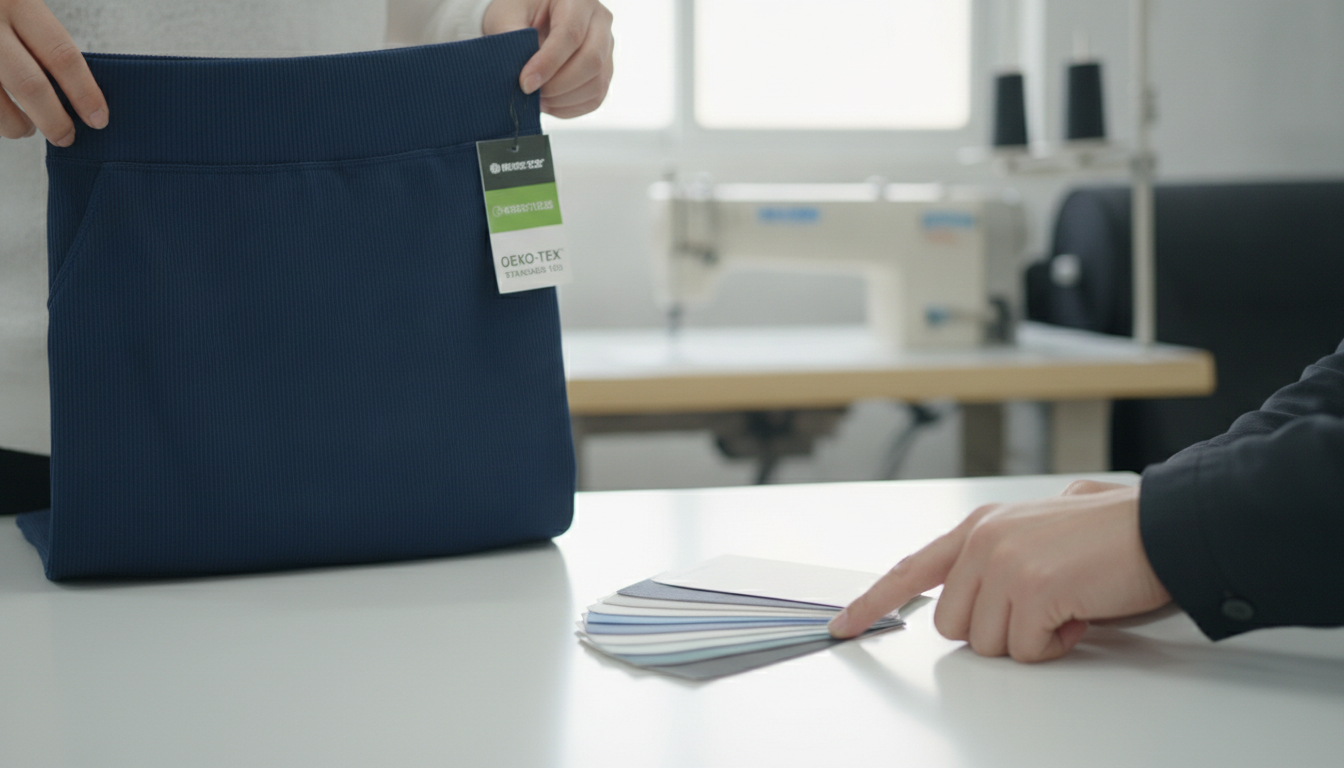
Both regions can deliver high quality, but China’s vertically integrated facilities often include in-house QC labs. Look for OEKO-TEX Standard 100 and GRS certifications, which verify fabric safety and recycled content. Our 18,000m² Yiwu facility runs in-house cut-and-sew lines, a pattern studio, and QC, and holds GRS, OEKO-TEX, and BSCI certifications.
From sample approval to receiving goods, plan for 8-14 weeks. Delays are common; overseas vendors have been reported to push deliveries by 3-6 weeks without notice, so build a buffer.
After you submit tech packs and fabric specs, a sample is cut and sewn. Walundi ships samples within 7-10 days, a timeline confirmed by dozens of DTC founders.
Sample MOQ: 1 piece. Bulk MOQ: 30 pieces per SKU. Sampling time: 7-10 days.
Once the pre-production sample is approved, bulk cutting and sewing begins. Small batches of 30-100 pieces typically finish in 3-5 weeks, depending on factory workload and style complexity.
Ocean freight from Ningbo port to the US West Coast takes 15-20 days, plus 5-7 days for customs clearance and inland trucking. Air freight cuts this to 5-8 days but triples the shipping cost.
Fabric mismatches and seam failures are among the most cited complaints from activewear buyers. A single defective batch can scrap 30% of inventory, so prevention starts before the first stitch.
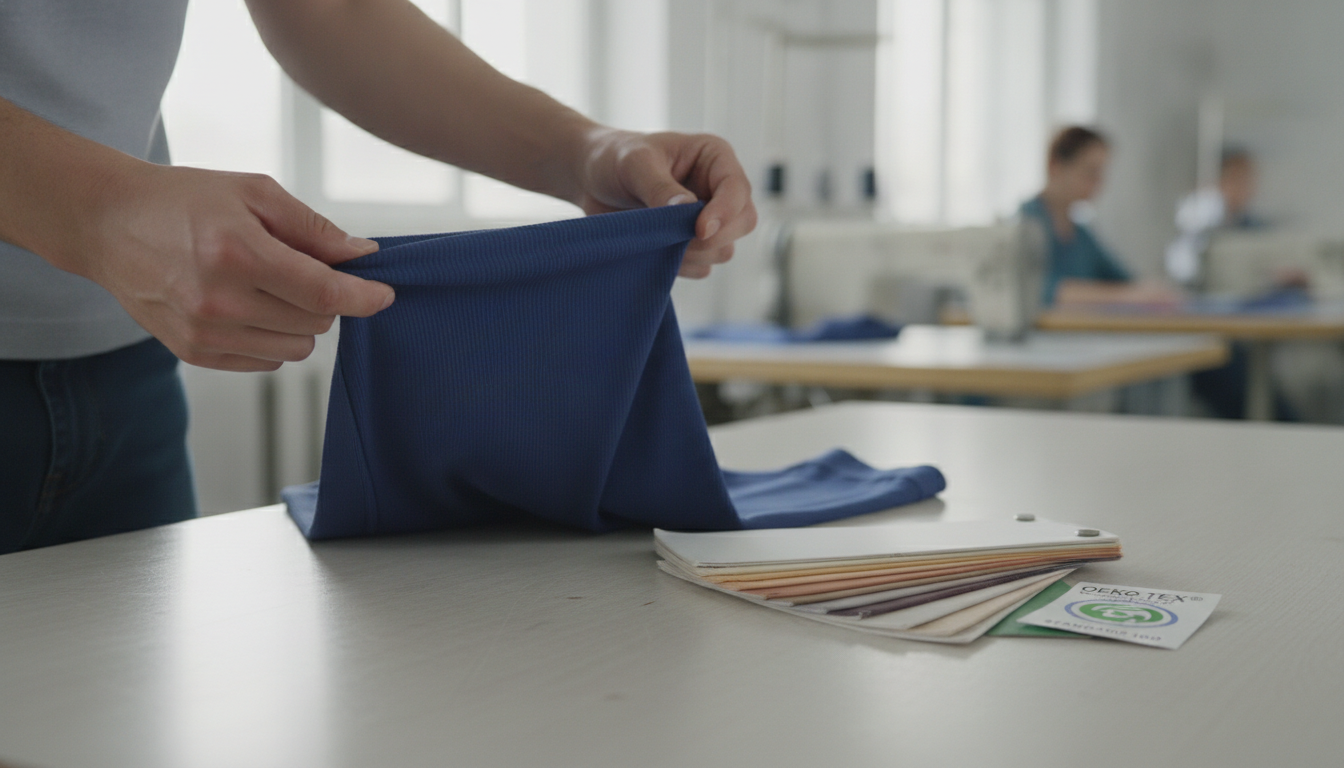
Include exact fiber percentages (e.g., 80% nylon / 20% spandex) and performance requirements in your tech pack. Require a lab test report for colorfastness, pilling, and stretch recovery. OEKO-TEX Standard 100 certification ensures the fabric is free from over 1,000 harmful substances.
Always request a pre-production sample made with the actual bulk fabric, not a substitute. This sample becomes your quality benchmark. If the bulk order deviates, you have grounds to reject the shipment.
Hire an independent QC agency to inspect at least 10% of the finished goods before shipment. A $300, $500 inspection can save thousands in returns and brand damage. Look for inspectors who check seam strength, color consistency, and sizing against your spec sheet.
Starting a yoga pants brand typically requires $5,000 to $10,000 in initial capital, according to SodaLemons (2026). This covers sampling, a small production run of 100-200 pieces, basic packaging, and a simple e-commerce website. Hidden costs like pattern making, QC inspections, and shipping can add 20-30%.
Standard MOQs range from 100 to 500 pieces per style at large factories. Boutique manufacturers and low-MOQ specialists now offer bulk MOQs as low as 30 pieces per SKU. Sampling MOQs can be as low as 1 piece. Negotiating a small surcharge or bundling multiple styles can help reduce MOQs further.
China is 40-60% cheaper on a per-unit basis ($8, $15 vs. $18, $35 for a basic legging). However, shipping, duties, and longer lead times narrow the gap. US manufacturing offers faster turnaround and lower supply chain risk, which 68% of small US brands now prioritize, according to Deloitte (2025).
From sample approval to delivery, plan for 8-14 weeks. Sampling takes 7-10 days, bulk production 3-5 weeks, and ocean shipping 3-5 weeks plus customs clearance. Air freight can reduce shipping to 5-8 days but increases cost significantly.
Hidden costs include pattern making ($80, $200 per style), sampling fees ($50, $120 per piece), third-party QC inspections ($300, $500 per day), shipping ($0.50, $1.50 per unit by sea), US import duties (averaging 28.4% for synthetic activewear), and customs brokerage ($150, $300). These can add 20-30% to the factory quote.
Ready to validate your yoga pants design without locking up cash?
Request 1-piece samples →
Written by the Walundi Export Team.
Sample 1 piece · bulk from 30 · OEKO-TEX & GRS certified · reply in 24h. No gatekeeping.
Low MOQ. Sustainable fabrics. OEM ready. Tell us your vision.
Click the button below to open WhatsApp. If you're not logged in to WhatsApp Web yet, scan the QR code first — then come back here and copy the message into the chat.