📋 Table of Contents
If you’re searching for a custom yoga apparel manufacturer who won’t demand 500-piece minimums before you’ve proven your concept, you’re in the right place. This guide breaks down the manufacturing models, sample-validation processes, and certification requirements that separate a successful DTC yoga launch from a costly inventory mistake.
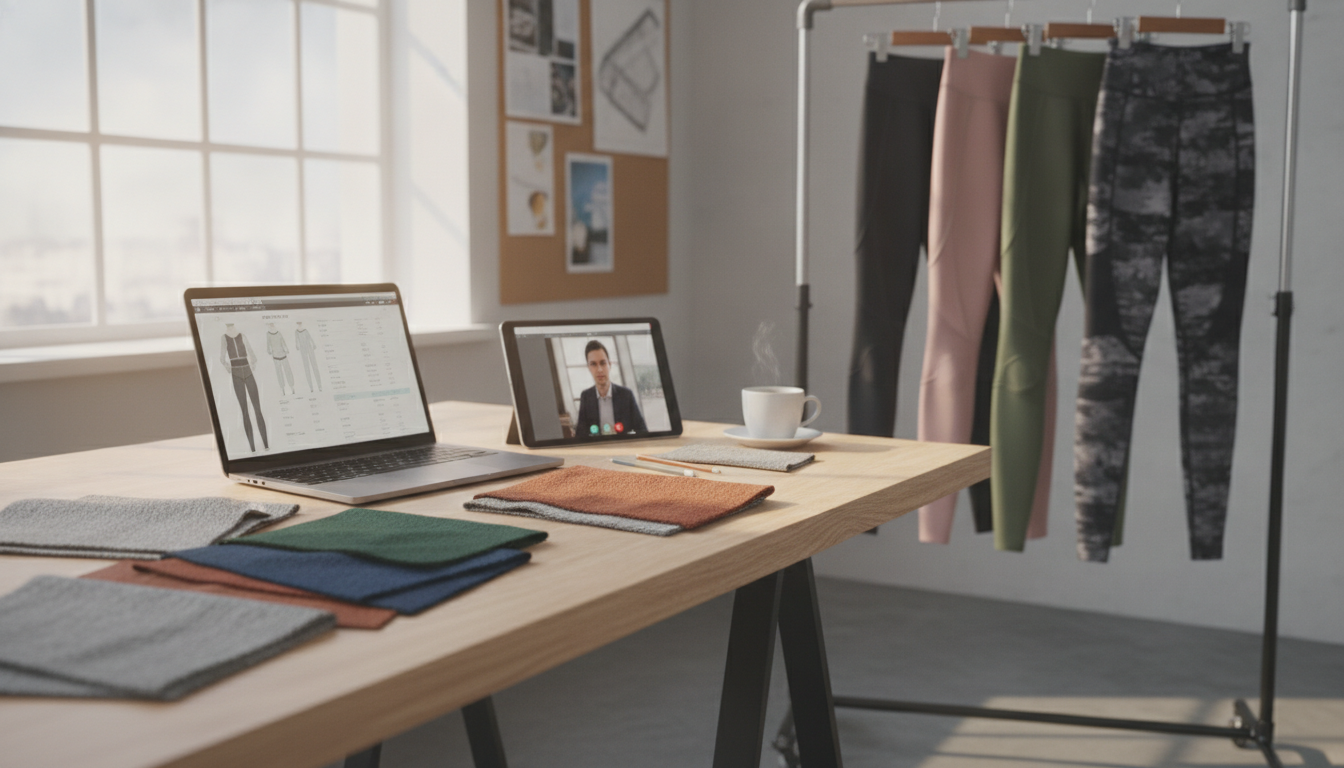
Not all custom yoga apparel is created equal. Understanding the three manufacturing tiers can save you from mismatched expectations and budget overruns.
Cut-and-sew production starts with your own patterns, fabric selection, and fit specifications. You control every detail-from inseam length to gusset shape-making it ideal for brands that want a signature fit or unique silhouette. MOQ typically starts at 30-100 pieces per style, and lead times run 4-6 weeks after sample approval.
Private label gives you access to pre-developed blocks and patterns. You choose fabrics, colors, and branding elements, but the core construction is already proven. This cuts development time to 2-4 weeks and often reduces sample fees. It’s a solid choice if you need a quick launch with moderate differentiation.
Full custom combines cut-and-sew with extensive embellishment: sublimation prints, custom labels, hang tags, and packaging. It demands a higher upfront investment (pattern fees, print setup) but creates a completely ownable brand identity. For DTC founders who need to stand out on Instagram and Shopify, this tier delivers the strongest brand equity.
Before you invest in a full collection, you need to know if your designs actually perform in real-world wear tests.
A single sample puts a tangible product in your hands in 7-10 days. You can test stretch recovery by hand, wear-legging opacity under studio lighting, and send it to a trusted yoga instructor for feedback. In our 12+ years manufacturing yoga apparel in Yiwu, we’ve seen DTC founders waste USD 5,000 on initial inventory that didn’t sell because they skipped the sample-and-test step.
Sample MOQ: 1 piece. Bulk MOQ: 30 pieces per SKU. Sampling time: 7-10 days.
Once your sample passes the opacity and fit tests, a 30-unit-per-SKU order lets you seed your brand with early adopters and gather real sales data. For many DTC founders, the biggest hurdle isn’t design-it’s MOQ. That’s why a low-MOQ yoga manufacturer that offers 30-piece-per-SKU minimums can unlock your first batch without tying up USD 10,000 in cash.
You don’t need a 20-piece collection to start selling. A focused, 3-5 SKU assortment often outperforms a bloated lineup because it avoids confusing customers and simplifies inventory management.
With a lean assortment, each piece gets dedicated marketing attention and you minimize the risk of holding deadstock. Grand View Research data shows that the yoga apparel market’s compound annual growth rewards brands that iterate quickly rather than those that overstock.
Focus on pieces that deliver the best combination of margin and repeat purchase: high-waisted leggings with pockets, medium-support sports bras, and cropped tanks.
Yoga apparel must pass a gauntlet of physical tests that fashion apparel never faces-stretch recovery, sweat management, and absolute opacity during movement.
If your brand stands for sustainability, you’ll need a sustainable yoga clothing manufacturer that can back eco-claims with GRS and OEKO-TEX certifications. Our 18,000m² Yiwu facility runs in-house cut-and-sew lines, a pattern studio, and QC-allowing small-batch validation runs the same precision as larger orders.
Custom yoga apparel refers to activewear-leggings, bras, tops-manufactured to a brand’s exact specifications rather than sourced off-the-rack. This can mean selecting fabrics, colors, and labels (private label) or developing original patterns and fits from scratch (cut-and-sew). The process lets boutique studios and DTC founders create unique products that reflect their brand identity, with control over fit, performance, and sustainable materials.
Costs vary widely by fabric, construction, and order volume. A 1-piece sample typically runs USD 50-150 including shipping. Small-batch orders (30-100 pieces per style) range from USD 8-25 per unit for basic nylon-spandex leggings, while premium eco-certified fabrics and full-custom prints can bring unit costs to USD 25-45. Always factor in one-time pattern fees (USD 80-150) and print setup charges.
The minimum order quantity (MOQ) for custom yoga apparel depends on the manufacturing model. Cut-and-sew typically starts at 30-100 pieces per style, while private label can go as low as 30 pieces. Some manufacturers offer 1-piece sample MOQs, allowing brands to test products before committing to bulk. Always confirm whether MOQs apply per style, per color, or per size when negotiating with a factory.
Private label is better for speed and lower upfront cost, as it uses pre-existing patterns and proven constructions. Custom manufacturing (cut-and-sew) gives total design control but requires more time and budget for pattern development. The right choice depends on your timeline, differentiation strategy, and budget. Many DTC founders start with private label to validate demand, then shift to full custom for subsequent collections to build brand identity.
Starting a yoga apparel brand begins with defining your niche and target customer, then ordering 1-piece samples to test fit, fabric, and opacity. Once you validate a core assortment of 3-5 SKUs, place a small-batch order (30 pieces per style) from a low-MOQ manufacturer. Focus on a direct-to-consumer launch via Shopify and social media. Use real sales data to iterate, then scale with a certified, sustainable supply chain that can grow with you.
When you’re ready to move from concept to custom yoga apparel that sells, start with a 1-piece sample.
Stop guessing and start testing.
Request 1-piece samples today →
Sample 1 piece · bulk from 30 · OEKO-TEX & GRS certified · reply in 24h. No gatekeeping.
Fill in your details and we'll connect on WhatsApp instantly.
Click the button below to open WhatsApp. If you're not logged in to WhatsApp Web yet, scan the QR code first — then come back here and copy the message into the chat.