
📋 Table of Contents
Hidden sample fees, unreachable account managers, and quality that drifts after the prototype-most founders encounter these problems within the first 90 days of working with a new yoga apparel manufacturer. The right partner starts with 1-piece samples and a clear landed-cost sheet before you commit a single dollar to bulk. This guide breaks down the search process, the real MOQs that won’t trap cash, and the certifications that separate a reliable factory from a middleman.
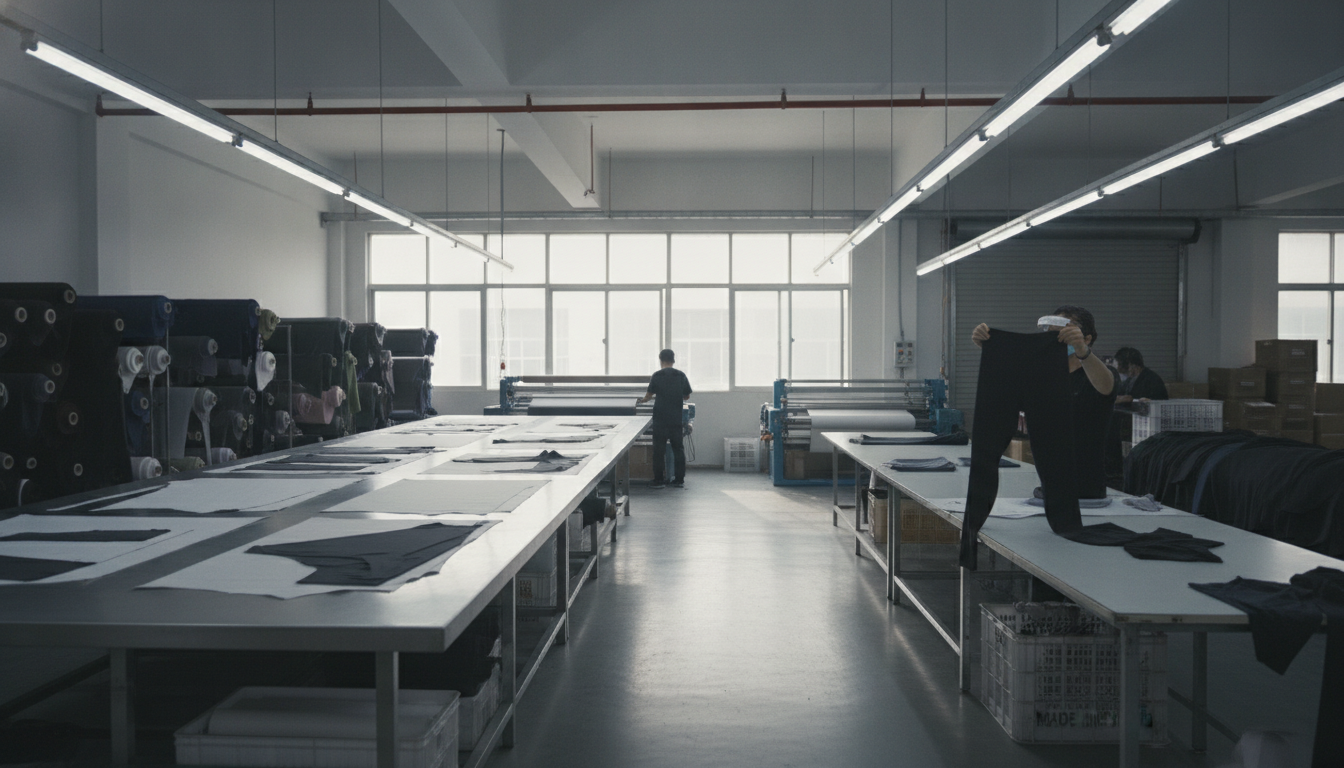
When the factory says “yes” to every request but delivers a completely different garment, the gap usually traces back to weak pre-production processes. Spotting a reliable yoga apparel manufacturer starts with three concrete checks.
Request product specs and tech packs in writing within the first 48 hours of contact. A supplier that avoids shared documents, CAD files, or detailed BOMs often lacks the internal structure to replicate your designs. In forums and marketplace reviews, buyers routinely cite slow, broken-English exchanges as the top frustration that delays corrections.
Before any fabric is cut, schedule a 20-minute video call to walk through stitch density, seam finishes, and fit tolerances. Manufacturers that push straight to sampling without this step have a higher risk of sample-to-production drift. In our 12+ years manufacturing yoga apparel, we’ve seen that a single pre-production alignment meeting cuts downstream rework by more than half.
Ask for recent third-party audit reports (BSCI, SMETA) and a live video tour of the cutting floor, not just the showroom. Cross-check the business registration with import records or trade portals. Suppliers with no audit trail are often shell companies that outsource production and lose control of quality.
Certifications aren’t marketing badges-they are proof that the facility and materials have been tested against measurable standards. For skin-touching activewear, three certifications carry the most weight.
This certification tests textiles against more than 1,000 harmful substances, including heavy metals and formaldehyde. For yoga leggings and sports bras, where fabric sits against sweat-activated skin, the certificate is the quickest way to assure customers that the product won’t cause rashes or long-term irritation.
GRS requires at least 20% recycled material content and a documented chain of custody from fiber to finished garment. If your brand markets “recycled polyester” or “sustainable activewear,” having a GRS-certified yoga apparel manufacturer lets you legally print the GRS logo and avoid greenwashing accusations.
An audit report from amfori BSCI or SMETA covers working hours, safety, and management systems. It also indirectly signals quality: factories that pass these audits typically have documented processes, which means repeatable stitching and consistent sizing. When evaluating a new supplier, request the latest audit summary report, not just the certificate number.
GRS-certified yoga clothing manufacturing with audit-backed transparency is available for brands that need both fiber certifications and full supply chain accountability.
High minimums force founders to bet on untested styles. The right MOQ structure lets you validate each SKU with real customers before scaling.
Sample MOQ: 1 piece. Bulk MOQ: 30 pieces per SKU. Sampling time: 7-10 days.
Most offshore manufacturers require 50-200 pieces just to produce a sample set. This locks up $1,500, $6,000 before you’ve confirmed fit or fabric. With a 1-piece sample MOQ, you can order a single sports bra or legging in your chosen fabric and evaluate every seam before placing a bulk order. That keeps the initial validation cost under $100 per SKU including courier shipping.
A bulk MOQ of 30 pieces per style allows a three-color, three-size test run of one design. You can launch a small collection of 3 SKUs for under $2,000 in FOB cost, test sell-through, and reorder only the winners. This phased approach directly answers the common complaint that MOQs “tie up too much cash.”
After proving demand, jump to 100-300 units per SKU without retooling-the same factory, same tech pack, shorter lead time. A startup-friendly yoga apparel manufacturer allows you to progress in 30-unit increments, aligning production with cash flow and sales data instead of guesswork.
Low-MOQ yoga manufacturer terms built for small brands let you test colors and fits without locking up inventory cash.
Hidden charges for labels, packaging, and duty brokerage can push a $12 FOB unit to a $22 landed cost. Transparent quotes separate the professional facilities from the ones that reveal fees only after production starts.
The FOB price should bundle fabric, digital or screen printing, cut-and-sew labor, woven labels, hang tags, and polybagging. A quality yarn-dyed legging with four-way stretch and a brushed finish typically lands in the $8, $12 FOB range; a basic seamless crop top can go as low as $6 when you order across 3 SKUs. Always request an itemized line-item FOB sheet that breaks out fabric consumption and trims.
According to US International Trade Commission tariff data, duty rates on yoga apparel can range from 10% to 28% based on fiber type and origin. Add ocean or air freight, insurance, and customs brokerage, and the total landed multiplier sits around 1.15× to 1.25× the FOB value. For a $10 FOB unit, budget $12.00, $12.50 all-in delivered to your US 3PL.
Confirm whether custom size strips, barcode stickers, and retail-ready packaging are included in the FOB or charged separately. In B2B sourcing threads, founders frequently report $0.30, $0.80 per unit in unexpected packaging surcharges. Ask for the “all-in ex-factory” price that covers everything short of freight.
Choosing between domestic and offshore production isn’t just about unit cost-it’s about control, speed, and tolerance for lead time variability.
A vertically integrated facility in Zhejiang can offer both low MOQs and the ability to grow from 30 units to 3,000 per SKU without switching factories. The FOB cost advantage-often 50-70% less than domestic-lets small brands capture margin while undercutting big-box activewear pricing.
US cut-and-sew shops give you next-day line visits and two-week sample turns, but costs are high, and MOQs rarely dip below 100 units per style. This works for brands with confirmed purchase orders from wholesale buyers, but it’s risky for a DTC founder still testing demand.
These regions excel in bulk basic activewear but typically require MOQs of 500-1,000 pieces per color. Communication hurdles and longer transit times make them less agile for studio-branded lines or season-newness drops. A specialized yoga apparel manufacturer in China’s Yiwu cluster often strikes the best balance between cost, skill, and small-batch flexibility.
Boutique yoga studios can build a branded apparel line that deepens community and adds a 20-30% margin stream. The sequence below avoids inventory deadstock and mismatched sizing.
Start with a high-waisted legging, a supportive cross-back bra, and a modal-blend studio tank. Keeping SKUs to three items limits complexity and fabric waste while giving students a coordinated look. Choose one hero fabric-like a brushed recycled polyester-spandex-that works across all pieces.
Order single samples of each style and size range, then invite 10-15 regular students to wear them in class for a week. Gather fit notes and take pre-orders with a 50% deposit. This turns sample cost into market validation.
With pre-orders in hand, place a bulk PO of 30-50 units per style across sizes XS-XL. Because the samples have already been wear-tested, the production risk drops significantly. A reliable yoga apparel manufacturer will reproduce the sample exactly from the locked tech pack.
For studios without storage space, ask if the manufacturer can ship directly to customers with neutral packaging. Some vertically integrated factories offer fulfillment from China to the end customer in 7-12 days, eliminating the need for a US warehouse. This keeps the line asset-light until you hit 100+ monthly units.
Private label yoga clothing programs let you add studio branding, tags, and packaging with low upfront investment.
Before wiring a deposit, run through these four checks. Each one addresses a top reason first production runs fail, from sample drift to duty spikes.
Write out the fabric composition (e.g., 75% recycled polyester, 25% spandex), weight (200 gsm), and stretch percentage. Attach Pantone codes for colors and a line-art sketch with measurement points. If the factory can’t produce a graded size chart within three days, manufacturing consistency is unlikely.
Wear-testing on 5-8 real bodies-different heights, bust sizes, and activity levels-before confirming the production sample catches fit issues that a dummy can’t. Adjust the tech pack based on feedback, and only then lock the production-ready reference sample.
At 30 units per SKU, your total first-run outlay (FOB + duties + freight) will typically sit between $2,000 and $4,500. This is the smallest commercially viable run that gives you enough stock to test sell-through on your site or at studio events without draining working capital.
Tariffs on activewear can change within a quarter. Pad your landed cost estimate by 5-8% if you’re shipping during peak Q3-Q4, and check with your freight forwarder for current LCL spot rates. A manufacturer that provides CIF or DDP terms can remove the guesswork.
Start by requesting written tech pack alignment, third-party audit reports, and a live video tour of the cutting floor. Check for certifications like OEKO-TEX, GRS, and BSCI. Avoid suppliers that avoid documentation or push samples without first discussing stitch standards and tolerances.
Typical offshore MOQs fall between 200 and 500 pieces per style. However, vertically integrated yoga apparel manufacturers can now offer 1-piece sample MOQs and bulk MOQs as low as 30 units per SKU, giving small brands the ability to test first before scaling.
Yes. By using 1-piece samples and 30-unit bulk MOQs, the total launch cost for a 3-SKU line can stay under $4,000 including FOB, duties, and freight. Pre-selling to a loyal audience or yoga studio community further reduces cash risk.
The three most important are OEKO-TEX Standard 100 (harmful substance testing), Global Recycled Standard (GRS) for recycled content claims, and a factory audit like BSCI or SMETA that verifies working conditions and operational structure.
FOB cost per unit for a quality legging or bra ranges from $6 to $18 depending on fabric and construction. With freight, duties, and logistics, the landed cost multiplier averages 1.15× to 1.25× FOB, meaning a $10 legging lands at about $12.50 in the US.
Request 1-piece samples and a detailed landed-cost quote for your first collection.
Get a Sample & Cost Sheet →
Sample 1 piece · bulk from 30 · OEKO-TEX & GRS certified · reply in 24h. No gatekeeping.
Fill in your details and we'll connect on WhatsApp instantly.
Click the button below to open WhatsApp. If you're not logged in to WhatsApp Web yet, scan the QR code first — then come back here and copy the message into the chat.