
📋 Table of Contents
If you’re a DTC yoga brand founder preparing to launch your first line, you’ve probably wondered: what’s the typical lead time for small batch yoga wear production? The answer can determine whether you hit your launch window or miss an entire season. Realistic timelines span 5 to 8 weeks for a first order of 100-500 units, but hidden delays in sampling, fabric sourcing, and logistics often stretch that to 4 months-or longer.
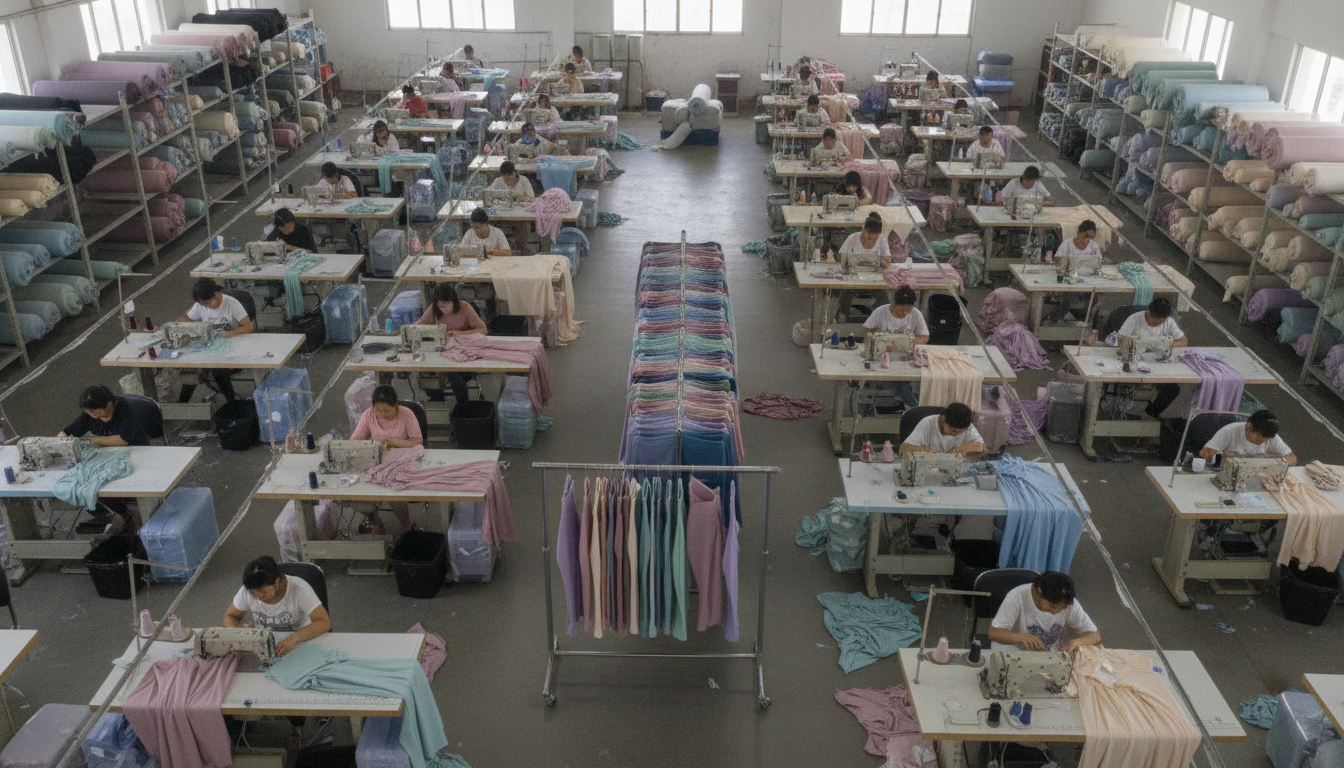
For a custom yoga apparel manufacturer producing a first-time order of 100-300 pieces, the typical lead time for small batch yoga wear production is 5 to 8 weeks, 7 to 14 days for sampling and approval, then 25 to 45 days for bulk cut-and-sew. However, this assumes standard fabrics and no design revisions. In our 12+ years manufacturing yoga apparel in Yiwu, we’ve seen lead times balloon to 12-16 weeks when buyers change styles after the golden sample or when 4-way stretch fabrics are involved.
First-time buyers often collapse the entire process into a single number, but the timeline has two distinct phases. Sampling is short but critical; bulk production is longer but more predictable once materials are locked.
After you submit a tech pack, the factory creates a first sample. This stage includes pattern making, cutting, and stitching a single unit. For straightforward leggings or sports bras, 7-10 business days is standard. If custom fabric dyeing is required, add 3-5 days.
Once you approve fit, feel, and color, the factory produces a final golden sample-the exact reference for bulk. This step is where many timelines break. Buyers often request small tweaks (seam position, waistband height), which restart the sample clock. A real-world complaint: one founder reported sampling took 3 weeks, then bulk took 9 weeks, and the delivered fabric didn’t match the sample. To prevent this, insist on a documented golden-sample approval protocol where both parties sign off on fabric swatches and construction specs.
After golden-sample approval, cutting and sewing 100-300 units takes 25 to 35 calendar days for standard fabrics. If 4-way stretch spandex blends are used, expect 35 to 45 days. These numbers assume the factory has capacity; smaller boutique orders often get deprioritized, pushing delivery past 60 days.
Sample MOQ: 1 piece. Bulk MOQ: 30 pieces per SKU. Sampling time: 7-10 days.
A common question: why does small batch production feel slower? Large brands get dedicated production lines, but orders of 100-300 units share capacity with other clients, and specialty fabrics introduce compounding delays.
Factories schedule 5,000-piece orders first. Your 30-piece per SKU order fits between larger runs, adding days or weeks. This queue-jumping is the single biggest reason the typical lead time for small batch yoga wear production overshoots estimates.
Functional activewear demands yarns that provide both compression and recovery. According to Deloitte (2025), 4-way stretch yarns add 2.3 weeks to production lead time because specialized mills operate on longer delivery schedules. If the fabric isn’t in stock, you’ll wait 10-14 days just for greige goods delivery before dyeing begins.
Startups often default to sea freight to save cash, then realize they’ve lost a 6-week launch window.
MOQ is the second biggest concern after lead time. Startups need to validate designs without tying up $20,000 in inventory.
Sample MOQ is now as low as 1 piece at specialized manufacturers. Bulk MOQ for cut-and-sew yoga leggings ranges from 30 to 300 pieces per SKU depending on the factory. According to Textile Exchange (2026), Vietnam’s MOQ flexibility for startups increased 45%, with 200-300 pcs becoming the norm for 7-day sampling. However, many factories still push for 500 pcs to lower per-unit pricing-a pain point echoed in buyer forums: “MOQ was 300 pcs but they pushed for 500 to get a better price, blowing our budget.”
A low MOQ yoga manufacturer lets you test 3-4 styles with just 30 units each, reducing upfront cost to a few thousand dollars instead of tens of thousands. This approach matches the reality that 78% of DTC founders face lead times over 4 months and need validation fast.
Where you manufacture affects transit time, customs friction, and total landed cost. Two leading hubs-China and Vietnam-offer different trade-offs.
Even a small label error can trigger a 3-week hold, as reported by a boutique yoga studio owner on social channels. GOTS (2025) found that 34% of branded apparel lines fail to launch within 6 months because of unforeseen customs delays. Working with a manufacturer that has in-house compliance teams and can pre-file documentation-including HTS codes, fabric composition certificates, and country-of-origin declarations-cuts this risk dramatically.
You can compress the typical 5-8 week timeline by making strategic decisions early, before the first fabric is cut.
While air freight adds $2-3 per unit, it cuts transit from 4-6 weeks to 5-10 days. For a 150-unit launch, the $400 extra ensures you don’t miss a pre-holiday window. Many founders realize this too late-the complaint “they don’t give air-freight options, only sea” is common, so confirm logistics flexibility before placing an order.
Once your first batch’s fabric is tested and approved, repeat orders can bypass the sampling phase entirely. Pre-approved materials let factories go straight into cutting, compressing total turnaround to 2-3 months.
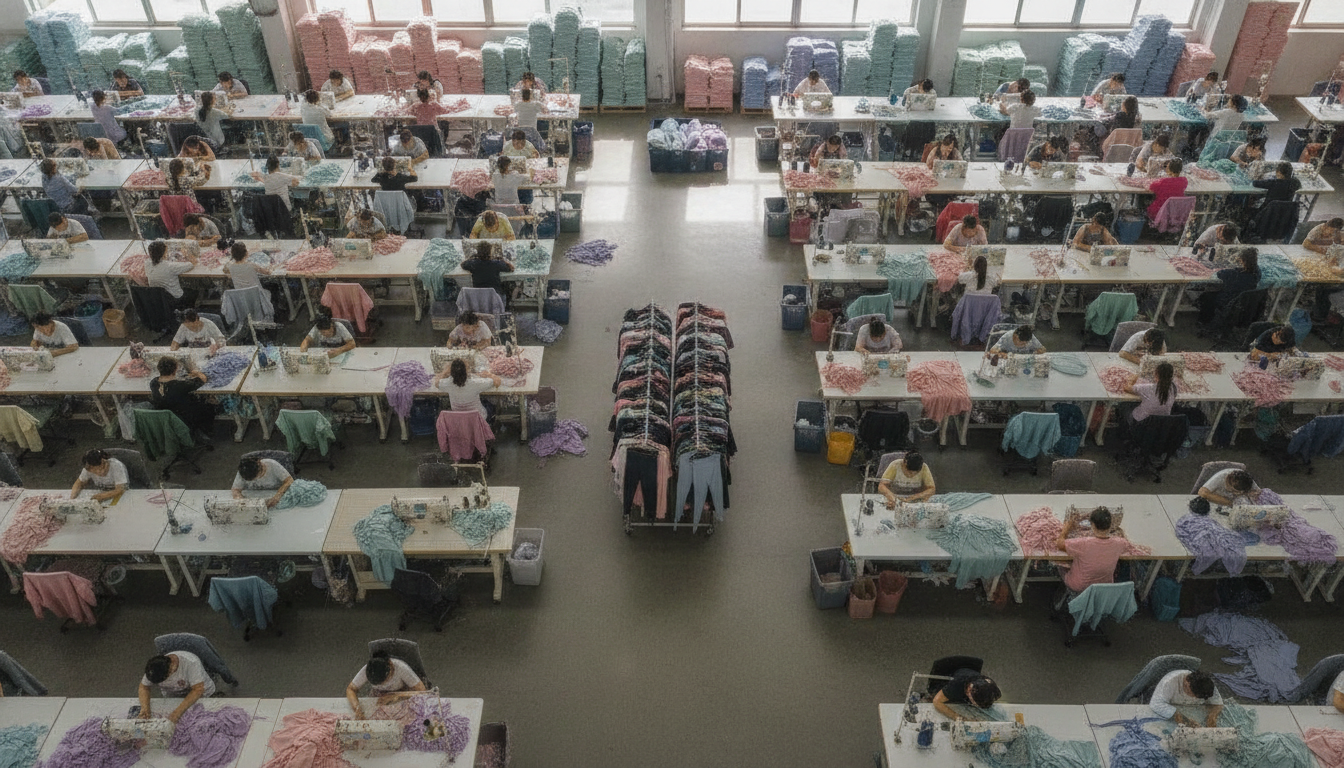
A yoga clothing manufacturer for startups that controls pattern-making, cutting, and QC under one roof avoids handoff delays between subcontractors. Our 18,000m² Yiwu facility runs in-house cut-and-sew lines, a pattern studio, and in-line QC, which cuts typical sampling time to 7-10 days and speeds bulk production by coordinating all steps onsite.
Typical lead time for a first order of 100-300 pieces is 5-8 weeks: 7-14 days for sampling and golden-sample approval, then 25-45 days for bulk production. This assumes standard fabrics; 4-way stretch adds 2-3 weeks. Air freight can reduce transit by 3-4 weeks versus sea.
Sample MOQ can be as low as 1 piece; bulk MOQ for custom leggings starts at 30 pieces per SKU at specialized manufacturers. Many factories still set minimums at 200-300 pcs, but low-MOQ specialists let you validate designs with minimal inventory risk.
Small orders get lower factory priority, as large brands fill production lines first. Specialty fabric sourcing-especially 4-way stretch-adds weeks, and sea freight transit times of 30-45 days inflate total calendar days. Repeat orders with pre-approved fabrics can be much faster.
Sampling takes 7-14 days to produce a single prototype for fit and style approval. Bulk production follows golden-sample sign-off and takes 25-45 days for 100-300 units. Delays happen when buyers request changes after the golden sample, restarting the bulk clock.
From China (Ningbo port) to US West Coast, sea freight takes 18-22 days; from Vietnam, 20-25 days. Customs clearance adds 2-4 days with proper documentation, but delays of 2-3 weeks are common. Air freight cuts total transit to 5-10 days for either origin.
Ready to move beyond guesswork on the typical lead time for small batch yoga wear production? Request your 1-piece samples and lock in a production timeline that protects your launch window.
Request 1-Piece Samples →
Written by the Walundi Export Team.
Sample 1 piece · bulk from 30 · OEKO-TEX & GRS certified · reply in 24h. No gatekeeping.
Low MOQ. Sustainable fabrics. OEM ready. Tell us your vision.
Click the button below to open WhatsApp. If you're not logged in to WhatsApp Web yet, scan the QR code first — then come back here and copy the message into the chat.