
📋 Table of Contents
Choosing a ribbed workout set private label supplier often comes down to three hard constraints: minimum order quantities that lock up cash, sample costs that drain budgets before validation, and quality inconsistencies that derail launch windows. For DTC founders in Canada and emerging activewear brands, these constraints can mean the difference between testing product-market fit with confidence or gambling on inventory you cannot afford to hold.
Ribbed knit construction creates vertical stretch channels that contour to the body while maintaining shape recovery. The construction method you choose directly impacts opacity, durability, and cost per unit.
Seamless circular knitting machines produce ribbed sets with minimal seams, reducing chafing and creating a smooth silhouette. The process requires specialized Santoni or Lonati machines, which increase upfront tooling costs but lower per-unit labor. Seamless ribbed sets typically require 15-20% more fabric than cut-and-sew, pushing material costs higher. Opacity depends on the gauge: 18-gauge knits offer better coverage than 14-gauge, which can show skin tone under stretch. Founders testing seamless construction should request samples in their target colorway under natural light and full stretch to verify opacity before placing bulk orders.
Cut-and-sew ribbed sets use flat-knit or tubular rib fabric cut into pattern pieces and sewn together. This method offers more design flexibility for paneling, color-blocking, and fit adjustments. Seam placement matters: flatlock seams lie flat against the skin, while overlock seams can create bulk at the waistband and underarms. Walundi’s custom yoga apparel manufacturer facility runs in-house pattern studios where fit adjustments happen within 48 hours, avoiding the delays that come with subcontracted sampling. Cut-and-sew MOQs are often lower than seamless because tooling costs are minimal, making this construction ideal for brands validating multiple styles.
Brushed rib adds a soft, fleece-like interior to ribbed fabric, creating a lounge-forward aesthetic. The brushing process adds 10-15% to fabric cost and requires careful quality control to prevent pilling after the first wash. Brands positioning brushed rib sets as premium loungewear can justify higher retail prices, but the fabric must pass pilling tests (ISO 12945-2, grade 3 or higher) to avoid returns. Sampling brushed rib in the target weight (280-320 GSM is common) and washing the sample twice before approval prevents bulk-order surprises.
MOQ language creates cash-flow surprises when suppliers quote per-size or per-color minimums instead of total units. A ribbed workout set private label supplier quoting 30 pieces per SKU means a 3-size, 2-color set requires 180 total units (30 × 3 sizes × 2 colors), not 30 total.
Request a written MOQ breakdown before signing a purchase order. The breakdown should specify whether the minimum applies per style, per size, per color, or per size-color combination. Suppliers who resist written clarification often hide per-size minimums that triple the actual order quantity. Walundi’s 30-piece-per-SKU policy means 30 units per size-color combination, so a 3-size black ribbed set requires 90 total pieces, not 30.
Most DTC brands selling in Canada see a size distribution of roughly 20% small, 50% medium, 30% large. A 90-unit order (3 sizes × 30 per size) produces 30 small, 30 medium, 30 large, which overweights small and underweights medium. Adjusting to 15 small, 45 medium, 30 large better matches demand but requires a supplier willing to accept uneven size ratios within the 30-piece-per-SKU minimum. Clarify size-ratio flexibility in writing before placing the order to avoid dead inventory in unpopular sizes.
Digital swatches and supplier photos do not reveal stretch recovery, waistband grip, or opacity under movement. Physical samples tested under real-world conditions prevent bulk-order mismatches.
Walundi’s 1-piece sample MOQ allows founders to order a single ribbed set in their target size, fabric, and construction method without committing to 30 or 50 units. The sample arrives in 7-10 days, giving time to test fit, wash durability, and opacity before approving bulk production. Brands testing multiple construction methods (seamless vs. cut-and-sew) can order one sample of each, compare performance, and choose the winner without locking up $2,000-$5,000 in untested inventory.
In practice: A Toronto-based yoga brand ordered 1-piece samples in three rib gauges, tested each under studio lighting and full stretch, and selected the 18-gauge construction that passed their opacity standard before placing a 90-unit bulk order.
After approving the initial sample and placing a bulk order, request a pre-production sample from the actual production run. This sample uses the same fabric lot, dye batch, and sewing team as the bulk order, catching any color-matching or construction deviations before 500 units roll off the line. Pre-production samples add 3-5 days to the timeline but prevent costly remakes. Specify in the purchase order that bulk production cannot begin until you approve the pre-production sample in writing.
Stretch recovery, pilling resistance, and colorfastness require lab testing, not just visual checks. OEKO-TEX Standard 100 certification screens textiles against more than 1,000 harmful substances, including azo dyes, formaldehyde, and heavy metals. GRS certification requires a minimum of 20% recycled content and tracks the material chain from source to finished product. Brands making recycled-fabric claims without GRS certification risk greenwashing accusations. Request copies of current certifications (issued within the past 12 months) and verify the certificate number on the certifying body’s public database before approving fabric.
Canadian brands selling ribbed workout sets must comply with Competition Bureau labeling requirements and textile fiber disclosure rules. Non-compliance creates legal risk and damages brand credibility.
Every garment sold in Canada must carry a permanent label showing fiber content by percentage, country of origin, and care instructions. The label must be securely attached and legible through the garment’s useful life. Fiber content must list each fiber present in amounts of 5% or greater, in descending order by weight. A ribbed set made of 92% polyester and 8% spandex must state “92% Polyester, 8% Spandex” on the label. Country of origin must specify where the garment was assembled, not just where the fabric was knit. Walundi’s Yiwu facility handles in-house cut-and-sew, so the country of origin is China.
Care labels must provide clear washing, drying, ironing, and bleaching instructions using either text or symbols. The Canadian General Standards Board (CGSB) publishes care-labeling standards (CAN/CGSB-86.1) that specify symbol usage. Ribbed sets with spandex content should carry “wash cold, hang dry” instructions to prevent heat damage to elastic fibers. Tumble-drying spandex-blend fabrics at high heat degrades stretch recovery within 10-15 washes, leading to customer complaints and returns.
Marketing claims like “eco-friendly,” “sustainable,” or “recycled” require substantiation. The Competition Bureau enforces truth-in-advertising standards, and unsubstantiated environmental claims can trigger investigations and fines. Brands using GRS-certified recycled polyester can legally claim “made with GRS-certified recycled polyester” and display the GRS logo, but only if the certification covers the specific product. Generic claims like “eco-friendly activewear” without third-party certification create enforcement risk. Walundi provides GRS certificate copies for each certified fabric lot, allowing brands to back up recycled-content claims with documentation.
Landed cost per unit determines whether a ribbed set can hit target margins at competitive retail prices. Founders need a clear breakdown of fabric, labor, packaging, shipping, and duty costs before committing to production.
A typical ribbed workout set includes a sports bra and high-waisted legging. Fabric cost for a medium-sized set in 280 GSM ribbed knit runs $4.50-$6.00 per set, depending on fiber content and dye complexity. Cut-and-sew labor adds $2.50-$3.50 per set in Yiwu. Packaging (polybag, hangtag, size sticker) adds $0.40-$0.60. Total FOB cost (factory cost before shipping) for a ribbed set ranges from $7.40 to $10.10. Freight from Ningbo to Vancouver via ocean container adds roughly $1.20-$1.80 per set for a 500-unit shipment. Canadian import duty on activewear from China is 18% under general tariff rates, though some polyester-spandex blends may qualify for lower rates under specific HS codes. Total landed cost per set: $10.00-$13.50.
DTC activewear brands typically target 60-70% gross margins to cover marketing, fulfillment, and overhead. A ribbed set with a $12.00 landed cost needs a retail price of $30-$40 to hit 60-70% margins. At $35 retail, the brand earns $23 gross profit per set, leaving room for 15-20% of revenue to go toward paid acquisition and 10-15% toward fulfillment. Brands selling through wholesale channels (yoga studios, boutiques) must account for 50% wholesale discounts, which compress margins and require higher production volumes to maintain profitability.
Initial 90-unit test orders validate product-market fit but do not generate meaningful profit after covering sampling, photography, and launch costs. Reorder quantities of 300-500 units per SKU unlock better fabric pricing (5-10% discount) and lower per-unit freight costs. Plan reorder timing around 60-day lead times (10 days sampling + 35 days production + 15 days ocean freight) to avoid stockouts during peak selling seasons. Walundi’s low MOQ yoga manufacturer terms allow brands to reorder 30 pieces per SKU even after initial test runs, bridging the gap between validation and scale.
Suppliers claiming end-to-end service sometimes subcontract fulfillment, design, or even production, creating communication delays and inconsistent quality. Vertically integrated facilities control every step in-house.
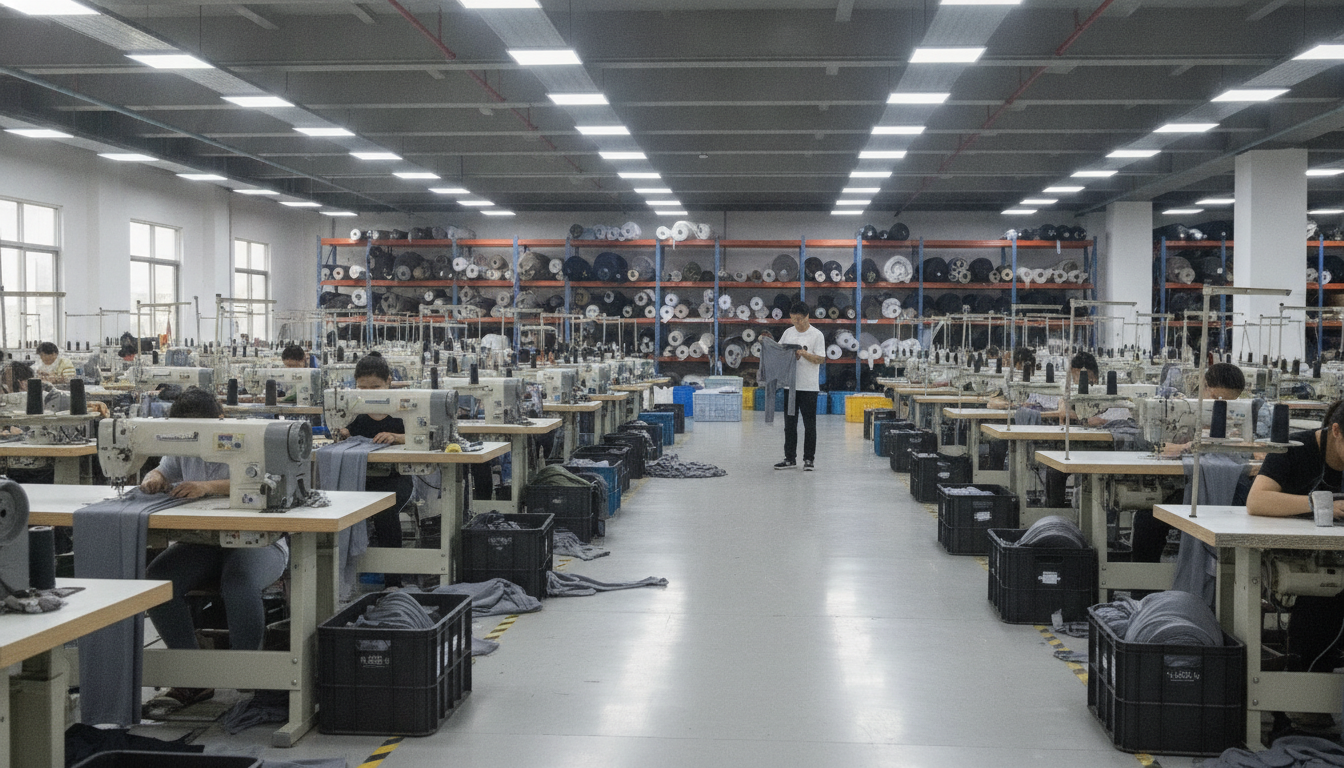
Walundi’s 18,000m² Yiwu facility includes a pattern studio where fit adjustments and design tweaks happen within 48 hours. Subcontracted pattern-making adds 5-7 days per revision cycle because samples must ship between facilities. Brands testing multiple ribbed-set variations (different waistband heights, leg lengths, neckline styles) benefit from in-house sampling that allows same-week iteration. Request a facility tour (virtual or in-person) to verify that the supplier controls pattern-making, not a third party.
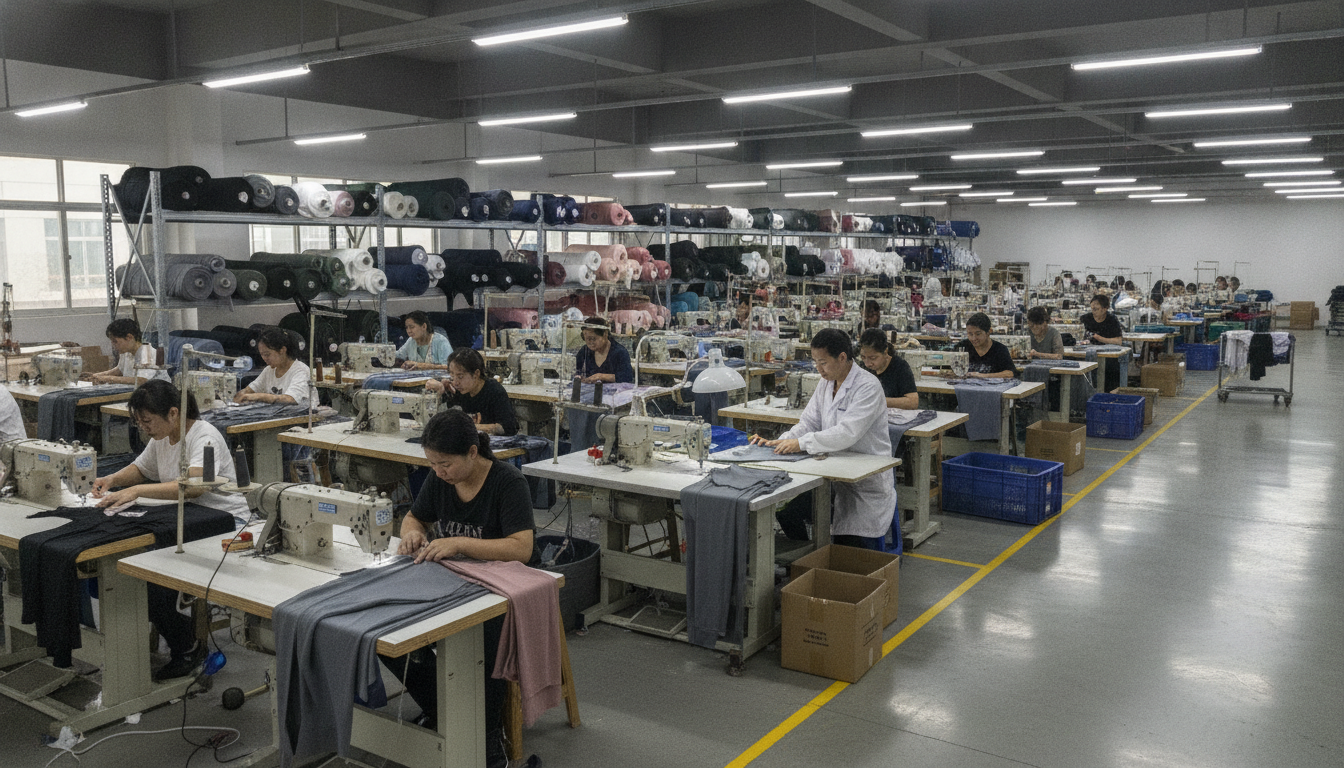
Vertically integrated factories run their own sewing lines, eliminating the hand-off delays and quality inconsistencies that come with subcontracted assembly. Walundi’s 200+ skilled workers handle all cut-and-sew operations in the Yiwu facility, with in-house QC inspecting every garment before packing. Subcontracted sewing creates accountability gaps: if a bulk order arrives with incorrect stitching or misaligned seams, the supplier blames the subcontractor, and the brand waits weeks for remakes. Ask the supplier directly whether sewing happens in-house or at a partner factory, and request written confirmation.
Suppliers located near major ports reduce shipping lead times and simplify logistics. Walundi’s Yiwu facility is 120 kilometers from Ningbo port, allowing consolidated shipments to reach the port within 24 hours and board outbound vessels within 3-5 days. Suppliers located inland or far from ports add 7-10 days to the shipping timeline. Verify the supplier’s proximity to a major port (Ningbo, Shanghai, Shenzhen, Qingdao) and ask for typical port-to-vessel lead times before placing orders.
Missing parts, incorrect items, and inconsistent quality derail launch timelines and erode customer trust. Structured QC checkpoints catch errors before garments leave the factory.
Fabric defects (holes, dye streaks, uneven knit tension) must be caught before cutting begins. Walundi inspects every fabric roll upon arrival, measuring GSM (grams per square meter), stretch recovery, and color consistency against approved samples. Rolls that fail inspection are rejected and replaced by the fabric mill before cutting starts. Brands should request photos of fabric inspection reports as part of pre-production approval, verifying that the actual fabric matches the approved sample.
QC inspectors stationed on the sewing line catch stitching errors, misaligned seams, and skipped steps in real time, preventing defects from compounding across hundreds of units. In-line inspection reduces the final defect rate to below 2%, compared to 8-12% defect rates when QC happens only at the end of production. Ask the supplier how many QC inspectors are assigned per sewing line and whether inspection happens in-line or only at final packing.
Acceptable Quality Limit (AQL) standards define how many units in a batch must be inspected and how many defects trigger batch rejection. AQL 2.5 is standard for activewear, meaning a 500-unit order requires inspection of roughly 80 random units, with a maximum of 7 minor defects and 0 major defects allowed. Major defects include broken seams, incorrect sizing, and missing labels. Minor defects include loose threads and small dye spots. Walundi applies AQL 2.5 inspection to every bulk order, with photo reports sent to the brand before shipment. Brands can hire third-party inspection agencies (SGS, Bureau Veritas, Intertek) for independent verification, adding $250-$400 per inspection but providing extra assurance.
Incorrect items and missing parts stem from packing errors, not production defects. Each SKU must be counted, folded, bagged, and labeled correctly before boxing. Walundi’s packing team uses barcode scanners to verify SKU accuracy, reducing packing errors to below 0.5%. Brands receiving frequent packing errors from other suppliers should request a packing SOP (standard operating procedure) document and ask how the supplier verifies SKU accuracy before sealing cartons.
MOQ varies by supplier and often depends on whether the minimum applies per style, per size, or per color. Walundi’s bulk MOQ is 30 pieces per SKU, meaning a 3-size ribbed set in one color requires 90 total units. Clarify in writing whether the quoted MOQ is per size-color combination or total units to avoid cash-flow surprises.
Start by requesting physical samples to test fabric quality, stretch recovery, and opacity under real-world conditions. Verify certifications (GRS, OEKO-TEX, BSCI) by checking certificate numbers on the certifying body’s public database. Ask whether the supplier controls pattern-making, sewing, and QC in-house or subcontracts any steps. Walundi’s private label yoga clothing service includes in-house pattern studios, cut-and-sew lines, and QC within the same 18,000m² Yiwu facility.
Yes, private label suppliers provide custom woven labels, hangtags, polybags, and care labels with your brand name and logo. Ensure labels meet Canadian Competition Bureau requirements, including fiber content, country of origin, and care instructions. Walundi includes custom labeling and packaging in bulk orders, with label artwork approval before production begins.
Ribbed workout sets typically use 280-320 GSM rib knit fabric with 8-12% spandex for stretch and recovery. Polyester-spandex blends offer moisture-wicking and durability, while nylon-spandex blends provide a softer hand feel. Request physical samples in your target colorway and test opacity under full stretch and natural light before approving bulk fabric orders.
Sampling takes 7-10 days, and bulk production requires 25-35 days after sample approval. Ocean freight from Ningbo to Vancouver adds 12-18 days. Total timeline from sample order to delivery in Canada: 50-65 days. Plan reorders around 60-day lead times to avoid stockouts during peak seasons.
Ready to validate your ribbed workout set with 1-piece samples and 30-piece bulk orders?
Request Samples and MOQ Details →
Written by the Walundi Export Team.
Sample 1 piece · bulk from 30 · OEKO-TEX & GRS certified · reply in 24h. No gatekeeping.
Low MOQ. Sustainable fabrics. OEM ready. Tell us your vision.
Click the button below to open WhatsApp. If you're not logged in to WhatsApp Web yet, scan the QR code first — then come back here and copy the message into the chat.