
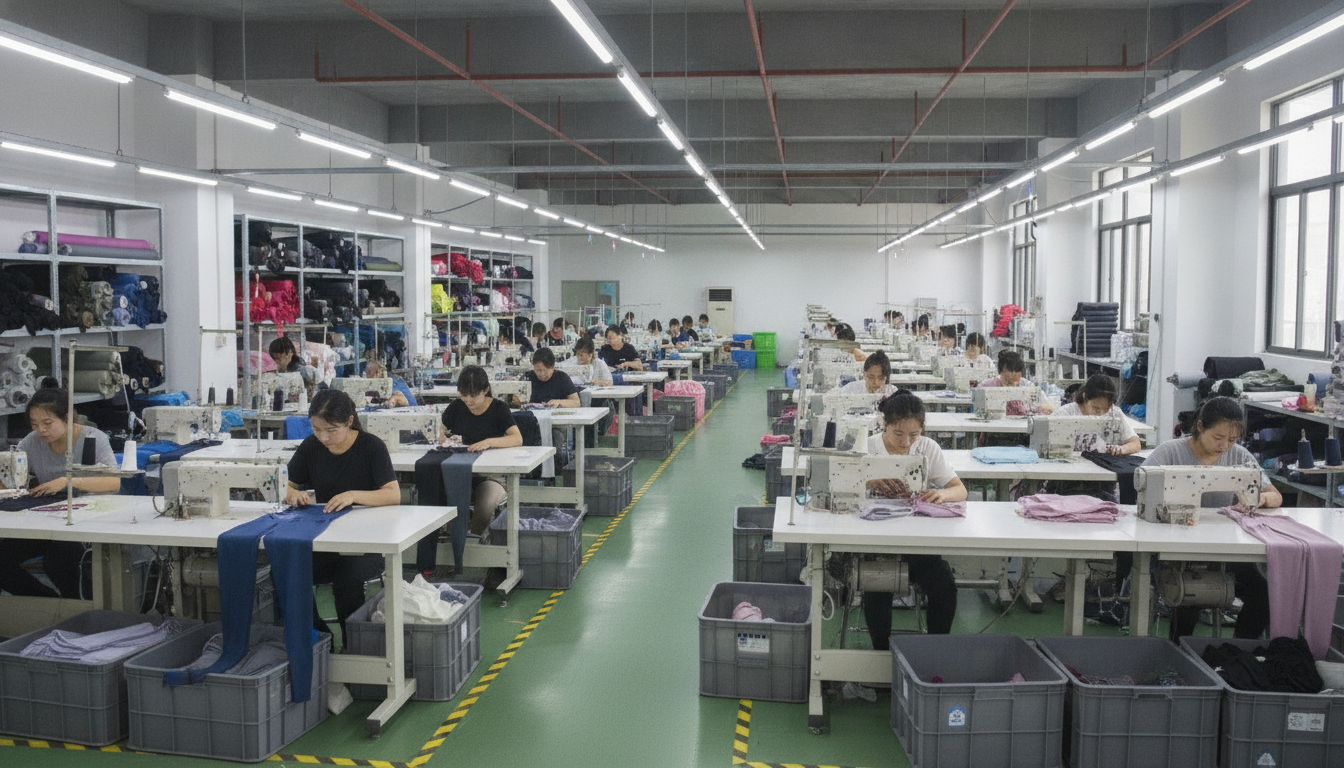
When you finally approve that perfect yoga legging sample, the clock starts ticking on bulk production. Yet many DTC founders discover their factory’s promised 30-day activewear bulk production lead time after sampling stretches to 60+ days, jeopardizing launch windows and peak-season inventory. Understanding the real timeline, hidden delays, and acceleration strategies separates brands that scale from those stuck chasing factory updates.
📋 Table of Contents
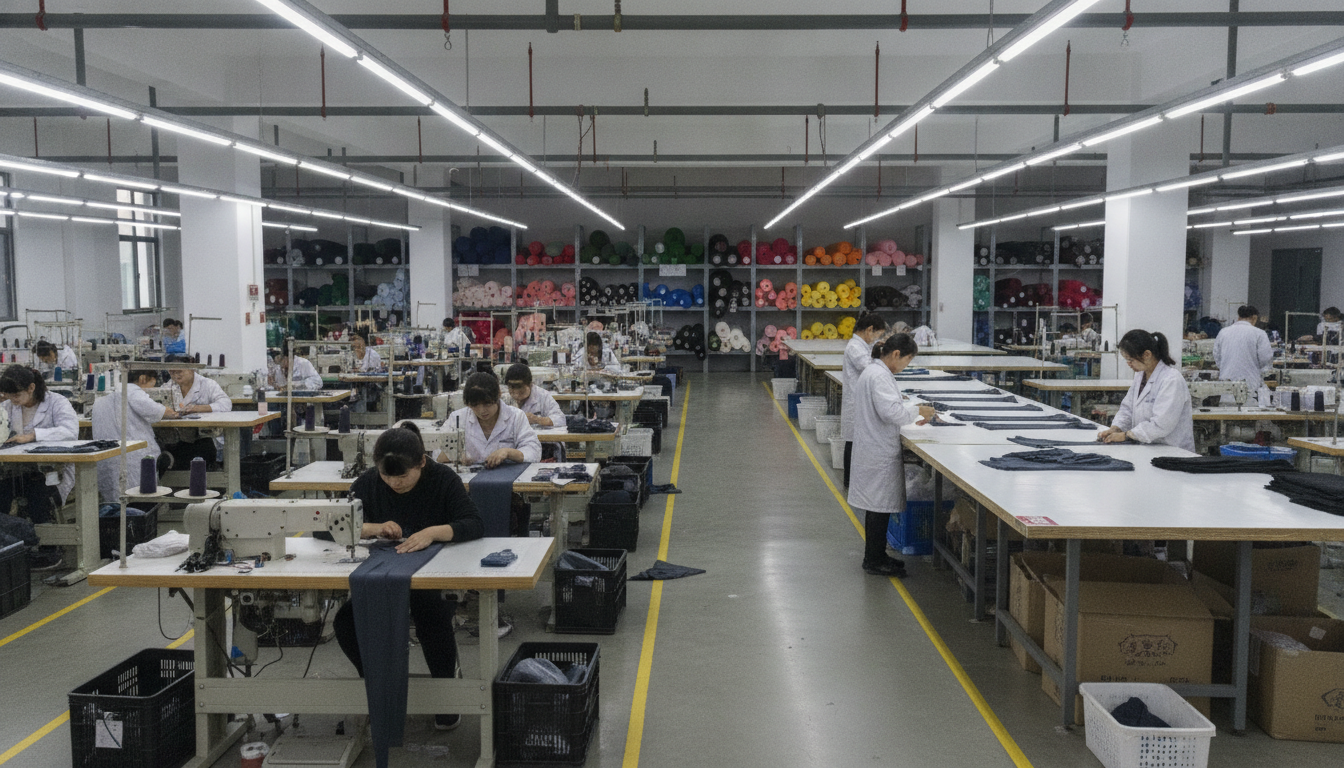
The activewear bulk production lead time after sampling begins the moment you sign off on the final sample. Most vertically integrated yoga apparel factories quote 30 to 45 days for cut-and-sew, quality control, and packing. However, real-world timelines often extend to 60 days or more when fabric procurement, dye-lot matching, or unexpected quality issues surface.
Bulk production unfolds in distinct phases, each with its own time requirement. Understanding these phases helps you negotiate realistic delivery dates and build buffer into your launch calendar.
Lead time varies by manufacturing region. China-based factories with vertical integration typically deliver faster than South Asian cut-make-trim operations that rely on third-party fabric mills. Vietnam and Bangladesh often add 5 to 7 days for fabric imports from China or India, while Pakistan-based manufacturers face inconsistent quality control that can trigger rework delays of 10 to 14 days.
Air freight from China to the United States takes 5 to 7 days door-to-door but costs 4 to 6 times more than sea freight. Ocean shipping from Ningbo to Los Angeles averages 18 to 22 days in transit, plus 3 to 5 days for customs clearance. Founders planning peak-season launches must add these shipping windows to the factory lead time, not treat them as separate.
In practice: A Los Angeles yoga brand approved legging samples in early March, received a 30-day bulk promise, but underestimated 21 days of ocean transit plus 4 days of customs clearance, missing their May launch by two weeks and losing pre-orders
.
Sample approval does not mean your bulk order enters production the next day. Factories often queue orders, wait for fabric dye lots, or discover that the sample fabric came from a different mill than bulk inventory. These hidden delays turn a quoted 30-day timeline into 45 or 60 days.
Many factories produce samples using in-stock remnant fabric, then source bulk yardage from a different mill. The new mill may require 10 to 14 days to dye and finish the fabric, especially for custom colors or recycled-content blends. Buyers assume fabric is ready the moment they approve the sample, but this assumption causes the most common timeline blow-out.
Pre-verified fabric inventory: Walundi maintains in-stock GRS-certified recycled polyester and OEKO-TEX Standard 100 tested nylon-spandex blends, cutting fabric procurement from 14 days to zero for standard colorways.
High-demand factories schedule bulk orders weeks in advance. Your approved sample may sit in a queue for 7 to 10 days before cutting begins, especially during peak seasons (January to March for summer inventory, July to September for holiday). Asking for a production slot guarantee at the time of sample approval prevents this surprise.
In-line inspections sometimes catch issues that did not appear in the sample, such as seam puckering on stretch fabric or color variation between dye lots. Rework adds 5 to 7 days and occurs in approximately 8 to 12 percent of bulk orders, based on our 12 years of low-MOQ yoga manufacturing in Yiwu.
Requesting changes after sample approval is the fastest way to double your lead time and increase unit cost. Even small modifications such as switching from a flat waistband to a high-rise fold-over design require new patterns, fresh fabric cuts, and re-sequencing on the production line.
Professional private-label yoga clothing manufacturers provide written change-order policies before sampling begins. These policies specify the cost and timeline impact of common modifications, preventing surprise delays and budget overruns. Factories that refuse to document change-order terms upfront often lack the production control to honor any timeline guarantee.
Cutting 10 to 14 days from the activewear bulk production lead time after sampling requires advance planning, not just paying for air freight. The most effective strategies address fabric procurement, production queuing, and quality control bottlenecks before the sample is even approved.
Request fabric swatches and lab-dip samples before finalizing your design. Approving the fabric separately from the garment sample lets the factory order bulk yardage in parallel with sampling, eliminating the 10 to 14 day fabric-procurement delay. This strategy works best with factories that maintain in-stock certified fabrics.
Reserve a production slot at the time you place the sample order, not after approval. Factories with transparent scheduling systems can guarantee a start date if you commit to a bulk order within a defined approval window, typically 7 to 10 days. This eliminates queue wait and gives you a firm delivery date for inventory planning.
Launching with a single colorway and three core sizes (S, M, L) instead of five colors and six sizes cuts lead time by 5 to 7 days and reduces fabric waste. Founders validating product-market fit benefit more from fast market feedback than from extensive SKU variety. You can expand the line after proving demand.
Factories with GRS-certified recycled polyester or OEKO-TEX Standard 100 tested nylon-spandex blends in inventory can start cutting immediately after sample approval. In our 18,000m² Yiwu facility, maintaining 15+ in-stock fabric options lets us begin bulk production within 48 hours of approval, cutting total lead time to 25 to 30 days instead of 40 to 45 days.
Shipping 30 percent of your order by air and 70 percent by sea balances speed and cost. The air portion arrives in 7 to 10 days for immediate launch and customer validation, while the sea shipment follows 3 weeks later to restock. This strategy costs 40 to 50 percent less than full air freight but still gets product to market fast.
In practice: A UK activewear startup used pre-approved GRS recycled fabric and locked a production slot during sampling, achieving 28-day bulk delivery and launching two weeks ahead of their competitor who waited for custom dye lots
.
Lack of proactive updates during bulk production is one of the most common buyer complaints. Founders report having to chase factories for status reports, with responses arriving days late or containing vague reassurances instead of concrete milestones.
Professional factories provide weekly email updates with photos at each production phase: fabric arrival, cutting complete, 50 percent sewing complete, final QC, packing. These updates should include the current date, next milestone, and any delays with root-cause explanation. Factories that resist structured updates often lack the internal systems to track orders accurately.
Linking payments to verified milestones incentivizes timely communication. A common structure is 30 percent deposit at order placement, 40 percent at cutting complete (with photo proof), and 30 percent before shipment. This structure protects both parties and ensures the factory has working capital to maintain schedule.
Hiring an independent QC inspector for a mid-production check costs 200 to 350 USD and catches issues early enough to fix without delaying the final delivery. Inspectors verify fabric quality, construction accuracy, and adherence to your tech pack, providing an unbiased progress report when factory communication is unclear.
Some sustainable yoga clothing manufacturers offer client portals with live order tracking, similar to e-commerce shipment tracking. These dashboards show cutting percentage, sewing percentage, QC status, and estimated ship date, updated daily. While not yet industry standard, this level of transparency is becoming a competitive differentiator for factories serving DTC brands.
Bulk production for activewear typically takes 30 to 45 days after sample approval, though this timeline assumes fabric is in stock and no design changes occur. Factories requiring fresh dye lots or custom fabric procurement often extend to 50 to 60 days. Adding ocean shipping (18 to 22 days to the US) and customs clearance (3 to 5 days) means total time from approval to your warehouse is 55 to 70 days for sea freight.
Five factors drive lead time variation: fabric availability (in-stock vs. custom dye lots), production queue wait (peak season vs. off-season), order complexity (single colorway vs. multiple SKUs), quality control rework rate, and factory vertical integration. Factories with in-house fabric inventory, pattern studios, and cut-and-sew lines deliver 7 to 14 days faster than operations relying on third-party mills and contractors.
Thirty days is achievable only when fabric is pre-verified and in stock, the factory has an open production slot, and no design changes occur after approval. Most realistic timelines run 35 to 45 days to account for fabric procurement buffers and minor quality adjustments. Founders should add 10 to 14 days of buffer to any factory-quoted timeline when planning launch dates, especially for first orders with a new manufacturer.
Pre-approve fabrics before finalizing garment samples, lock a production slot at the time of sample order, simplify first orders to one or two colorways, and choose factories with in-stock certified fabrics like GRS recycled polyester or OEKO-TEX tested nylon-spandex. Air-freight hybrid strategies (30 percent air, 70 percent sea) and milestone-based payment terms that incentivize on-time delivery also cut total time to market by 10 to 14 days.
Sampling lead time covers pattern development, sample garment construction, and any revision rounds, typically 7 to 21 days for one sample piece depending on design complexity. Bulk lead time begins after sample approval and includes fabric procurement, cutting, sewing, QC, and packing for the full order quantity, running 30 to 45 days. The two timelines are sequential, not parallel, so total time from initial tech pack to finished bulk inventory is 40 to 65 days minimum.
Ready to secure predictable lead times for your activewear launch?
Request 1-piece samples and bulk timeline guarantee →
Written by the Walundi Export Team.
Sample 1 piece · bulk from 30 · OEKO-TEX & GRS certified · reply in 24h. No gatekeeping.
Low MOQ. Sustainable fabrics. OEM ready. Tell us your vision.
Click the button below to open WhatsApp. If you're not logged in to WhatsApp Web yet, scan the QR code first — then come back here and copy the message into the chat.