📋 Table of Contents
For founders launching a yoga brand, low MOQ yoga clothing isn’t just a preference-it’s the difference between validating a product line and tying up $10,000 in inventory that might not sell. Yet many factories advertise “low minimums” that evaporate the moment you ask for custom colors, grading, or private labels. This guide breaks down exactly what real low MOQ terms look like, how to vet suppliers, and how to control landed costs so your first production run doesn’t become your last.
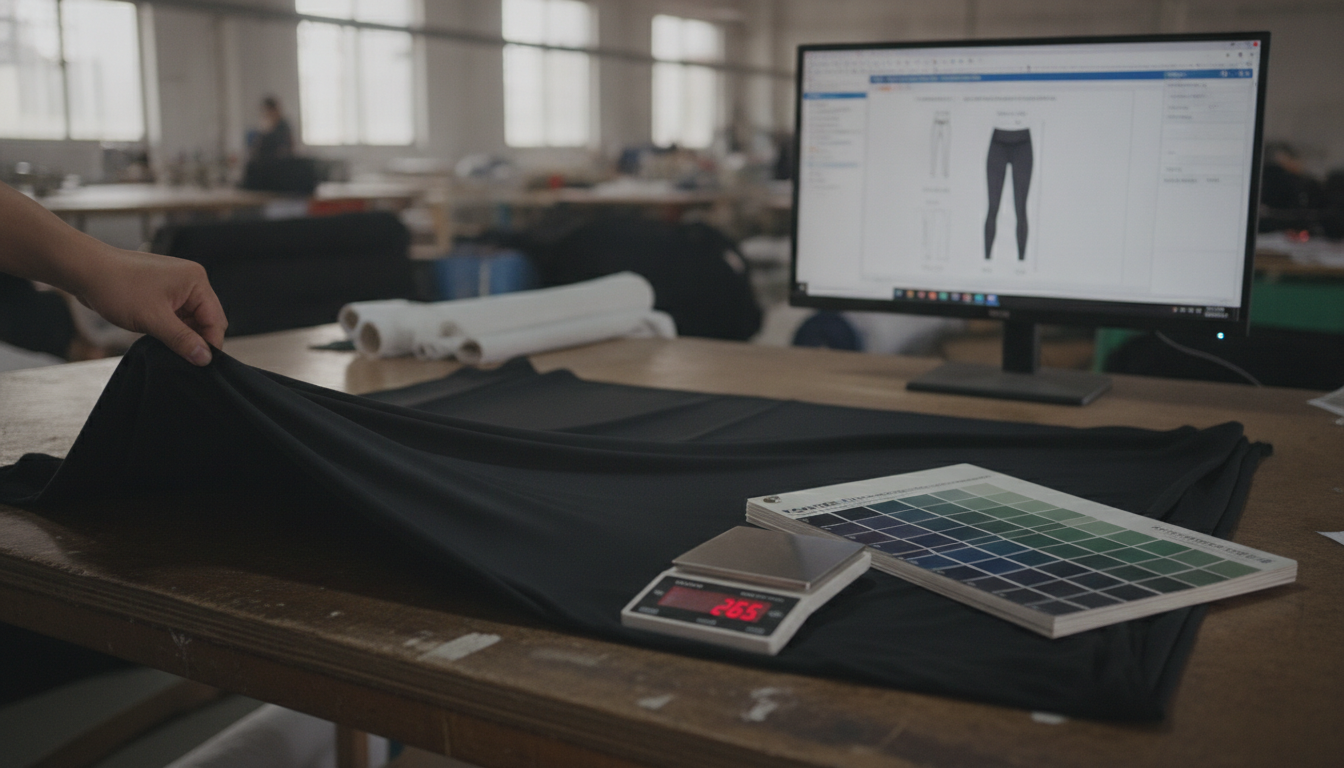
A genuine low MOQ manufacturer lets you order samples in single units and bulk runs at 30-50 pieces per style, not 500. The term gets stretched by factories that count “low MOQ” as 300 pieces-but only for stock blanks, not your custom design. When shopping for a low MOQ yoga clothing manufacturer, ask for a written breakdown of minimums by customization depth: blank, private label, and full OEM.
One number doesn’t fit all. Leggings often carry a lower MOQ than sports bras due to fabric yield; seamless knit items usually start higher because of knitting drum setup. The table below shows realistic ranges at a vertically integrated factory.
Sample MOQ: 1 piece. Bulk MOQ: 30 pieces per SKU. Sampling time: 7-10 days.
Get a Tiered QuoteBuilding a yoga brand? Sample 1 piece, bulk from 30.OEM / ODM / private label · OEKO-TEX & GRS certified · 24h quote
A factory that quotes you 1-piece sampling but later demands 300 pieces to “keep the production line open” is a red flag. Insist on a purchase order that locks the minimums before you invest in pattern making. In our 12+ years manufacturing yoga apparel in Yiwu, we’ve seen dozens of startups burn cash on prototypes only to find the factory can’t honor the original MOQ promise.
The activewear market’s size, $406.4 billion globally in 2024, per Grand View Research-attracts plenty of middlemen posing as factories. When a sampling delay or a miscommunication can stall your launch by two months, vetting becomes a survival skill. These steps filter out the good operators from the shell companies that simply resell capacity from unknown workshops.
Request a real-time video walkthrough, not edited promo reels. Look for dedicated cut-and-sew lines, an in-house pattern studio, and visible QC inspection stations. When a supplier refuses or offers only staged photos, the operation likely doesn’t control production floor reality.
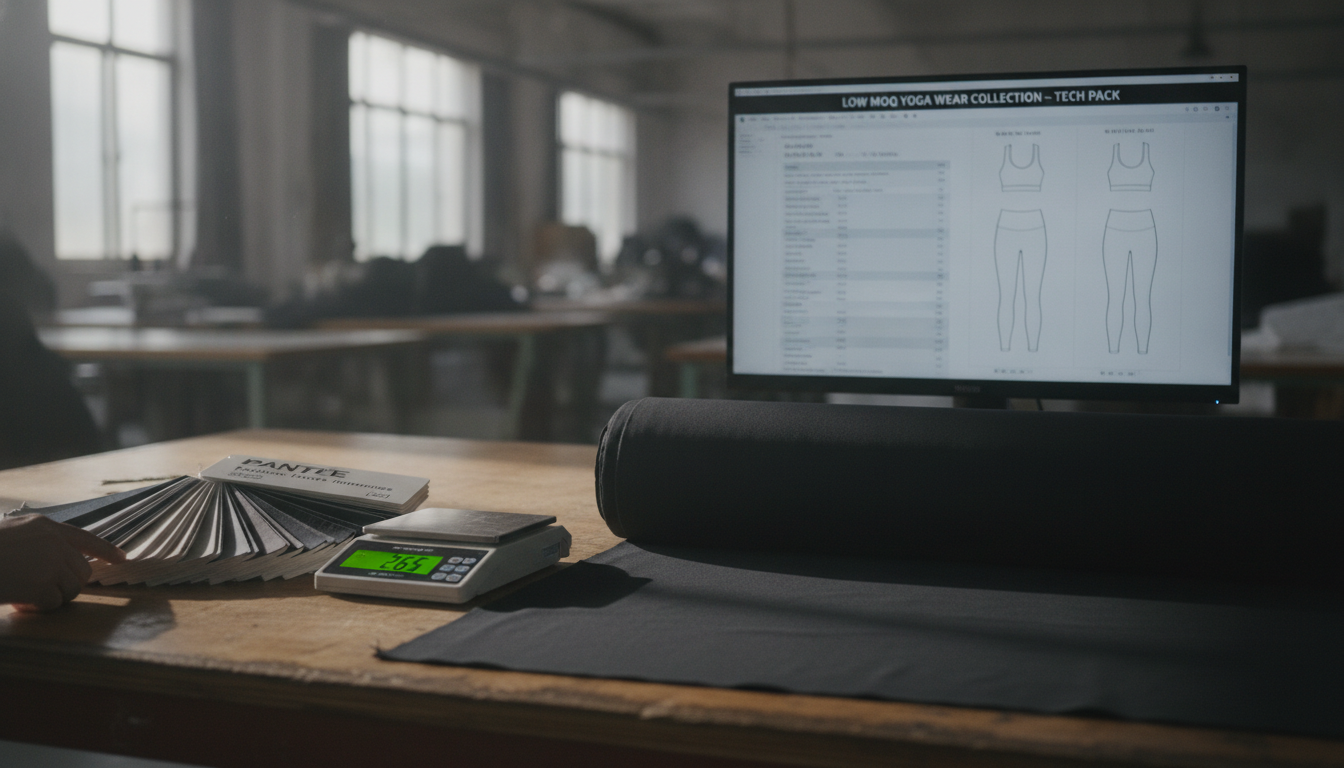
Send a detailed tech pack and time the response. A responsive custom yoga apparel manufacturer will reply within 24 hours with specific questions about grading, seam construction, or fabric weight-not a generic “send us your design.”
Accurate samples let you test fit and fabric before committing to 30 pieces per SKU. The table below compares common sourcing paths for startup brands.
Agree on a single point of contact (not a rotating sales rep) and a shared project tracking tool. Miscommunication is the top reason small batches arrive with wrong labels or missing size splits.
A photo of squat-proof leggings means nothing if the actual fabric is 160 g/m² of unbranded polyester. Thin, see-through material is the number-one complaint in marketplace reviews. Protect your brand by insisting on these three verification layers.
Specify a minimum weight: 240-280 g/m² for opaque yoga leggings, 180-220 g/m² for tops. Always request a fabric mill certificate showing the exact nylon/elastane ratio. 78% nylon / 22% spandex is a common squat-proof blend, but cheaper factories substitute polyester without disclosure.
Sustainability claims like “eco-friendly” are easy to fake. Third-party certifications link your fabric to an audited supply chain. Our 18,000 m² Yiwu facility carries GRS, OEKO-TEX, and BSCI credentials, so every yard of recycled nylon is traceable.
A sustainable yoga clothing manufacturer will have these test results on file and share them without hesitation.
Factory unit price is just the starting point. For small orders from China to the US, freight, duties, and incidentals can add 35%, 50% to the FOB cost. Mapping the full landed cost avoids the margin-destroying shock that many first-time founders report on sourcing forums.
Use this framework to compare quotes. Air freight is often more cost-effective than sea for sub-50 kg shipments once you factor in time and minimum charges.
If your shipment is valued under $800, Section 321 de minimis entry can eliminate duty-but only if used correctly. Above $800, classify yoga leggings under HTS 6104.63.2011 to avoid misclassification penalties. A customs broker can confirm the correct HTS code based on fiber content.
Deciding between OEM (you supply the design, factory executes) and ODM (factory offers pre-developed styles you brand) directly impacts your cost, timeline, and design uniqueness. The table below guides the choice.
Choose OEM when you need a signature compressive legging that no other brand sells. Pick ODM when speed-to-market matters more than exclusivity. A private label yoga clothing option sits between these two-you bring the label and trim, the factory supplies a proven blank that already fits well.
It varies widely. A true low-MOQ factory offers sampling at 1 piece and bulk starting at 30-50 pieces per SKU for custom styles. Blank stock may require 50 pieces, while full OEM can drop to 30. Always confirm the MOQ in writing for your specific product type and customization level before paying for samples.
Yes. Many founders begin with 30-50 pieces per style to test fit and demand. With a 1-piece sample option, you validate designs before committing to bulk. Pair low MOQ production with a pre-order launch to minimize inventory risk and gather real customer feedback on sizing and fabric preference.
A nylon-spandex blend (78% nylon, 22% spandex) at 240-280 g/m² is the gold standard for squat-proof opacity and four-way stretch. Recycled nylon with GRS certification offers the same performance plus sustainability credentials. Avoid pure polyester blends below 200 g/m², which often show sheerness during deep stretches.
Start by requesting live video walkthroughs of the factory floor, not stock photos. Check for a pattern studio, sample room, and on-site QC. Test their responsiveness with a detailed tech pack, and ask for a written MOQ grid by customization depth. Vertically integrated facilities in Yiwu often offer the lowest sample-to-bulk ratio.
ODM is faster-you brand a factory’s existing design and stock fabric, often with MOQs as low as 10 pieces. OEM gives you total design control but requires 25-40 days and a 30-50 piece minimum. Start with ODM to test market fit, then shift to OEM once you have proven demand for a unique silhouette.
Validate your yoga wear line with 1-piece samples and transparent bulk minimums.
Request 1-Piece Samples →
Sample 1 piece · bulk from 30 · OEKO-TEX & GRS certified · reply in 24h. No gatekeeping.
Fill in your details and we'll connect on WhatsApp instantly.
Click the button below to open WhatsApp. If you're not logged in to WhatsApp Web yet, scan the QR code first — then come back here and copy the message into the chat.