
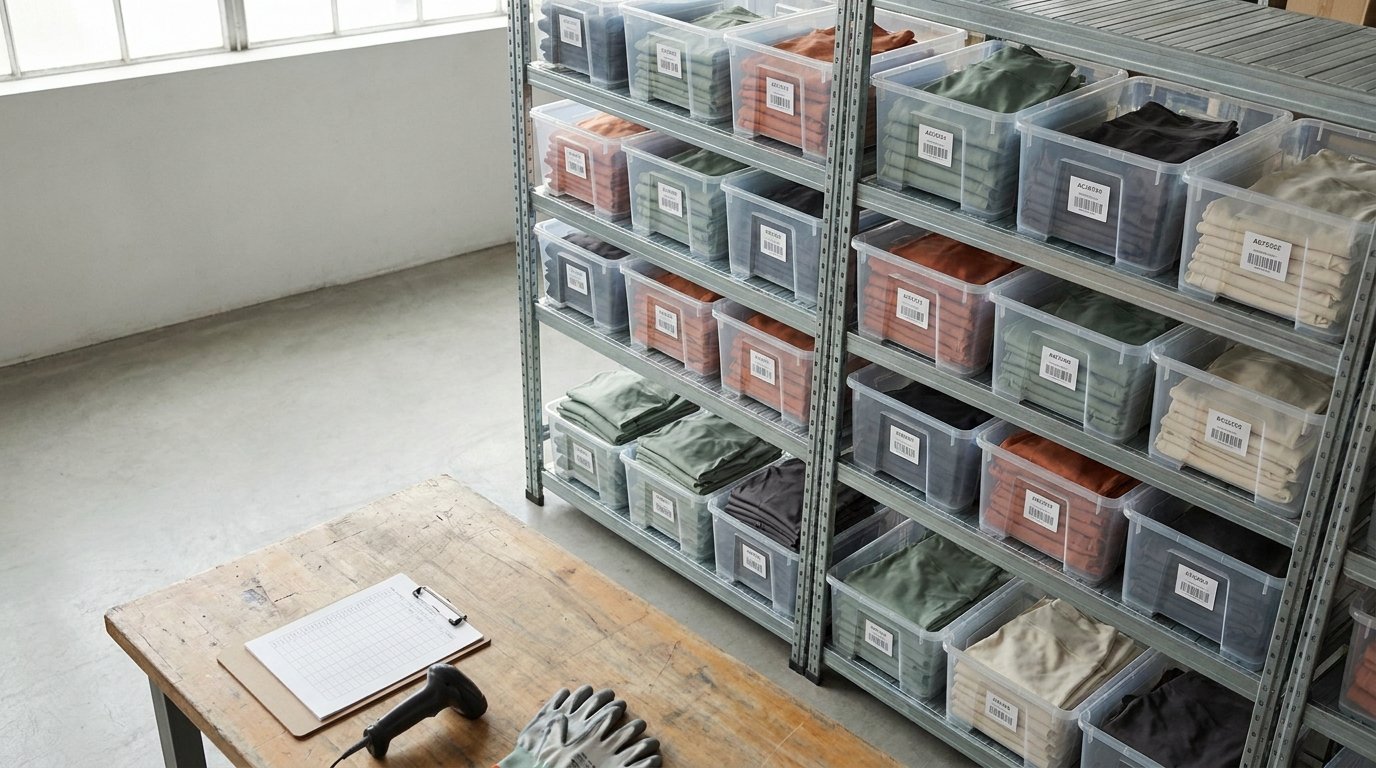
Inventory management is the difference between profit and cash flow crisis. This comprehensive guide covers demand forecasting, reorder points, seasonal planning, and dead stock reduction strategies for B2B yoga wear buyers.
Key Findings:
Related: Supply Chain Guide | Wholesale Guide
Monthly Order = (Avg Monthly Sales × 1.2) + Safety Stock – Current Stock
Add 20% buffer for growth and uncertainty.
| Month | Multiplier | Notes |
|---|---|---|
| Jan-Feb | 1.3x | New Year resolutions boost |
| Mar-May | 1.0x | Baseline (spring transition) |
| Jun-Aug | 1.2x | Summer fitness season |
| Sep-Oct | 0.9x | Back to school, slight dip |
| Nov-Dec | 1.5x | Holiday gifting peak |
| Collection | Design Start | Order By | Launch |
|---|---|---|---|
| Spring/Summer | July (prior year) | October | Feb-March |
| Fall/Winter | January | April | Aug-Sept |
| Holiday | April | July | October |
Inventory that hasn’t sold in 6-12 months. It ties up capital and costs storage fees.
| Tool | Price | Best For |
|---|---|---|
| Shopify Inventory | $29-299/mo | D2C brands on Shopify |
| TradeGecko (QuickBooks) | $39-239/mo | Wholesale + retail |
| Zoho Inventory | $29-99/mo | Small-medium businesses |
| Cin7 | $299-899/mo | Enterprise, multi-channel |
Walundi supports your inventory management with flexible MOQ, fast restocking, and reliable lead times. We serve 500+ brands worldwide.
Published: May 2026
Sample 1 piece · bulk from 30 · OEKO-TEX & GRS certified · reply in 24h. No gatekeeping.
Low MOQ. Sustainable fabrics. OEM ready. Tell us your vision.
Click the button below to open WhatsApp. If you're not logged in to WhatsApp Web yet, scan the QR code first — then come back here and copy the message into the chat.