📋 Table of Contents
Most first-time brand founders assume a yoga apparel manufacturer guide is just a list of factory names. The real work is matching your budget, fabric preferences, and quality expectations with a partner that won’t demand 500 units per style before you’ve proven a single design. This yoga apparel manufacturer guide gives you concrete numbers, testing protocols, and country-by-country sourcing tactics, not generic advice.
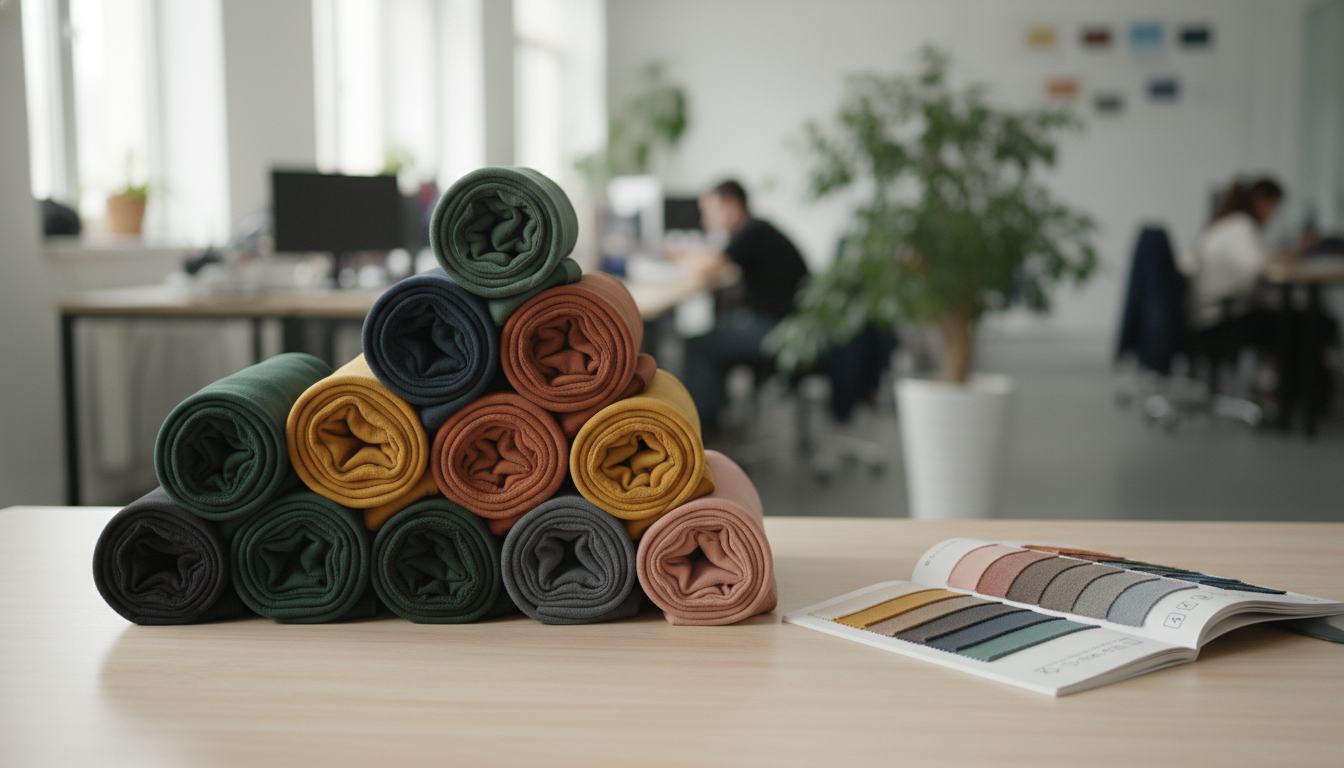
Not every activewear factory understands the four-way stretch, gusset reinforcement, and seam placement that a chaturanga or pigeon pose demands. A genuine custom yoga apparel manufacturer operates with yoga-specific pattern blocks and in-house fabric testing, not repurposed sportswear templates.
Standard leggings patterns fail when you transition from warrior II to headstand. Look for a manufacturer that keeps a library of yoga block patterns with diamond gussets, high-rise compression waistbands, and minimal side seams. In our 12+ years manufacturing yoga apparel in Yiwu, we’ve seen returned inventory spike by over 20% when brands use generic sportswear blockers.
Ask for inline inspection reports, not just AQL 2.5 final audits. A reliable partner runs a pull-test on every new fabric lot, checks colorfastness to perspiration (ISO 105-E04), and does 20-wash pilling assessments. Without these, your first customer review will surface the problem.
The biggest friction for a new yoga brand is turning a logo sketch into 100 pairs of leggings before you’ve booked a single sale. That friction disappears when you separate sample MOQ from bulk MOQ, and choose a low MOQ yoga manufacturer that lets you start at 30 pieces per SKU.
Common industry minimums still sit at 300, 500 pieces per style, which locks up $6,000, $15,000 before any sales data. A leaner path, one we see working for DTC founders, is:
Sample MOQ: 1 piece. Bulk MOQ: 30 pieces per SKU. Sampling time: 7, 10 days.
For a 3-SKU launch (leggings, bra, tank), a workable cash-outlay model with a 30-piece/SKU MOQ looks like:
Landed cost per unit typically falls between $8.50 and $14.50, leaving room for a 3x, 4x retail markup.
In practice: A US yoga brand founder validated 3 legging styles with 1-piece samples, then placed a 30-unit-per-SKU first order without locking up cash.
Sustainability claims collapse if the fabric pills after two hot yoga sessions. The right sustainable yoga clothing manufacturer pairs GRS-certified yarns with lab-tested elongation and recovery.
Shoppers in the UK, Germany, and the US increasingly check for third-party proof. Here is what you need:
Import duties, shipping lanes, and consumer expectations differ sharply across your target markets. Use this table to model landed cost by destination before locking in a production partner.
Air freight works for early validation runs because it avoids 30, 40-day sea transit and warehouse costs. Once a style proves a repeat order rate above 40%, split the run: restock 50% via sea, keep 50% via air to maintain sell-through speed.
Profit per unit starts with fabric costing, not retail price. Use this per-unit breakdown to decide whether a style earns a place in your first collection.
Top sellers in our network target a 65, 75% gross margin after landed cost. With a $12.40 legging, a retail price of $48, $58 yields a healthier margin than undercutting at $35. This math holds even when paying 16% US import duty.
A beautiful swatch doesn’t guarantee a pair of leggings that survive hot classes and handstands. Build a simple testing checklist before you greenlight the bulk order.
Order one sample in your core size (typically S or M) and one in a boundary size (XL). Test on three different body types: someone with a short torso, someone with an athletic build, and a yogi who practices inversions. Document transparent waistband rolling, camel-toe risk, and side-seam twist after a 60-minute heated flow.
If your manufacturer cannot produce these reports, factor in $300, $500 to run them through a third-party lab like SGS or Intertek before you commit to bulk.
Run three samples through 20 home-laundry cycles with consumer-grade detergent and tumble dry low. Measure shrinkage beyond 3% flags factory preshrinking failure. This simple step prevents the most common reason for returns in yoga apparel: leggings that shorten by 1.5 inches after two washes.
Private label activewear manufacturing means a factory produces garments using its existing patterns and fabrics, then adds your brand’s labels, hangtags, and packaging. It speeds up time to market because you skip pattern development, but customization is limited to surface-level changes like color, logo, and trim. It suits founders who want a branded line without investing $2,000+ in new pattern engineering.
Traditional factories require 300, 500 pieces per style. In 2026, vertically integrated manufacturers like Walundi offer bulk MOQ of 30 pieces per SKU, with sample orders starting at just 1 piece. This allows DTC founders to validate demand with low upfront cash and iterate on fit before scaling. Always confirm whether the MOQ is per style, per color, or per size.
Look for Global Recycled Standard (GRS) certification that includes transaction certificates, not just a logo. Request OEKO-TEX Standard 100 reports proving no harmful substances. Verify that the factory runs segregated production lines for recycled fibers to prevent cross-contamination. Also ask for a fabric mill’s lifecycle assessment or Higg Index score. Audit the facility’s energy source and wastewater treatment.
GRS for recycled content, OEKO-TEX Standard 100 for chemical safety, BSCI or SMETA for social compliance form the essential trio. If you use organic cotton, GOTS is mandatory. For the EU and UK, REACH compliance and CE/UKCA marking matter. Ask for the audit report, not just the certificate number. Many factories show a certificate but cannot show the transaction certificates linking your batch.
A lean launch with 3 styles, 30 pieces each, totals $2,000, $3,500 in landed cost, including sampling, production, and air freight. Adding custom packaging and woven labels adds $150, $250. Photography, website, and initial ad spend typically add another $1,500, $3,000. The total startup range is $4,000, $7,000 for a soft launch, far lower than the $15,000+ many founders assume.
Request 1-piece samples or a 15-minute sourcing call to test fabrics and fits before you commit.
Request Samples & Call →
Sample 1 piece · bulk from 30 · OEKO-TEX & GRS certified · reply in 24h. No gatekeeping.
Fill in your details and we'll connect on WhatsApp instantly.
Click the button below to open WhatsApp. If you're not logged in to WhatsApp Web yet, scan the QR code first — then come back here and copy the message into the chat.