
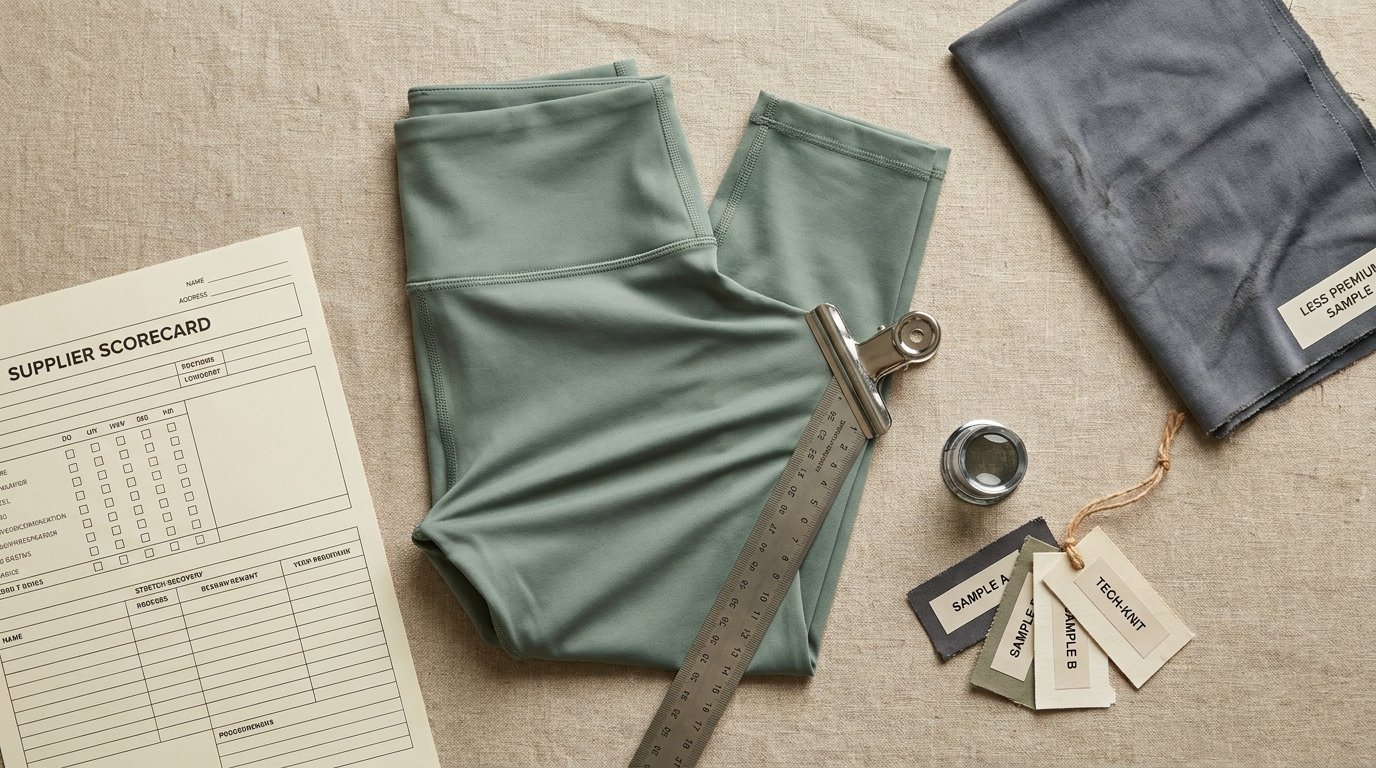
Procurement officers and brand directors in the activewear sector face a specific, quantifiable challenge: end-user retention correlates directly with textile durability and performance. Identifying a wholesale yoga activewear manufacturer that bridges the gap between cost-efficiency and premium fabric engineering is the critical path to brand scalability. The objective is securing a supply chain that consistently delivers high-yield garments without the volatility of fluctuating lead times.
Performance apparel cannot be sourced on aesthetics alone. A reliable manufacturing partner must provide rigorous baseline specifications for elasticity recovery, moisture transport, and pilling resistance. The industry standard 80/20 Nylon-Spandex blend dictates the core market, but micro-variations in GSM (Grams per Square Meter) and yarn denier separate premium brands from discount labels.
When sourcing custom yoga wear suppliers, the primary assessment should focus on their textile sourcing network. High-grade athletic apparel requires fabrics that maintain a minimum of 4-way stretch with a 95% recovery rate. Walundi bypasses middle-tier textile markets, sourcing raw, high-filament yarns to construct proprietary fabric blends that meet strict athletic performance criteria.
Transitioning from off-the-shelf white-label purchasing to custom private label activewear requires a factory capable of true OEM/ODM scalability. The friction point for most B2B buyers is the translation of technical packs into physical prototypes.
Walundi operates specifically to eliminate this friction. By vertically integrating the production phases—from CAD pattern grading and fabric knitting to final stitch inspection—Walundi controls the internal production timeline. This operational model mitigates the standard logistical delays inherent in fragmented overseas manufacturing. B2B athletic apparel buyers require predictable delivery schedules; controlling the floor operations ensures those schedules are met.
Environmental compliance has transitioned from a localized marketing tactic to an international regulatory requirement. Buyers sourcing bulk apparel demand transparency in fabric dyeing processes and wastewater treatment. Partnering with a sustainable yoga clothing factory is a preemptive measure against shifting import regulations in North America and Europe. Facilities integrating recycled polyester (rPET), bio-based nylons, and OEKO-TEX certified eco-friendly dyes secure higher vendor compliance ratings and protect the buyer’s brand equity.
High-volume production, particularly for seamless leggings bulk purchases, presents unique defect liabilities. Uneven compression zones, dropped stitches in the circular knit, or micro-tears in the gusset directly translate to high consumer return rates.
Walundi implements a multi-stage QA framework on the factory floor. Batches are tested for tensile strength, colorfastness under UV and sweat exposure, and squat-proof opacity before shipment authorization. The facility’s mandate is straightforward: intercept manufacturing anomalies at the source so the client only receives retail-ready inventory.
The structural integrity and ergonomic performance of modern athletic bottoms rely entirely on the underlying manufacturing technique. Brands aiming to capture market share in the activewear sector must understand the mechanical differences in production. Sourcing custom seamless yoga leggings wholesale is not merely a purchasing decision; it is an engineering requirement.
Seamless knitting technology radically alters garment construction by fabricating the core structure as a continuous, three-dimensional tube. This methodology eliminates lateral friction points and bulky side seams, directly reducing chafing during high-friction athletic movements.
For buyers conducting due diligence on an OEM yoga apparel manufacturer, evaluating the factory’s machine park is the first step. The presence of advanced circular knitting machinery, such as Santoni systems, indicates a facility capable of precision manufacturing. Walundi utilizes high-gauge circular knitting infrastructure to program specific fabric geometries directly into the garment, removing the margin of error associated with manual cut-and-sew operations.
Targeted muscular compression is achieved through precise, programmable yarn manipulation. A competent high-waisted workout pants supplier must be able to adjust the tension of the nylon spandex blend leggings at exact anatomical zones. This requires programming higher compression algorithms around the pelvic and lumbar regions for stability, while reducing tension at the calves to prevent vascular restriction.
Walundi engineers these variable compression profiles into the CAD knitting software prior to any yarn being fed into the machines. This ensures that every unit in a production run features identical tension mapping, providing the brand with absolute product consistency.
Opacity under tension is the definitive metric for athletic bottoms. The ‘squat-proof’ standard is compromised if the fabric’s GSM drops below critical thresholds in high-stress areas (typically the glutes and knees).
Procuring squat-proof activewear bulk requires a manufacturer that does not dilute yarn density to cut costs. Walundi mandates a minimum fabric density for all lower-body garments, testing bulk productions using standardized mechanical stretch-and-recovery protocols. The parameters guarantee zero visual transparency even at maximum fabric elongation under demanding lighting conditions.
Securing a reliable manufacturing pipeline demands clear communication regarding Minimum Order Quantities (MOQs), prototyping timelines, and tech pack execution. Unclear specifications lead to sample iterations that burn capital and delay market launch.
Walundi deploys dedicated merchandising and technical design support for B2B clients. Technical files are audited for manufacturing feasibility within 48 hours. By streamlining the transition from conceptual design to physical sample, Walundi allows brand owners to focus on marketing and distribution, knowing the supply side is secured by a structurally sound manufacturing partner.
Sample 1 piece · bulk from 30 · OEKO-TEX & GRS certified · reply in 24h. No gatekeeping.
Low MOQ. Sustainable fabrics. OEM ready. Tell us your vision.
Click the button below to open WhatsApp. If you're not logged in to WhatsApp Web yet, scan the QR code first — then come back here and copy the message into the chat.