
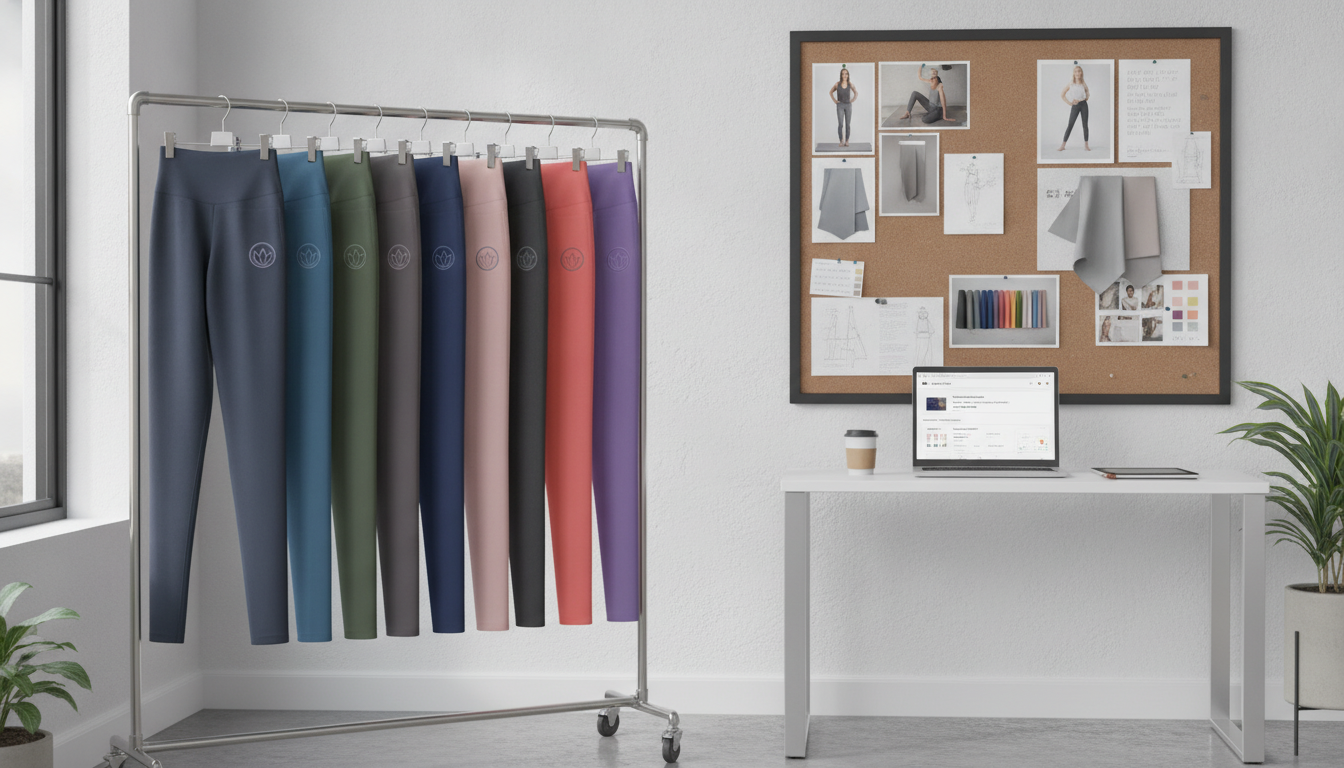
📋 Table of Contents
Founders testing yoga apparel concepts often run into a wall: high MOQs and opaque sampling processes that tie up cash before you can validate a single SKU. Custom yoga pants with logo represent the ideal starting point, but sourcing a custom yoga apparel manufacturer who supports 1-piece samples and 30-unit bulk orders changes the economics entirely.
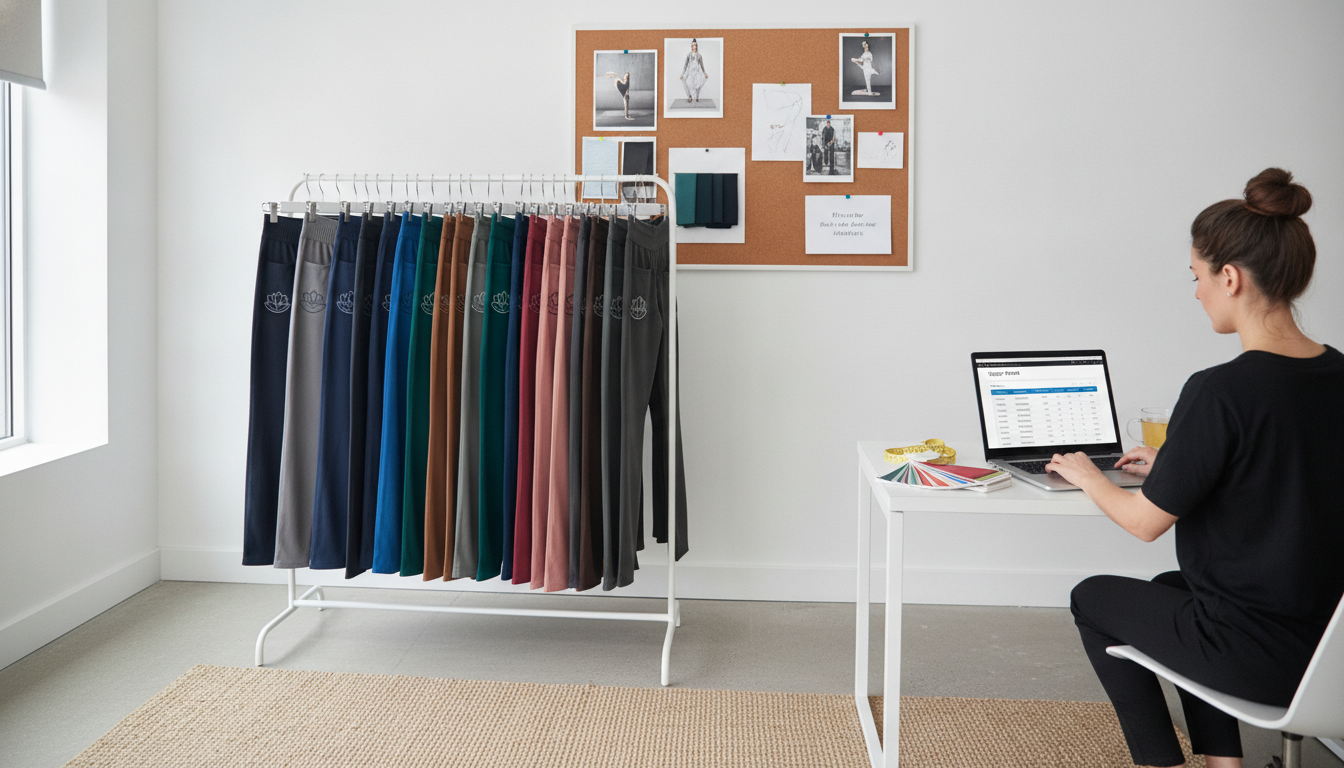
Custom yoga pants with logo are fully bespoke bottoms manufactured to a brand’s exact specifications, from fabric blend and fit to the placement and technique of the logo. Unlike buying blank stock and applying heat transfers later, true OEM production embeds your branding at the source, creating a garment that tells a consistent product story. This approach lets DTC founders and studio owners start with small order quantities while testing distinct design variations.
The most common base is a nylon/spandex blend (e.g., 80/20) for four-way stretch and moisture wicking. Options now range from recycled polyester to TENCEL™ Lyocell blends, each with specific weight (gsm) and handfeel profiles. Selecting the right gsm, typically 200-280 for yoga pants, impacts both opacity and drape.
Each method offers different durability, cost, and minimums. The right choice depends on design complexity and fabric compatibility.
Most startup brands begin with XS-XL, but inclusive sizing up to 3XL is possible without tooling changes if the pattern library supports it. Waistband style (high-rise, v-cross, fold-over) and inseam length can be adjusted during sampling, so you can dial in the silhouette that matches your target customer demographic.
Sourcing directly from an OEM cuts out middlemen and reduces per-unit cost by 20-40%, but the process needs structure. A clear timeline prevents launch delays and quality surprises.
Evaluate manufacturers by asking for their most recent BSCI audit score, in-house pattern digitizing capability, and the exact MOQ for both sample and bulk. A private label yoga clothing specialist with in-house cut-and-sew lines eliminates the risk of subcontracting, which often causes quality drift.
Always order a 1-piece sample before committing to production. A sample reveals fabric thickness, seam strength, and logo placement accuracy. Sampling turnaround of 7-10 days lets you iterate quickly and test with a focus group before placing the bulk order.
Once samples are approved, confirm lead times and packaging specs (poly bags, hang tags, care labels). Typical production takes 15-25 days depending on order size and customisation complexity. Clarify whether the factory handles freight forwarding or if you need to engage your own logistics partner for FOB terms.
Minimum order quantity is the single biggest barrier for emerging brands. Traditional factories demand 300-500 pieces per style, which can mean tying up $15,000, $25,000 before a single sale. A low-MOQ structure flips that equation.
Look for a factory that separates sample and bulk MOQs. A sample MOQ of 1 piece lets you test 3-4 SKUs for under $500 total, while a bulk MOQ of 30 pieces per SKU keeps the first production run affordable enough to test market response without over-committing inventory.
Sample MOQ: 1 piece. Bulk MOQ: 30 pieces per SKU. Sampling time: 7-10 days.
According to CB Insights, 38% of startups fail because they run out of cash. By starting with a 30-piece run per style, you limit inventory exposure to roughly $1,200, $1,800 (assuming a $40-60 landed cost), freeing capital for marketing and customer acquisition. This model also lets you test multiple colorways simultaneously without multiplying risk.
Sustainability claims without third-party verification can trigger greenwashing accusations. A sustainable yoga clothing manufacturer provides audit-backed certifications that protect your brand’s credibility as consumer expectations evolve.
The Global Recycled Standard (GRS) requires a minimum of 20% recycled material content and tracks the entire supply chain from source to finished garment. Using GRS-certified fabric lets your brand communicate a verified circular story, which 67% of consumers now consider important, according to a McKinsey 2023 survey.
OEKO-TEX Standard 100 certification means every component of the garment, including threads, zippers, and prints, has been tested for over 1,000 harmful substances. For skin-contact yoga pants, this eliminates concerns about formaldehyde, heavy metals, or azo dyes leaching into sweat.
If your line targets the eco-conscious studio crowd, organic cotton certified to GOTS adds premium positioning. Blending organic cotton with a small percentage of elastane (95/5) gives the stretch needed for yoga while keeping the natural feel. TENCEL™ Lyocell, a wood-based fiber, offers a silky drape that holds color well for printed designs.
A crooked or peeling logo destroys brand trust faster than any other defect. Structured QC increases first-pass yield and reduces chargebacks.
During production, an in-house QC team measures seam stretch, checks logo alignment against a master template, and does a wash test on 3% of garments. In our 12+ years manufacturing yoga apparel in Yiwu, we’ve seen that factory-floor checks catch 85% of issues before a third-party inspector arrives. Standard tolerance for logo placement is ±2 mm from the approved tech pack spec.
For your first order, a pre-shipment inspection (PSI) by an agency like SGS or Bureau Veritas verifies quantity, workmanship, and packaging against AQL 2.5 standards. The cost, about $300-450 per man-day, is worth it until you build trust with the factory’s internal systems.
Sample MOQ is typically 1 piece, while bulk MOQ can be as low as 30 pieces per SKU. This allows brands to validate designs without large inventory commitments.
Landed cost per unit ranges from $18-55 depending on quantity, fabric, and logo method. Sample orders (1 piece) typically cost $35-55, while bulk orders at 500+ units can drop to $18-28.
Sample production takes 7-10 days. Bulk production runs 15-25 days, plus 14-21 days for ocean freight to the US West Coast. Total lead time from sample approval to delivery is roughly 5-7 weeks.
Yes, recycled polyester certified to GRS standards is widely available. Many manufacturers offer it at a 5-10% cost premium over virgin polyester. It performs identically in stretch and moisture management.
Screen print works best for simple one-color designs and lasts 50+ washes. Silicone heat transfers offer a raised, multicolor look for 40+ washes. Embroidery gives a permanent premium finish, while sublimation works for all-over prints.
Ready to validate your custom yoga pants with logo without high inventory risk?
Request Your 1-Piece Sample Today →
Sample 1 piece · bulk from 30 · OEKO-TEX & GRS certified · reply in 24h. No gatekeeping.
Low MOQ. Sustainable fabrics. OEM ready. Tell us your vision.
Click the button below to open WhatsApp. If you're not logged in to WhatsApp Web yet, scan the QR code first — then come back here and copy the message into the chat.